Lenacapavir will slow HIV infections if there's enough of it and it reaches at-risk groups
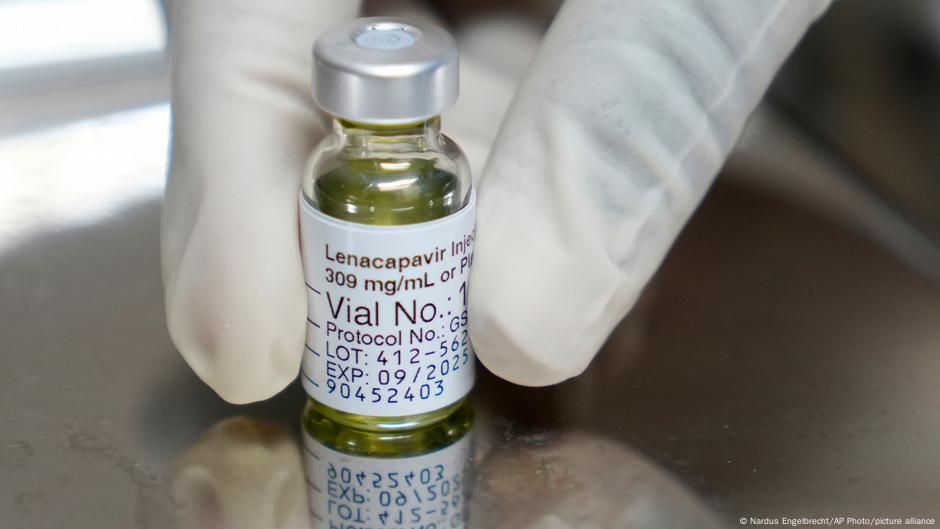
Lenacapavir is one injection, twice a year. It's a big improvement for people in high-risk groups, currently taking a pill a day against HIV infection
Lenacapavir is one injection, twice a year. It's a big improvement for people in high-risk groups, currently taking a pill a day against HIV infection. But its long-term impact depends on its reaching those very people. For a healthy young woman in South Africa, the greatest risk of HIV may come from someone she wants to trust, but can't. She may not know her partner's HIV status, may not always be able to insist they use a condom, and may have little control over whether he has other partners. There is an option: Daily Pre-Exposure Prophylaxis (PrEP) pills keep antiretroviral drugs in the body at high enough levels to stop HIV before it can establish any infection. But PrEP only works if she keeps taking the medication. Miss too many doses and drug levels can fall too low to provide sufficient protection. She may forget, resent having to take a daily pill, or fear that a partner or relative will find the medication, causing stigma. She may also experience side effects from PrEP or struggle to obtain new supplies. Zimbabwe takes a big shot toward an HIV-free future To view this video please enable JavaScript, and consider upgrading to a web browser that supports HTML5 video How can lenacapavir help? Taking medication consistently — known as adherence — is a challenge for people with conditions like hypertension and diabetes. With PrEP, however, the difficulty is even greater. "You're asking people who are healthy, who don't have any illness, to take a tablet every day," said Salim Abdool Karim, director and co-founder of the Centre for the AIDS Programme of Research in South Africa.
"That's a high bar." "Repeated studies, including our own, show that patients who start taking PrEP, by month three, about half of them have given it up. By the end of the year, you're left with only a handful that are still taking PrEP," Abdool Karim told DW. Lenacapavir sharply reduces that daily burden: It requires just one injection every six months. "That's infinitely easier to do than to remember to take a tablet every day," he said. "For those who receive the injection every six months without fail, it works superbly because adherence is effectively complete." But lenacapavir is still too expensive in some regions and access is low. How does lenacapavir last so long in the body? Most established PrEP drugs block enzymes that allow the virus to reproduce and spread —it uses the enzymes to copy its own genetic material and insert it into a human cell's DNA. Lenacapavir works completely differently. It is the first PrEP drug to target the capsid, a cone-shaped shell that surrounds the viral genetic material. But the capsid is also essential to the virus' replication process — and therefore a promising target. Lenacapavir attacks the capsid of HIV, shown in green because they are vital for the virus' ability to replicate and spread in the body Image: Cavallini James/BSIP/picture alliance "[Lenacapavir] is the most potent molecule we know of against HIV," Wesley Sundquist, a University of Utah biochemist and leading expert on the HIV capsid, told DW. Sundquist said lenacapavir remains effective over long periods and that it is potent even at low concentrations.
 The BriefWire