Delhi Police Defends Crowd-Control Action, Says Unruly Mob Hijacked Students’ Protest | Exclusive
Delhi Police Defends Crowd-Control Action, Says Unruly Mob Hijacked Students’ Protest | Exclusive Reported By, Last Updated: July 23, 2026, 15:28 IST Delhi Police has
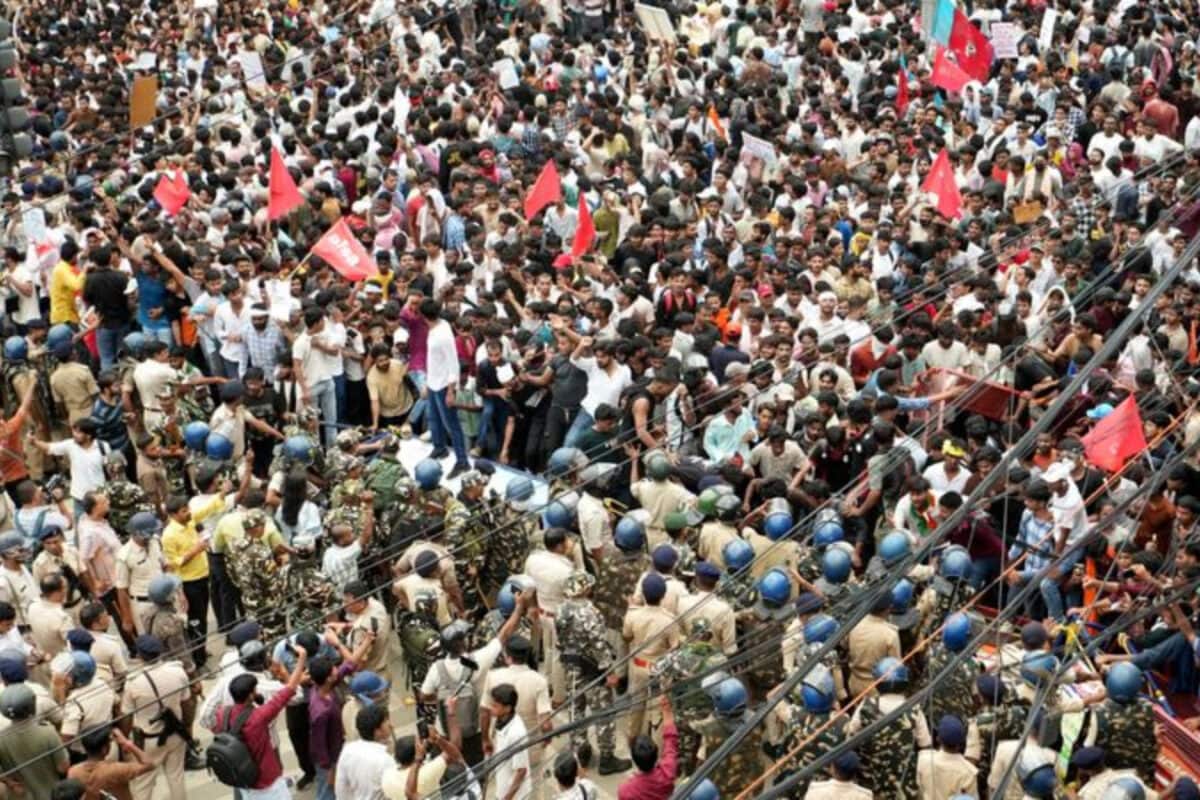
Delhi Police Defends Crowd-Control Action, Says Unruly Mob Hijacked Students’ Protest | Exclusive Reported By, Last Updated: July 23, 2026, 15:28 IST Delhi Police has said it is open to judicial and investigative scrutiny and has preserved drone footage, CCTV recordings and body-camera feeds related to the violence. Rapid Read A view of the ongoing protest in New Delhi (Reuters Photo) A student-led protest that remained largely peaceful for nearly three weeks was eventually hijacked by outsiders and unruly groups, leading to violent clashes near central Delhi’s high-security parliamentary zone, top Delhi Police sources have told CNN-News18. The police said the safety of genuine student protesters remained a priority throughout the agitation, but the situation changed when non-student groups allegedly entered the protest site, attempted to breach security barricades and moved towards Jai Singh Road. More than 118 police personnel, including senior IPS officers, were injured in the violence, according to police estimates. Between 60 and 150 protesters were also reportedly taken to hospitals, while around 20 government vehicles were damaged. Eyewitnesses, protesters and civil rights organisations, however, have accused the police of using excessive force, including indiscriminate baton charges, heavy tear gas shelling and physical assault on unarmed demonstrators. The allegations include claims that protesters were pulled by their hair and that some personnel in plain clothes used weapons during the crackdown. Delhi Police has said it is open to judicial and investigative scrutiny and has preserved drone footage, CCTV recordings and body-camera feeds related to the violence. Police Say Outsiders Entered Protest After 20 Days According to top police sources, officers had exercised restraint during nearly three weeks of peaceful sit-ins at Jantar Mantar and had used only the minimum force required to manage the gathering.
The police said the nature of the demonstration began to change after people who were not students were spotted among the protesters. Officers initially attempted to identify and separate genuine students from the non-student groups, the sources said. The matter was already under police observation when an unwanted crowd began gathering at Jantar Mantar. The situation escalated when sections of the crowd allegedly tried to break through multi-layered security barricades and began moving towards Jai Singh Road, catching the police deployment by surprise. Delhi Police believes the original student movement was taken over by groups seeking to provoke a confrontation and push the march towards the Parliament area. March Declared An Unlawful Assembly The march was treated as an unlawful assembly after demonstrators allegedly attempted to breach barricades erected near the parliamentary zone. Police sources said permission for the march had been formally denied and prohibitory orders were already in force around the high-security area. Delhi Police maintained that it was legally bound to prevent protesters from entering restricted zones and protect Parliament, government buildings and nearby civilian areas. Repeated warnings were issued through public-address systems before crowd-control measures were initiated, the sources said. Police personnel first used smoke canisters and other dispersal measures before resorting to physical intervention, according to the official account. Sudden Surge Stretched Police Deployment Police sources acknowledged that the force initially had limited personnel on the ground because of the sudden increase in the size of the gathering. The authorities struggled with the rapid escalation, which was followed by last-minute Metro station closures, internet restrictions and the emergency deployment of more than 3,000 personnel, including units of the Rapid Action Force. Security forces were then directed to reinforce barricades, protect public transport and prevent the crowd from spreading towards sensitive government installations.
 The BriefWire