Can Plainclothes Police Stop, Search Or Arrest You During A Protest? What Indian Law Says
Can Plainclothes Police Stop, Search Or Arrest You During A Protest? What Indian Law Says Written By, Last Updated: July 23, 2026, 14:41 IST The
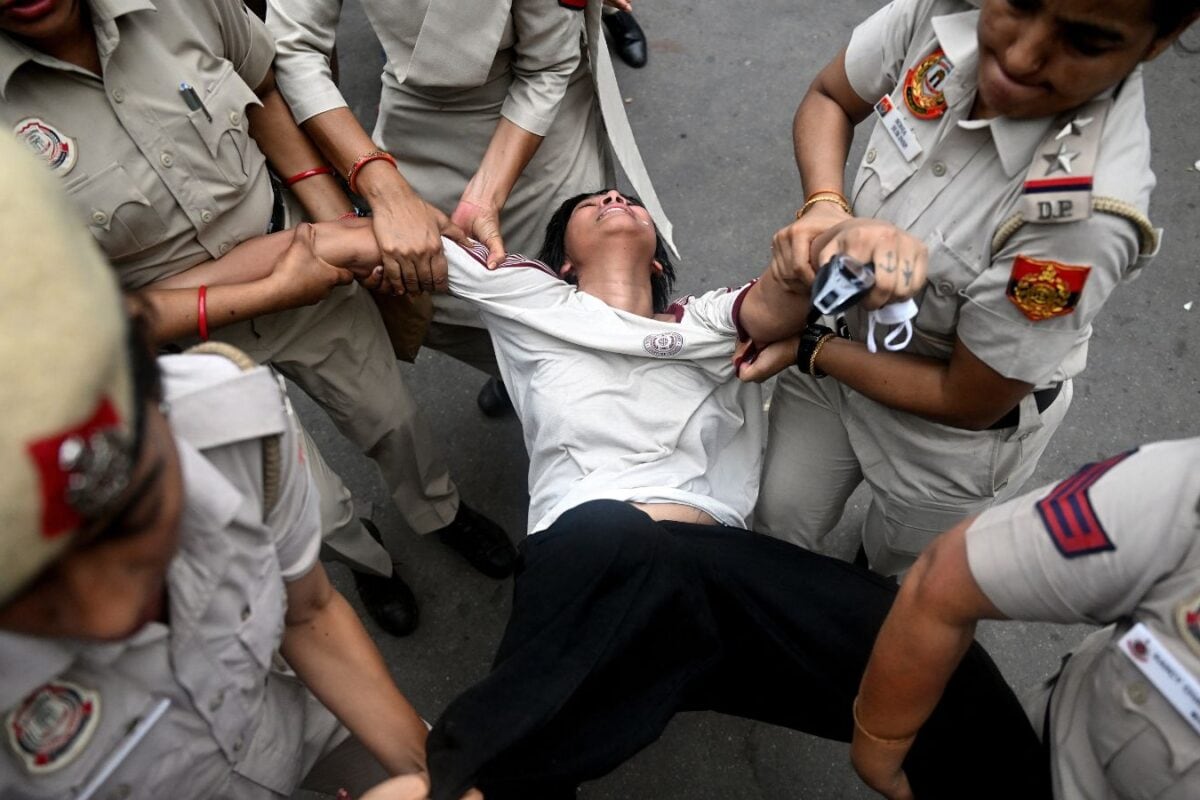
Can Plainclothes Police Stop, Search Or Arrest You During A Protest? What Indian Law Says Written By, Last Updated: July 23, 2026, 14:41 IST The latest debate arose after plainclothes personnel were seen wielding lathis and participating directly in crowd control during protests in Delhi Rapid Read Plainclothes policing has long been a recognised policing method, particularly where revealing an officer's identity could compromise an operation. (AFP) The presence of plainclothes police personnel wielding lathis during the protests in Delhi has sparked a debate over whether police officers must identify themselves while carrying out law enforcement duties. Visuals from the protests at Jantar Mantar showed several men in civilian clothes participating in crowd control, prompting questions over legality, accountability and citizens’ rights. But what exactly does the Indian law say? Can Police Officers Work in Plain Clothes? Yes. There is no legal requirement in India that necessitates all policemen to wear their uniforms all the time. All police stations in India make use of officers in civilian dress for activities like intelligence gathering, surveillance, undercover work, anti-crime operations, crowd control, and protection of VIPs. Plainclothes policing has long been a recognised policing method, particularly where revealing an officer’s identity could compromise an operation. Can They Arrest or Detain Someone? Yes, but with necessary restrictions. A plainclothes policeman is not deprived of their legal power just because they wear civilian clothes. Under the conditions prescribed by law, the plainclothes officer is allowed to apprehend the suspect, make an arrest of the accused person, employ reasonable force, and participate in controlling crowds.
Nevertheless, the exercise of these powers should be still governed by the same legal restraints as those of uniformed policemen. Do Plainclothes Officers Have to Identify Themselves? In many situations, yes. While there is no blanket legal requirement that every plainclothes officer must constantly display an identity card or badge, Indian law and Supreme Court guidelines emphasise that officers carrying out arrests or exercising coercive powers should clearly identify themselves. Under the Bharatiya Nagarik Suraksha Sanhita (BNSS), 2023, every police officer making an arrest is expected to bear accurate, visible and clear identification of name, facilitating easy identification by the arrested person. This continues a safeguard that earlier existed under the Code of Criminal Procedure. What Does the Supreme Court Say? The landmark DK Basu vs State of West Bengal (1997) judgment laid down mandatory arrest guidelines to prevent custodial abuse. Among them are: Police personnel carrying out an arrest should bear clear identification and name tags, details of the arresting officers should be recorded, arrest memos must be prepared, family members or friends should be informed, and medical examination and documentation are required. These guidelines continue to form the backbone of arrest procedures in India. What Are Your Rights If You’re Stopped By Someone Claiming To Be Police? If someone in civilian clothes claims to be a police officer, you can reasonably ask their name and designation; which police station or unit they belong to; to see official identification; where circumstances permit; and why you are being detained or questioned.
 The BriefWire