The London Skyscraper That Was So Shiny It Accidentally Melted Luxury Cars
The London Skyscraper That Was So Shiny It Accidentally Melted Luxury Cars Published By, Last Updated: July 23, 2026, 14:19 IST During spring and summer
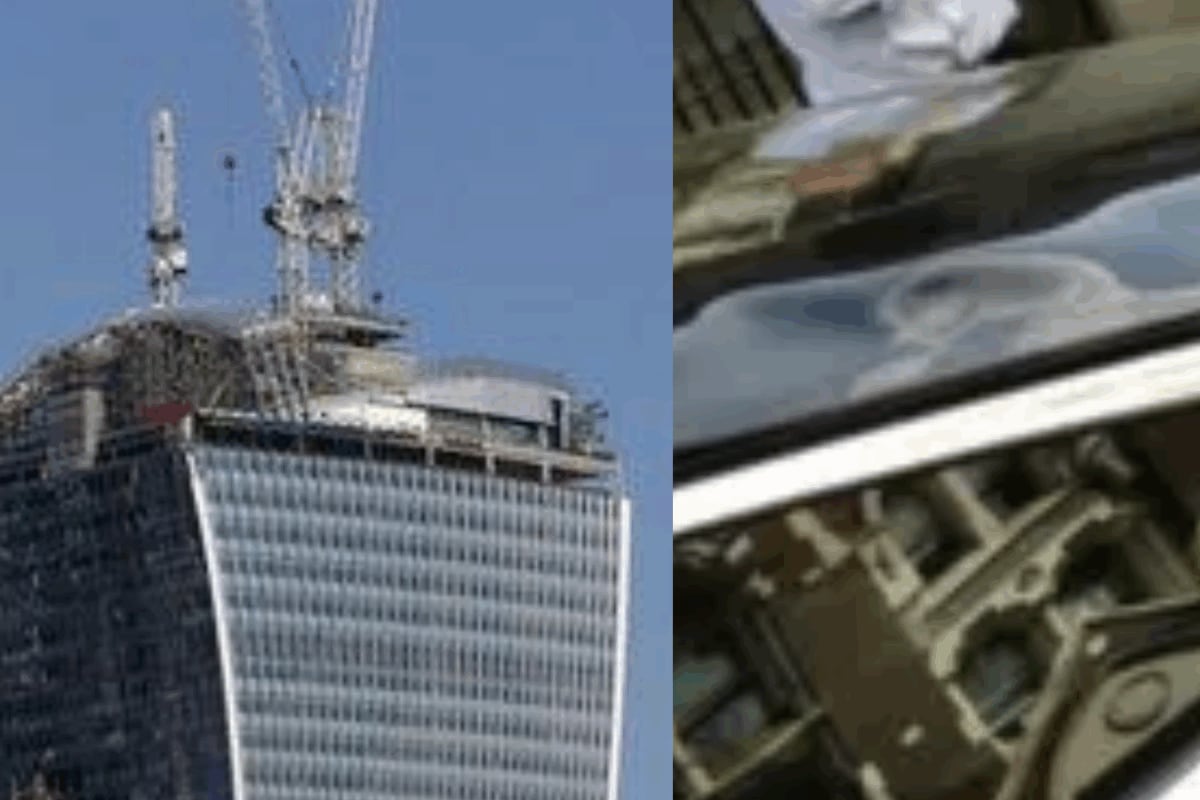
The London Skyscraper That Was So Shiny It Accidentally Melted Luxury Cars Published By, Last Updated: July 23, 2026, 14:19 IST During spring and summer afternoons, when the sun reached a specific angle in the sky, the skyscraper's reflective glass gathered sunlight across its vast surface area. The building developers had to act fast to avoid millions in property damage payouts. In the summer of 2013, businessmen in London’s financial district began noticing a bizarre phenomenon: the pavement on Eastcheap Street was getting so hot you could literally fry an egg on it. Shortly after, a local businessman parked his £55,000 Jaguar XJ on the street for two hours. When he returned, he was horrified to find the side panels warp, the plastic rearview mirror melted and the brand emblem scorched beyond recognition. The culprit was a brand-new, £200 million glass skyscraper looming 37 stories above the street- a building that locals quickly dubbed the “Walkie-Talkie" (and later, the “Walkie-Scorchie").
How Physics Turned A Tower Into A Giant Magnifying Glass Located at 20 Fenchurch Street in central London, the building was designed by world-renowned architect Rafael Viñoly. To maximize real estate value on the upper floors where rent is highest, the tower flared outward as it rose, creating a distinct, top-heavy curve. However, that curved, concave glass facade had an unintended consequence: it acted as a massive parabolic mirror. During spring and summer afternoons, when the sun reached a specific angle in the sky, the skyscraper’s reflective glass gathered sunlight across its vast surface area and focused it into a single, intensely concentrated beam onto the streets below. A Heat Ray Capable Of Smoldering Doormats For about two hours every afternoon, the reflected beam moved across nearby sidewalks like a sci-fi heat ray. Thermometers placed in the beam registered temperatures reaching 117°C (243°F)- far above the boiling point of water. Beyond melting plastic car trim and side-view mirrors on luxury vehicles, the focused glare scorched nearby shop carpets, cracked sidewalk tiles, melted bicycle seats and set fire to a doormat outside a local barber shop.
Television reporters rushed to the scene to successfully cook eggs and toast baguettes live on camera using nothing but the reflected beam. How Engineers Tamed “Death Ray" The building developers had to act fast to avoid millions in property damage payouts. First, the city temporarily suspended parking in the affected heat-zone lanes. Then, engineers designed a permanent fi a giant, non-reflective horizontal louver system called a “brise-soleil." Installed across the upper concave south-facing facade in 2014, these aluminum slats absorb and scatter incoming sunlight before it can reflect down to street level, permanently neutralizing the death ray. News18 Newsletter Handpicked stories, in your inbox A newsletter with the best of our journalism submit Key Questions Answered Could similar skyscrapers cause issues in other cities? Yes, similar skyscrapers could cause issues in other cities. The "Walkie-Talkie" skyscraper in London, designed by Rafael Viñoly, focused sunlight into an intense beam due to its reflective glass, melting car parts, cracking tiles, and scorching doormats.
 The BriefWire