The Russian Job Trap: How Foreign Nationals End Up Fighting The War In Ukraine
The Russian Job Trap: How Foreign Nationals End Up Fighting The War In Ukraine Published By, Last Updated: July 23, 2026, 13:51 IST A joint
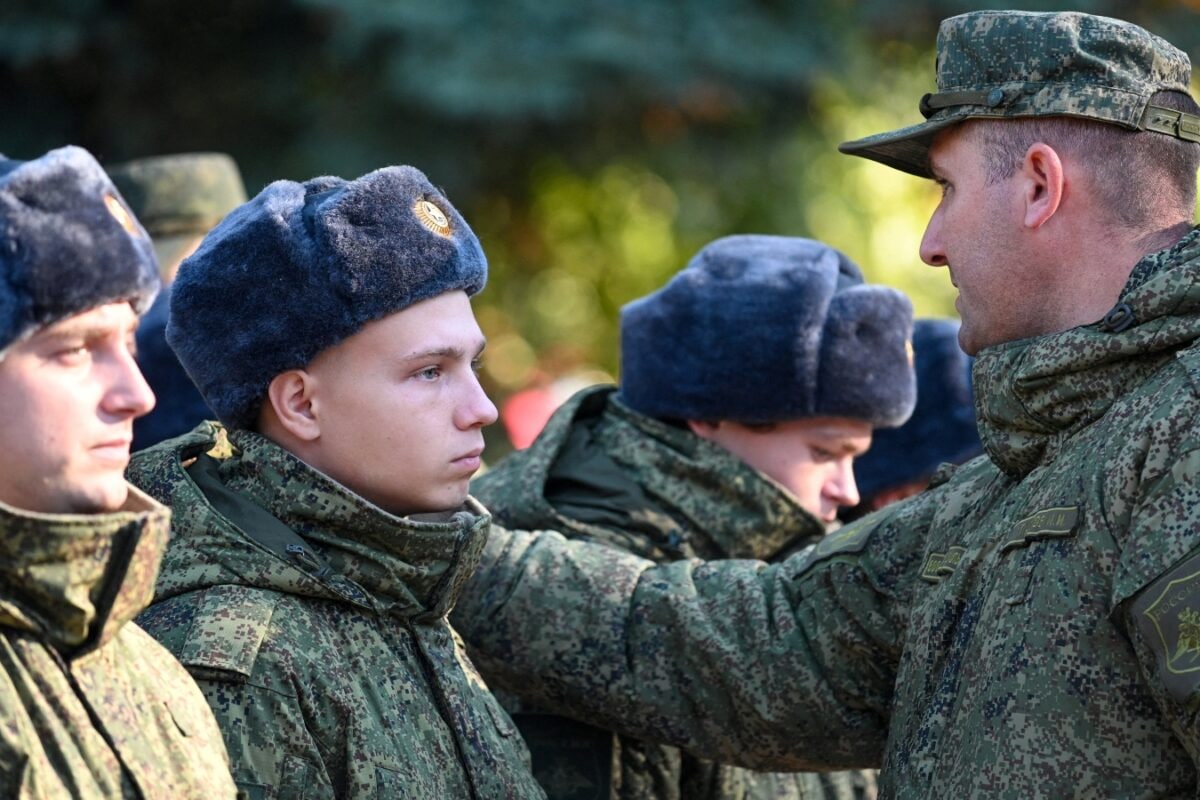
The Russian Job Trap: How Foreign Nationals End Up Fighting The War In Ukraine Published By, Last Updated: July 23, 2026, 13:51 IST A joint human rights report said at least 27,000 foreign nationals from more than 130 countries have joined Russia’s army since the invasion of Ukraine began. Rapid Read A Russian army officer talks to conscripts called up for military service during a ceremony marking their departure for garrisons, in Bataysk in the Rostov region, Russia. (REUTERS/File) When former Kenyan soldier Oscar Khagola Mutoka left for Russia in the summer of 2025, his family believed he was travelling abroad in search of work. A week later, he sent them a photograph of himself in military uniform. They never heard from him again. His family later learnt that he had died but could not recover his body. “The worst part is that I don’t know if and where he was actually buried, or if his body was simply dumped in a forest in Russia," his father, Charles Mutoka, told DW. Mutoka is among thousands of foreign nationals recruited into the Russian military since Moscow launched its full-scale invasion of Ukraine in February 2022. Some knowingly accept military contracts for high salaries or Russian citizenship. Others say they were promised civilian jobs, taken to Russia on tourist visas and pushed into military service after signing documents they could not understand. A joint study by the International Federation for Human Rights, Truth Hounds and the Kazakhstan International Bureau for Human Rights and Rule of Law says Russia has built a global recruitment network targeting people in economically, socially and legally vulnerable circumstances. At least 27,000 foreign nationals from more than 130 countries have joined the Russian army since the invasion began, according to the study. Ukrainian authorities claimed in April that Moscow could recruit another 18,500 foreigners in 2026. How Is Russia Recruiting Foreign Nationals? The recruitment drive operates through social media, private employment agents and direct offers of military service. According to the joint study, many recruits come from economically deprived parts of Africa, Asia and Latin America.
Some are openly offered military contracts carrying salaries far higher than what they could earn at home, along with enlistment bonuses, residence documents or a pathway to Russian citizenship. Others are promised civilian work in construction, warehouses, agriculture, security or logistics. “This recruitment targets people in economically, socially and legally precarious life situations. The methods employed range from enticing offers to deception and even coercion," Ilya Nusov, one of the study’s authors, told DW. How Fake Job Offers Funnel Foreigners Into Russia’s Army Recruits say they were never told they would be joining the military. Arman Mondol, a Bangladeshi national, was promised work packing goods in a warehouse, according to DW. His father sold property and borrowed money to pay a recruiter before Mondol travelled to Russia via Saudi Arabia on a tourist visa. After arriving, he said he was forced to sign a contract written in Russian, which he could not read. He was later placed in the Russian army and deployed in Ukraine. “When we were on a mission, they always sent us ahead while they remained behind us. They used us as human shields and pushed us into the thick of the fighting," Mondol told DW. His vehicle later hit a landmine. Mondol was one of only two survivors and escaped from a military hospital before the Bangladeshi embassy in Moscow helped him return home. He came back with shrapnel in one leg and a heavy limp. What Happens After They Reach Russia? The Atlantic Council, citing the joint human rights report, said survivors had described being deployed to some of the most active parts of the battlefield after minimal training, resulting in high casualty rates. Families may also struggle to trace relatives or recover their bodies. Mercenaries Or Human Trafficking Victims? Foreign nationals fighting for Russia are often described as mercenaries, but their legal status is more complicated. Nusov told DW that some may not meet the strict definition of a mercenary under international law, particularly if they obtain Russian citizenship before joining the armed forces.
 The BriefWire