Red Sea To Black Sea: Merchant Ships Become The New Battlefield Of Modern Wars
Red Sea To Black Sea: Merchant Ships Become The New Battlefield Of Modern Wars Published By, Last Updated: July 23, 2026, 10:49 IST The Houthis
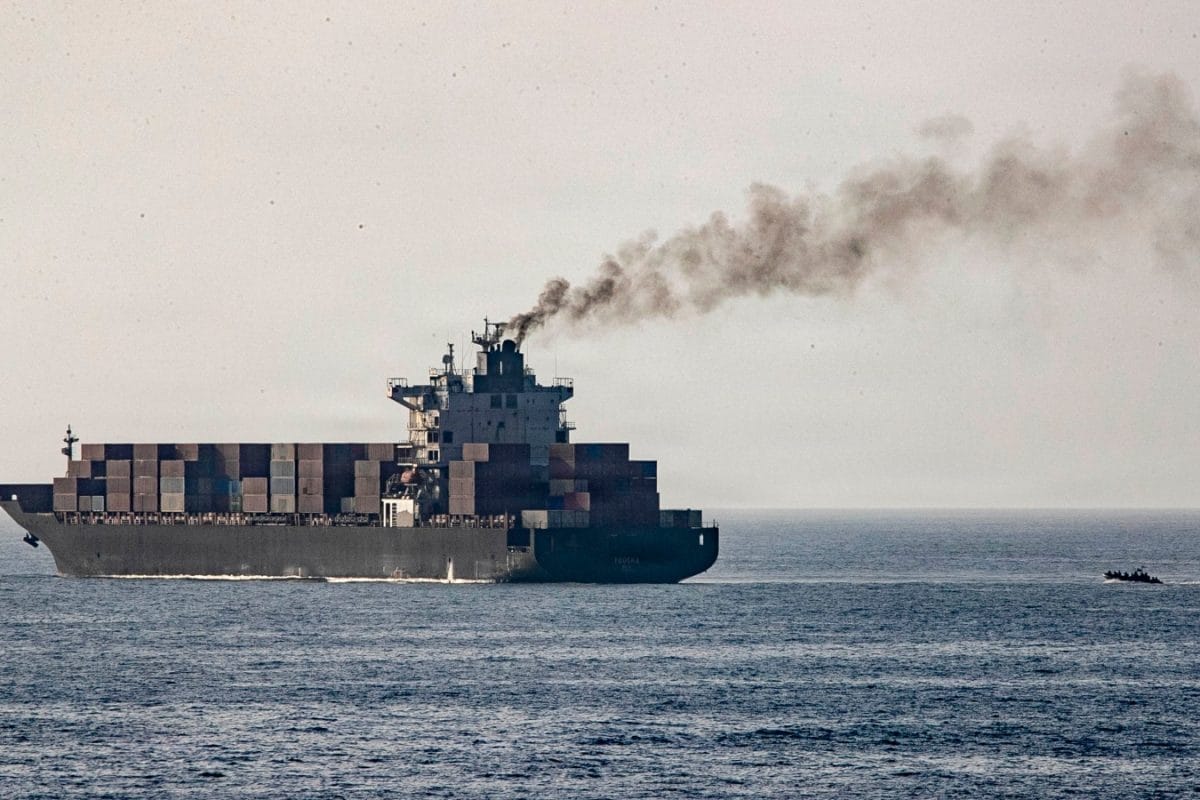
Red Sea To Black Sea: Merchant Ships Become The New Battlefield Of Modern Wars Published By, Last Updated: July 23, 2026, 10:49 IST The Houthis claimed responsibility for attacking the Saudi oil tankers ENCELA and LAYLIA in the Red Sea using ballistic missiles, cruise missiles and drones. Rapid Read US forces patrolling the Arabian Sea near the Touska, an Iranian-flagged cargo ship, on April 20. (AFP photo) The latest attack by Yemen’s Iran-backed Houthi rebels on two Saudi oil tankers has reinforced a worrying trend that has emerged across multiple conflict zones this year: commercial vessels are no longer just collateral damage – they are increasingly becoming deliberate strategic targets. The Houthis claimed responsibility for attacking the Saudi oil tankers ENCELA and LAYLIA in the Red Sea using ballistic missiles, cruise missiles and drones, saying the vessels had violated a naval blockade they recently imposed on Saudi Arabia. One of the tankers reportedly caught fire after being hit near the Saudi port of Jizan, though no casualties were reported. The attack marked a significant expansion of the Houthis’ maritime campaign and added another layer of uncertainty to global energy markets. The attack is not an isolated incident. Since February 2026, commercial ships have increasingly found themselves caught in the crossfire of three major conflicts – the Iran-US confrontation around the Strait of Hormuz, the Russia-Ukraine war in the Black Sea and the expanding Houthi campaign in the Red Sea. Together, these conflicts have transformed some of the world’s busiest shipping lanes into active theatres of war. A New Pattern In Modern Warfare Traditionally, naval warfare centred on warships confronting one another at sea. Today, the objective is increasingly economic disruption. Merchant vessels carry crude oil, liquefied natural gas, grain, fertilisers, manufactured goods and industrial raw materials. According to the UN Conference on Trade and Development (UNCTAD), around 80 per cent of global merchandise trade by volume is transported by sea. Attacking commercial shipping therefore offers a way to pressure governments, disrupt supply chains and impose economic costs without directly confronting an adversary’s military.
The growing use of long-range cruise missiles, ballistic missiles, one-way attack drones and unmanned surface vessels has also made merchant ships far more vulnerable than in previous conflicts. Red Sea: Houthis Expand Their Maritime Campaign The latest strikes on ENCELA and LAYLIA signal a widening of the Houthi maritime campaign. For much of their earlier operations, the Houthis claimed they were targeting vessels linked to Israel or countries supporting Israel. The latest attacks directly targeted Saudi oil tankers, opening another front in an already volatile region. The Red Sea connects the Bab el-Mandeb Strait to the Suez Canal, making it one of the world’s busiest maritime corridors linking Europe and Asia. Any disruption forces ships to sail around Africa’s Cape of Good Hope, adding thousands of kilometres to voyages and increasing fuel, freight and insurance costs. The latest attacks also come as the wider US-Iran conflict has intensified, raising fears that both the Red Sea and the Strait of Hormuz could simultaneously face prolonged disruptions. Strait of Hormuz: Energy Shipping Under Direct Threat If the Red Sea is one global chokepoint, the Strait of Hormuz is arguably the most critical. Roughly one-fifth of the world’s seaborne oil trade passes through the narrow waterway connecting the Persian Gulf with the Gulf of Oman. Since the outbreak of the Iran-US conflict in late February, commercial shipping in the Strait has repeatedly come under attack. Merchant vessels have been struck by missiles, drones and explosive boats, while others have been damaged, abandoned or forced to alter course as Iran sought to enforce restrictions on shipping through the Strait. Maritime authorities have reported multiple casualties among civilian crews, while several vessels have sustained significant damage. The attacks have had an immediate impact on global energy markets. Tanker operators have rerouted ships, insurers have sharply increased war-risk premiums and oil prices have climbed amid fears that one of the world’s most important energy corridors could face prolonged disruption.
 The BriefWire