Despite Failed Iran Diplomacy, Why Pakistan’s $10 Billion Pitch To The US Could Work
Despite Failed Iran Diplomacy, Why Pakistan’s $10 Billion Pitch To The US Could Work Published By, Last Updated: July 23, 2026, 10:56 IST Islamabad has
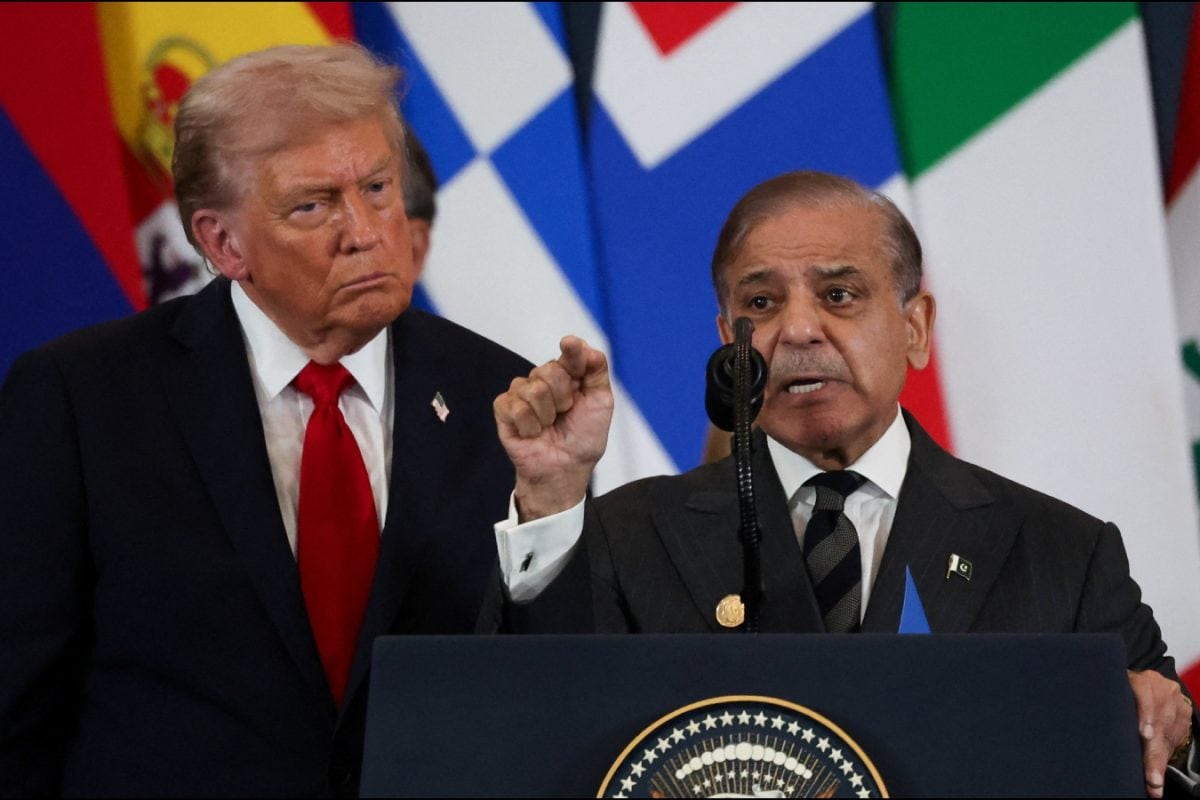
Despite Failed Iran Diplomacy, Why Pakistan’s $10 Billion Pitch To The US Could Work Published By, Last Updated: July 23, 2026, 10:56 IST Islamabad has sought a $10 billion bilateral exchange stabilisation facility from US Treasury Secretary Scott Bessent, with a repayment period of up to five years. Rapid Read Pakistan PM Shehbaz Sharif and US President Donald Trump. (File pic/Reuters) Pakistan is seeking a $10 billion financial backstop from the United States at a moment when the Iran deal it helped facilitate has already collapsed. On the face of it, the timing appears awkward. Islamabad’s role as a mediator during the Iran conflict raised its international profile, but the agreement did not hold. Yet Pakistan is now hoping that its brief return to regional relevance will translate into direct economic support from Washington. According to Reuters, Islamabad has asked the US Treasury for a bilateral exchange stabilisation facility worth $10 billion, repayable over as long as five years. If approved, it would strengthen Pakistan’s foreign exchange reserves, support the rupee and reduce its immediate reliance on repeated IMF bailouts. The US Treasury declined to comment, according to Reuters. But the proposal is unlikely to be judged on Pakistan’s economic record alone. For the US, the real calculation may involve Iran, Afghanistan, China and the risks of instability in a nuclear-armed state. What Exactly Has Pakistan Asked For? Pakistan reportedly raised the proposal during Finance Minister Muhammad Aurangzeb’s meeting with US Treasury Secretary Scott Bessent in Washington. A Pakistani finance ministry statement did not directly mention the $10 billion request, but said Aurangzeb had highlighted the country’s exposure to regional conflicts and sought greater American economic support. “Senator Aurangzeb sought greater US support for Pakistan’s road to market, underpinned by improved access to international capital markets, higher foreign exchange reserves, and enhanced sovereign credit ratings," the ministry said, according to Reuters. The proposed facility would act as a financial cushion by adding dollars to Pakistan’s reserves and easing pressure on the rupee.
It could also reduce Islamabad’s need to repeatedly turn to the IMF whenever its balance-of-payments position deteriorates. However, such support would not amount to an ordinary loan. Exchange stabilisation facilities are rare and are generally handled through the US Treasury’s Exchange Stabilization Fund. Reuters reported that the last comparable arrangement was extended to Argentina in 2025, the first such deal since Uruguay received one in 2002, apart from a long-running arrangement with Mexico. That makes Pakistan’s request unusual, and suggests that any approval would require a strategic justification. Iran Diplomacy The immediate trigger appears to be Pakistan’s recent diplomatic role in the Iran crisis. Reuters reported that Islamabad submitted the request after helping facilitate talks linked to the conflict, a role that raised its international profile and renewed its relevance in Washington. Pakistani officials appear to see that opening as a chance to reset ties with the US after years of strained relations. Unlike an IMF programme, a US Treasury-backed stabilisation facility would not be merely financial. It would also carry political significance by signalling a broader revival in bilateral ties. Pakistan’s Strategic Value Has Often Outweighed Economic Concerns The US-Pakistan relationship has repeatedly expanded or contracted according to Washington’s strategic needs. During the Cold War, Pakistan was a frontline American ally against the Soviet Union. After the September 11 attacks, Washington designated it a major non-NATO ally and provided billions of dollars in military and economic assistance as Islamabad became central to US operations in Afghanistan. Relations later weakened over concerns about Pakistan’s links with militant groups, while US military support declined sharply after the withdrawal from Afghanistan. But Pakistan’s importance has rarely disappeared completely. It has tended to return whenever regional security conditions change. The latest request fits that pattern. Islamabad is again presenting itself as a country whose geography and political connections make it difficult for Washington to ignore.
 The BriefWire