No Longer A ‘Chicken’s Neck’: Inside Strategic Transformation Of Siliguri Corridor | Exclusive
No Longer A ‘Chicken’s Neck’: Inside Strategic Transformation Of Siliguri Corridor | Exclusive Reported By, Last Updated: July 23, 2026, 09:33 IST Once seen as
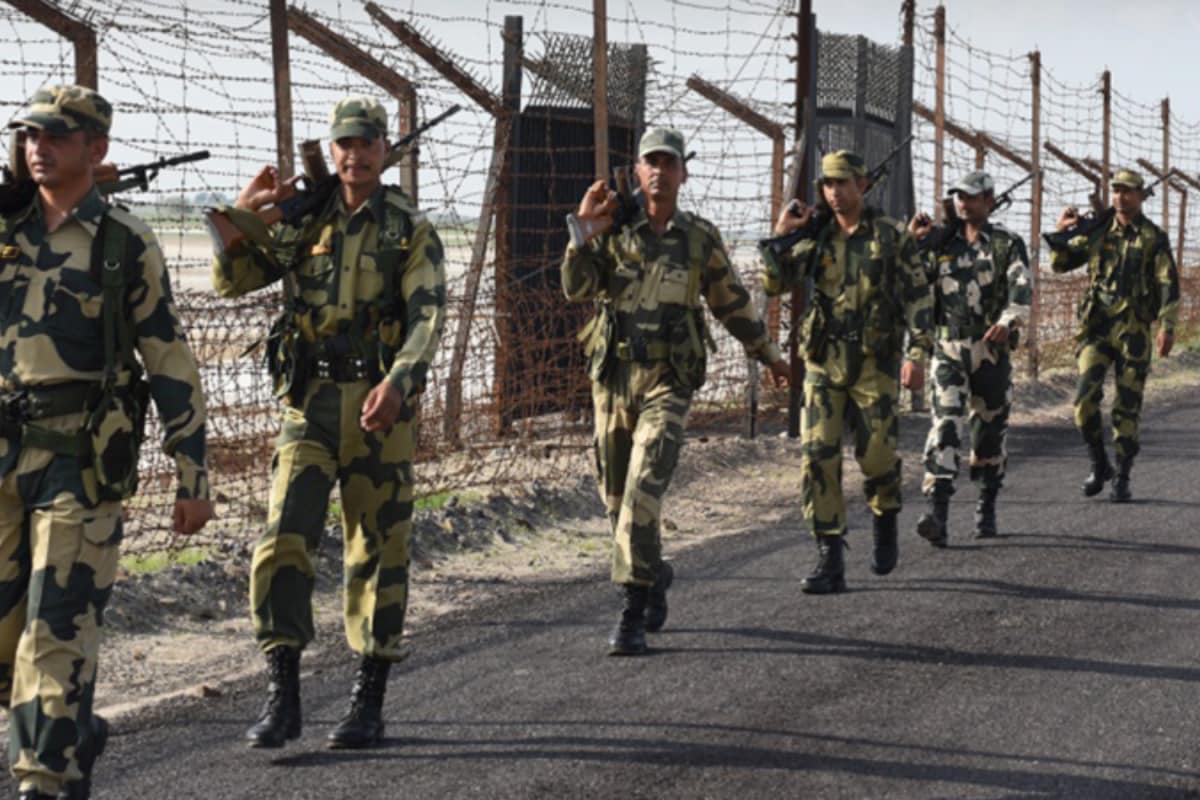
No Longer A ‘Chicken’s Neck’: Inside Strategic Transformation Of Siliguri Corridor | Exclusive Reported By, Last Updated: July 23, 2026, 09:33 IST Once seen as a fragile chokepoint, the Siliguri Corridor is now being described as an ‘Elephant’s Trunk’ capable of withstanding and responding to threats. Rapid Read Indian security planners have increasingly focused on strengthening border management, improving surveillance and ensuring rapid deployment capability along the India-Bangladesh border. (Representative image) For decades, military strategists and geopolitical analysts have regarded the Siliguri Corridor—a narrow strip of land in North Bengal measuring just 17 to 22 kilometres at its narrowest point—as one of India’s most strategically sensitive geographical locations. Popularly known as the “Chicken’s Neck", this slender land bridge is the only terrestrial link connecting mainland India with its eight north-eastern states. Nearly all major rail, road, fuel and military supply routes linking the Northeast with the rest of the country pass through this corridor. Its geography has long been considered India’s greatest strategic vulnerability. In any major conflict, disruption of this narrow passage could potentially affect civilian connectivity, military logistics and the movement of essential supplies to the Northeast. However, according to senior military officials, this decades-old perception is undergoing a significant transformation. The phrase “Chicken’s Neck" symbolised vulnerability—a narrow strip that could theoretically be choked during a conflict. Today, senior Army officers argue that this description no longer accurately reflects the military reality on the ground. Instead, they describe the corridor as an “Elephant’s Trunk"—strong, flexible, resilient and capable of projecting strength rather than merely absorbing threats. A Strategic Transformation Since 2014 Since 2014, the Centre has significantly increased its strategic focus on India’s eastern frontier. Successive investments in military infrastructure, border connectivity, logistics, surveillance systems and transportation networks have substantially strengthened the Siliguri Corridor. The objective has been clear: to transform a historically vulnerable passage into a heavily defended strategic gateway capable of supporting rapid mobilisation during both peace and conflict. Speaking to News18, a senior Army officer stationed under the Indian Army’s Eastern Command said: “A fundamental shift in India’s strategic posture has quietly rewritten this narrative.
Through an aggressive expansion of forward infrastructure and the establishment of permanent military deployments, India is transforming this historical chokepoint. The fragile ‘Chicken’s Neck’ has evolved into a muscular ‘Elephant’s Trunk’—a powerful, proactive instrument capable of neutralising any threat in its path." According to the officer, the analogy represents far more than symbolism. It reflects a change in military doctrine—from defending a vulnerable corridor to building a platform capable of sustaining offensive and defensive operations simultaneously. Why “Elephant’s Trunk"? Military officials explain that an elephant’s trunk is powerful, flexible and agile, and capable of both precision and force. Similarly, India’s eastern land bridge is no longer viewed merely as a narrow stretch requiring protection. Instead, it has become an integrated military ecosystem supported by permanent bases, advanced surveillance, strategic missile systems, modern air power, improved road and rail connectivity and multiple logistical redundancies. Rather than worrying about losing access to the Northeast, planners now emphasise maintaining uninterrupted operational capability while retaining the ability to respond rapidly across multiple fronts. Building A Three-Garrison Shield One of the most significant developments has been the establishment of three forward military installations strategically positioned around the Siliguri Corridor. Lachit Borphukan Military Station, Assam Located at Bamuni near Dhubri, the Lachit Borphukan Military Station serves as a major logistics hub supporting operations across the eastern theatre. It provides depth for troop movements, ammunition storage, equipment maintenance and sustainment operations. Kishanganj Forward Base, Bihar Positioned along the western approach to the corridor, the Kishanganj base secures vital transportation routes and enhances the Army’s ability to rapidly reinforce formations moving towards the Northeast. Chopra Forward Base, West Bengal Situated close to the international border, the Chopra Forward Base provides immediate surveillance of one of the narrowest stretches of the corridor while significantly reducing response times during emergencies. Working in coordination with the Border Security Force (BSF), these installations create overlapping layers of surveillance, intelligence-gathering, logistics and rapid troop deployment. Strengthening The Bangladesh Frontier The security environment around India’s eastern border has evolved following political developments in Bangladesh and changing regional security dynamics.
 The BriefWire