I found out why thousands are flooding Jantar Mantar now. It's not Wangchuk or Dipke
When the Cockroach Janta Party (CJP) announced its protest in June, 26-year-old Aminul Hoque was among those following it from afar. Sitting in Assam, he
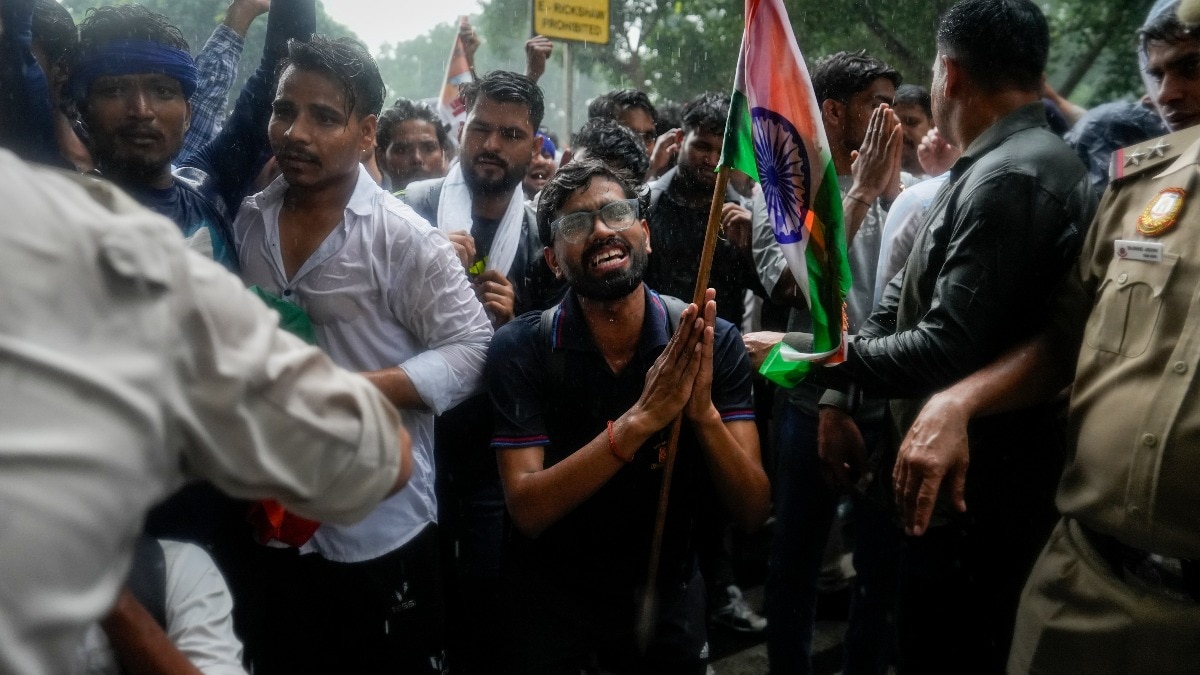
When the Cockroach Janta Party (CJP) announced its protest in June, 26-year-old Aminul Hoque was among those following it from afar. Sitting in Assam, he amplified the movement online, believing that the students protesting over the alleged NEET-UG paper leak were raising legitimate questions. With Ladakhi activist Sonam Wangchuk joining the agitation and later announcing an indefinite hunger strike at New Delhi's Jantar Mantar, Hoque's support only deepened. Read Full Story But it wasn't Wangchuk's fast that finally brought him to Delhi. It was the videos from July 20. As clips of Delhi Police lathi-charging protesters and firing tear gas shells during the CJP's march towards Parliament spread across social media, Hoque made up his mind. Within two days, he had boarded a flight to the national capital. "They attacked students who were protesting peacefully. I came here from Assam to show that they have messed with the wrong generation," Hoque told India Today Digital at New Delhi's Jantar Mantar on Wednesday, his voice carrying both anger and conviction. Hoque's journey reflects a broader transition unfolding at the protest site. For weeks, Jantar Mantar had witnessed a steady but manageable gathering of students and activists demanding accountability over the alleged examination irregularities and seeking Union Education Minister Dharmendra Pradhan's resignation. The crowds rarely crossed a couple of thousands at any given time. After Monday's police action, that changed. By Wednesday afternoon, nobody could count how many people, especially youths, were pouring into Jantar Mantar from different directions. The narrow roads leading from Sansad Marg and Tolstoy Road were packed with people making their way to the protest site. While the CJP organisers themselves struggled to estimate the numbers, one thing was evident on the ground. The protest had entered a new phase.
Many of those arriving at Jantar Mantar said they had not participated in the protest earlier. They came because of what they had watched on their phone screens over the past two days. Walking through the crowd, one phrase surfaced repeatedly in conversations, speeches and slogans. "Baccho ko nahi maarna chahiye tha (Students should not have been beaten up)". A protester holding a placard expressing his angst against Delhi Police and the Rapid Action Force's (RAF) crackdown against protesters on July 20. (Image: Avinash Kateel) HOW FRUSTRATION CHANGED TO ANGER AT JANTAR MANTAR For many, the July 20 crackdown transformed frustration into anger. "What were the protesters asking?" Hoque asked. "They were seeking accountability. If students are beaten for asking questions, then more people will come out. It is time the government listens," he told India Today Digital. That sentiment was echoed by hundreds of young protesters gathered around the main stage and beyond. "They thought students would be scared after the lathi-charge. But today they have been proven wrong," said a 20-year-old BTech student from Delhi, watching volunteers distribute water bottles under the sweltering afternoon sun. The student also said that the demand of students was simple. "Students were asking for Union Education Minister Dharmendra Pradhan's resignation as an act of accountability. You answer that with force instead of dialogue. Shame on you," he said. WHAT DELHI POLICE SAID ON LATHI-CHARGE AND TEAR GAS USE The actions taken by Delhi Police and Rapid Action Force (RAF) personnel to disperse and fade the crowd ironically appeared to have had the opposite effect. Instead of shrinking, the crowd had swelled. Instead of fading, the movement has found fresh momentum. The Delhi Police, however, maintains that its lathi-charge and tear gas actions were necessary.
 The BriefWire