Deep State Firewall: Pakistan Military Using LeT Leadership To Neutralise Maulana Fazlur Rehman | Exclusive
Deep State Firewall: Pakistan Military Using LeT Leadership To Neutralise Maulana Fazlur Rehman | Exclusive Reported By, Last Updated: July 23, 2026, 05:34 IST Maulana
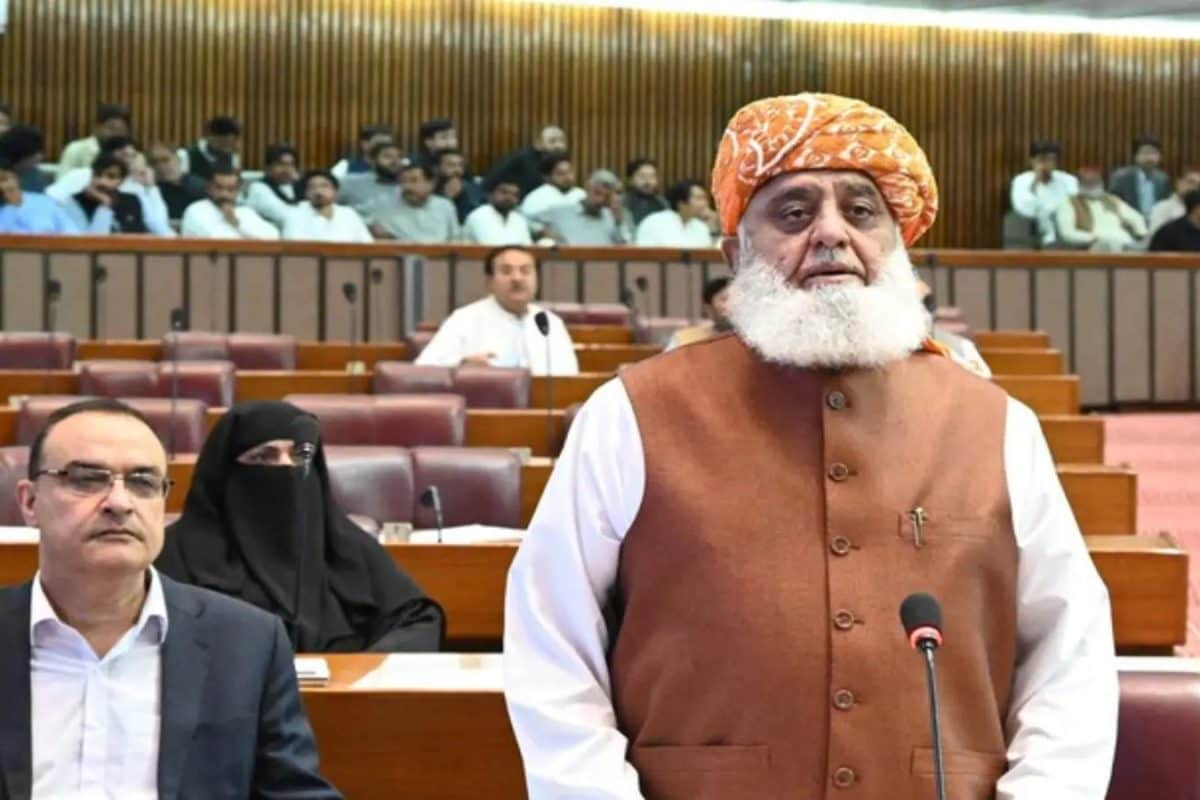
Deep State Firewall: Pakistan Military Using LeT Leadership To Neutralise Maulana Fazlur Rehman | Exclusive Reported By, Last Updated: July 23, 2026, 05:34 IST Maulana Fazlur Rehman has openly criticised Army Chief General Asim Munir's security policies and governance failures Rather than advocating for outright confrontation, the military-aligned alliance is pushing for a "soft stance" and strategic leniency towards Fazlur Rehman to neutralise his political momentum without provoking a wider confrontation. File image In a high-stakes move that underscores the deepening mullah-military nexus in Islamabad, state-backed cleric Hafiz Tahir Mahmood Ashrafi has held a high-profile meeting with Hafiz Talha Saeed—son of UN-designated terrorist Hafiz Saeed—at Markaz Quba. Intelligence sources reveal that the broad-daylight strategy session between the Pakistan Ulema Council Chairman and the Lashkar-e-Taiba (LeT) leadership was designed to orchestrate a coordinated response to Maulana Fazlur Rehman, who has openly criticised Army Chief General Asim Munir’s security policies and governance failures.
Rather than advocating for outright confrontation, the military-aligned alliance is pushing for a “soft stance" and strategic leniency towards Fazlur Rehman to neutralise his political momentum without provoking a wider confrontation. LeT figures at the meeting urged clerics to highlight positive aspects of the JUI-F chief’s career while firmly delivering a warning against speaking out against state institutions. By courting jihadist networks to manage traditional religious-political figures, Rawalpindi is using radical elements as a domestic firewall to shield the deep state from mounting political dissent. The open diplomacy between Tahir Ashrafi and the LeT leadership offers clear proof that Pakistan’s military establishment continues to mainstream designated terrorist cadres, treating them not just as external proxies but as embedded domestic political assets. Deploying extremist networks to contain figures like Fazlur Rehman exposes Rawalpindi’s underlying political vulnerability, demonstrating that when traditional political levers fail, the deep state relies on radical proxies to protect its authority and shape the national narrative News18 Newsletter Handpicked stories, in your inbox A newsletter with the best of our journalism submit Key Questions Answered How will this alliance impact Pakistan's political landscape?
The Pakistan military is reportedly using Lashkar-e-Taiba (LeT) leadership to counter Maulana Fazlur Rehman, who has criticized Army Chief General Asim Munir's policies. This strategy aims to neutralize Rehman's political momentum through leniency rather than direct confrontation. Could this strategy backfire on the Pakistan military? The Pakistan military's strategy of using Lashkar-e-Taiba (LeT) leadership to counter Maulana Fazlur Rehman could expose Rawalpindi's political vulnerability. What does this mean for regional stability? The Pakistan military is reportedly using Lashkar-e-Taiba (LeT) leadership to counter Maulana Fazlur Rehman, who has criticized Army Chief General Asim Munir's policies. About the Author Manoj Gupta Group Editor, Investigations and Security Affairs, Network18 First Published: July 23, 2026, 05:34 IST News world Deep State Firewall: Pakistan Military Using LeT Leadership To Neutralise Maulana Fazlur Rehman | Exclusive Disclaimer: Comments reflect users’ views, not News18’s.
 The BriefWire