Does Pouring Milk Into Rivers Pollute Them? Here's Why NGT Is Seeking Answers
Does Pouring Milk Into Rivers Pollute Them? Here's Why NGT Is Seeking Answers Written By, Last Updated: May 20, 2026, 13:17 IST Environmental experts have
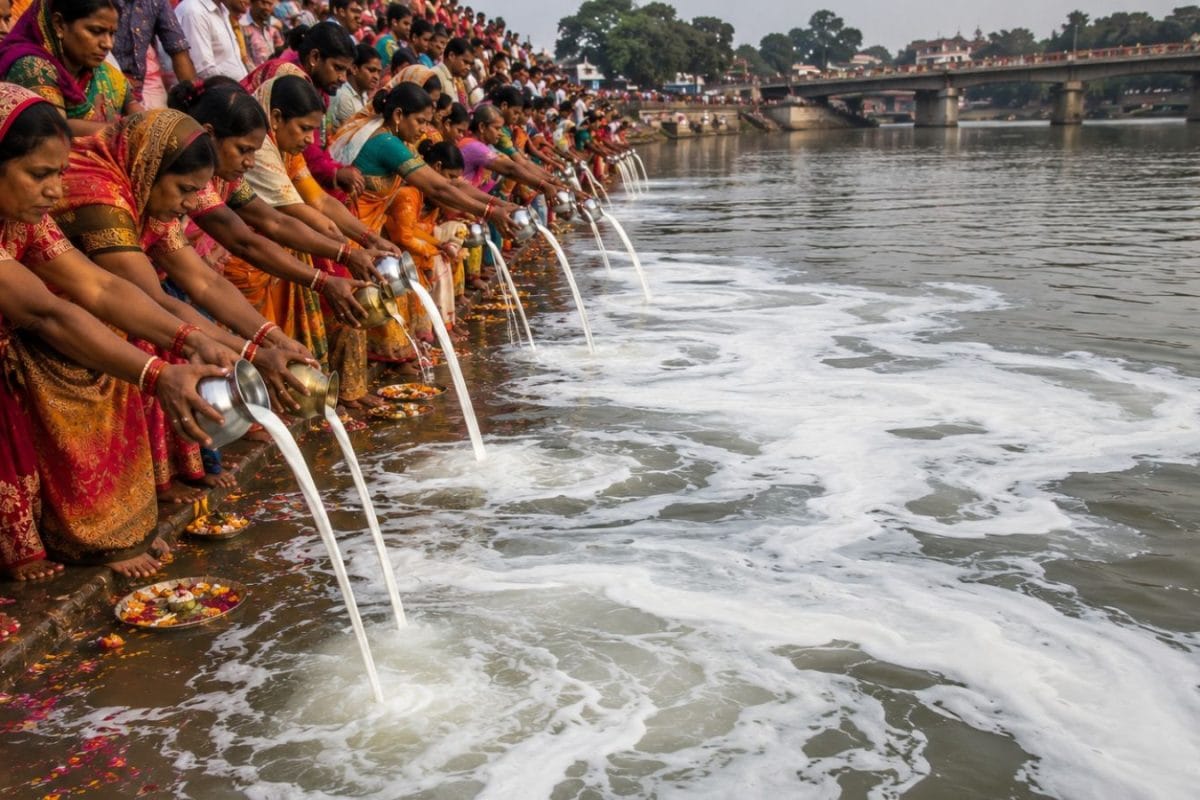
Does Pouring Milk Into Rivers Pollute Them? Here's Why NGT Is Seeking Answers Written By, Last Updated: May 20, 2026, 13:17 IST Environmental experts have long pointed out that even organic substances can pollute water bodies when introduced in large quantities Rapid Read Milk is not toxic like industrial chemicals, but it still adds organic load to water. (AI-Generated Image) A seemingly simple religious ritual has now reached India’s top environmental court. The Green Tribunal (NGT) has sought responses from the Central Pollution Control Board (CPCB) and Madhya Pradesh Pollution Control Board (MPPCB) on whether pouring milk into rivers amounts to pollution under environmental laws. The case centres around rituals performed in the Narmada River, where devotees often offer milk as part of religious ceremonies. It was triggered by a specific complaint alleging that nearly 11,000 litres of milk and 210 sarees were offered into the Narmada River during a religious event in Madhya Pradesh’s Sehore district earlier this year. The Tribune reported that the ritual, held in Satdev village in April at the end of a 21-day religious programme, went viral after videos showed a tanker emptying large quantities of milk directly into the river.
The footage sparked outrage online and renewed debate over whether religious offerings can amount to environmental pollution. The question before the tribunal is larger than one ritual: can organic offerings made for religious purposes still damage a river ecosystem? Why Could Milk Be Considered A Pollutant? At first glance, milk may not appear harmful because it is biodegradable and not a chemical contaminant. But environmental experts have long pointed out that even organic substances can pollute water bodies when introduced in large quantities. Milk contains fats, proteins and sugars. When these enter a river, microorganisms begin decomposing them. That decomposition process consumes dissolved oxygen in the water that fish and aquatic organisms need to survive. In environmental science, this is linked to something called Biological Oxygen Demand (BOD)—the higher the organic load dumped into water, the more oxygen gets depleted. If done repeatedly or at scale, it can stress aquatic ecosystems, especially in slow-moving or already polluted rivers. But Does One Ritual Really Matter? Probably not by itself. A small quantity of milk poured occasionally into a large flowing river is unlikely to create measurable pollution.
Rivers naturally dilute and break down limited organic waste. The bigger concern is cumulative impact. Environmental regulators are increasingly examining whether repeated mass offerings during festivals or rituals, involving milk, flowers, food, ashes, plastic packaging and idols, collectively burden rivers already struggling with sewage and industrial waste. That appears to be the context in which the NGT sought scientific input from pollution control authorities. Is This the First Time Religious Rituals Have Faced Environmental Scrutiny? No. Indian courts and pollution boards have repeatedly intervened in rituals affecting rivers and lakes. Authorities have previously regulated idol immersions, disposal of puja material, mass bathing events, and dumping of waste into water bodies. The NGT itself was established to address environmental disputes and applies principles such as “sustainable development" and the “polluter pays principle." The current case could therefore become part of a wider legal debate: where should the line be drawn between faith-based practices and ecological protection? So, Does Milk Actually Pollute Rivers? Scientifically, yes it can, especially in large quantities. Milk is not toxic like industrial chemicals, but it still adds organic load to water.
In environmentally stressed rivers, even biodegradable material can worsen oxygen depletion and water quality problems. At the same time, environmental impact depends heavily on scale, frequency, river flow and existing pollution levels. A symbolic offering by one person is very different from thousands of litres entering a river during large gatherings. That is precisely what the NGT now wants pollution control authorities to clarify: when does a ritual offering stop being symbolic and start becoming environmental damage? News18 Newsletter Handpicked stories, in your inbox A newsletter with the best of our journalism submit First Published: May 20, 2026, 13:17 IST News explainers Does Pouring Milk Into Rivers Pollute Them? Here's Why NGT Is Seeking Answers Disclaimer: Comments reflect users’ views, not News18’s. Please keep discussions respectful and constructive. Abusive, defamatory, or illegal comments will be removed. News18 may disable any comment at its discretion. By posting, you agree to our Terms of Use and Privacy Policy Loading comments...
 The BriefWire