Can India become the next semiconductor hub after Taiwan?
India is investing billions to build a domestic semiconductor industry as major industrial powers seek to diversify supply chains beyond Taiwan. More than 90% of
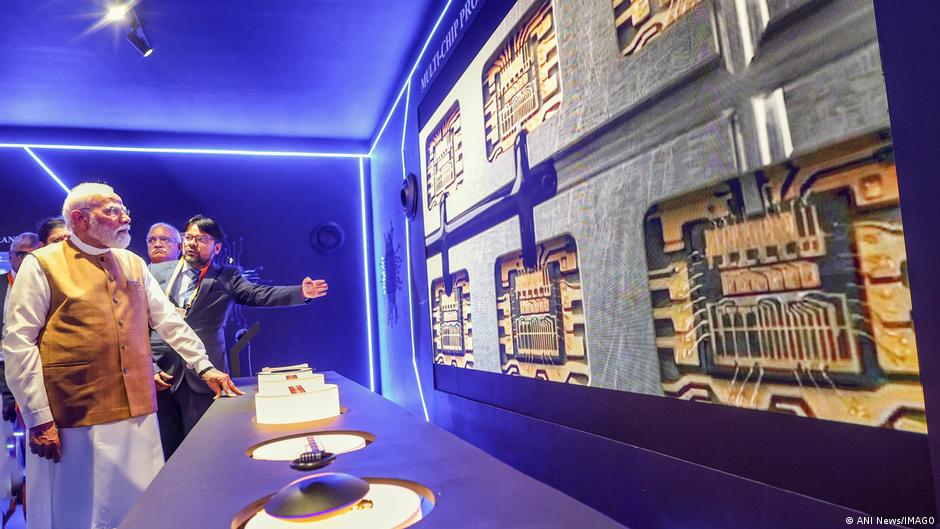
India is investing billions to build a domestic semiconductor industry as major industrial powers seek to diversify supply chains beyond Taiwan. More than 90% of the world's most advanced semiconductor chips are made in Taiwan, an island at the center of ongoing rivalry between the US and China. Any disruption to Taiwan's chip industry would likely send shockwaves through the global economy, with modern semiconductors used to make everything from smartphones and electric vehicles (EVs) to aircraft and military systems. During the COVID-19 pandemic, chip shortages forced automakers to halt production — exposing how dependent the world had become on a handful of manufacturers in East Asia. The result has been a global race to build more resilient semiconductor supply chains. The US, Japan, South Korea and also the EU have all launched multi-billion-dollar programs to attract chipmakers. India is now mounting its biggest push yet to become part of that network and enter the global arena as the next electronics powerhouse. India's chipmaking ambitions Last week, the Indian government approved a $13.2 billion (€11.4 billion) semiconductor program labeled Semicon 2.0. The project builds on the $9 billion India Semiconductor Mission (ISM) launched in 2021 and aims to develop the entire chip ecosystem — from chip design and fabrication to advanced packaging, specialty materials, equipment manufacturing and workforce training. US giant Micron Technology has established a semiconductor assembly and test facility in India Image: Jonathan Raa/Sipa USA/picture alliance Thousands of engineers working for companies such as Nvidia, AMD, Qualcomm and Texas Instruments already design some of the world's most sophisticated chips from research centers in the Indian cities of Bengaluru, Hyderabad and Noida.
But analysts warn India has been lagging behind in large-scale manufacturing. In the semiconductor industry, this is the area that brings both economic value and strategic importance. "India already has the expertise to design sophisticated semiconductor chips," said V Kamakoti, director of the Indian Institute of Technology in the city of Madras. "Indian engineers working for both domestic companies and multinational firms have successfully designed and delivered complex chips," Kamakoti told DW. "The bigger challenge is manufacturing them." So far, India's progress has been concentrated in chip packaging and testing rather than manufacturing the chips themselves. Kamakoti said the next step is building a domestic fabrication ecosystem that can turn those design strengths into large-scale production. Taiwan's AI surge fuels global power, amid growing risks To view this video please enable JavaScript, and consider upgrading to a web browser that supports HTML5 video Hopes of a $100 billion market by 2030 Micron Technology, a US memory chip maker, Kaynes Semicon and CG Semi, two Indian semiconductor assembly and packaging companies, have begun commercial production under the first phase of India's semiconductor program. Indian Minister for Electronics and Information Technology Ashwini Vaishnaw says the next phase is intended to move more of the semiconductor value chain into India. "Convincing global companies is no longer that difficult," said ISM chief executive Amitesh Kumar Sinha, pointing to the 12 approved fabrication and packaging projects, three of which are already in commercial production.
 The BriefWire