Germany's growing interest in Africa: A win for both sides?
Germany is deepening its footprint across Africa, as Foreign Minister Johann Wadephul embarks on his third trip to the continent in 2026. His top-level talks
Germany is deepening its footprint across Africa, as Foreign Minister Johann Wadephul embarks on his third trip to the continent in 2026. His top-level talks will focus on security, skills development and investment. Wadephul is currently visiting Nigeria as part of a multi-country trip across Africa, after a major stopover in Mauritania, and before making a call on South Africa. The trip follows up on prior journeys by Germany's top diplomat to Africa, with Wadephul having visited Ethiopia and Kenya in January, and Morocco in April. Wadephul says these repeated travels to the continent are a strategic necessity for Europe as part of Berlin's expanding engagement with Africa. "This is my third trip to Africa now. Why? Africa is a continent of both destiny and opportunity for Europe," he told reporters, highlighting the continent's economic potential while also emphasizing its persistent security challenges. In Nouakchott, Wadephul met with Mauritanian President Mohamed Ghazouani alongside several other German diplomats Image: Soeren Stache/dpa/picture alliance Mauritania: Security, migration and counterterrorism As the first destination on the current tour, Wadephul's stop in Mauritania focused on various interlinked issues such as security cooperation, migration management and regional stability. Geopolitical analyst Fidel Amakye Owusu believes that "Germany will go to Mauritania because of migration," highlighting the growing use of Atlantic migration routes by people desperate to reach Europe. In fact, the foreign minister's visit came just days after the UN refugee agency reported at least 144 deaths along this route near the Mauritanian coast.
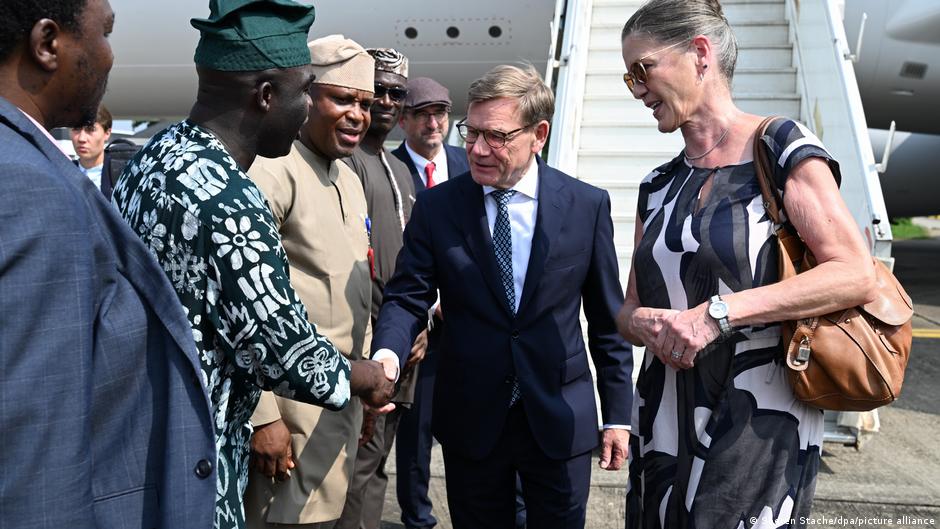
Wadephul's trip to the country, however, also focused on opportunities for deeper security cooperation with Mauritania; his delegation visited the Mourchidates, an all-female Islamic spiritual guide group trained and deployed by the state to counter extremism. DW's Silja Fröhlich, who accompanied Wadephul on the trip, noted that the foreign minister's interaction with the Mourchidates women was one of the main highlights: "In Mauritania, he was visibly moved by women working with the UN to prevent extremism and violence — women who, despite living in a deeply patriarchal society and often carrying personal ties to the very conflict they are confronting, are determined to protect their communities," she explained. Support for such a grassroots initiative is also a reflection of Germany's intent on bolstering community‑based approaches to preventing radicalization. Germany hopes to intensify its involvement — and investments — in Nigeria Image: Soeren Stache/dpa/picture alliance Nigeria: Economic partnership and youth‑driven innovation The second leg of the trip took Wadephul to Nigeria, where he met with various entrepreneurs, creatives, influencers, filmmakers and students. "We are looking for new global partners. This is the very reason that I am here: that we are looking to Africa and to the countries in Africa. I view Nigeria as some kind of a powerhouse, a striving nation, growing faster and faster and with a lot of creative ideas," the foreign minister commented, describing Nigeria as an African powerhouse, particularly in the creative industries.
 The BriefWire