Border peace prerequisite for normal ties between India and China: Jaishankar
External Affairs Minister S Jaishankar told Chinese Foreign Minister Wang Yi in Manila on Wednesday that peace and tranquillity in the border areas are a
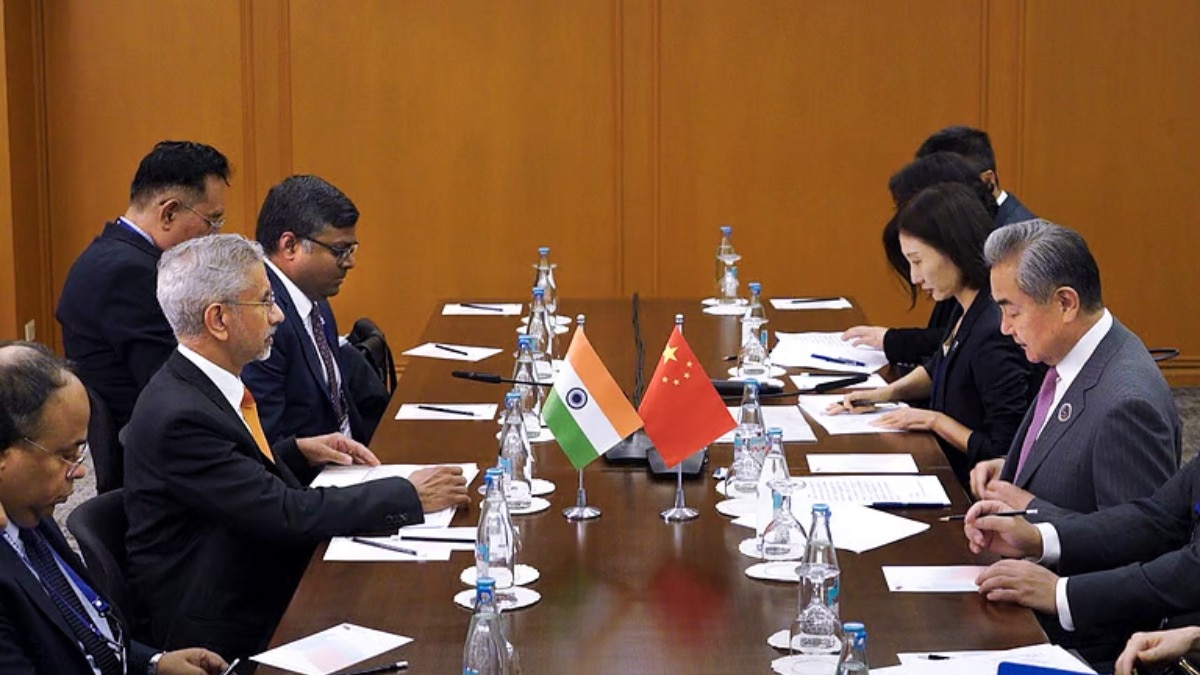
External Affairs Minister S Jaishankar told Chinese Foreign Minister Wang Yi in Manila on Wednesday that peace and tranquillity in the border areas are a "pre-requisite" for normal ties between India and China, and that the relationship must be based on mutual respect, mutual interest and mutual sensitivity. At the meeting, Jaishankar also raised India's concerns over market access, trade imbalance and uncertainty in supply chains. Read Full Story The two ministers were in the Philippine capital for high-level discussions under the Association of Southeast Asian Nations framework, as New Delhi and Beijing continue steps to improve relations after the prolonged eastern Ladakh border standoff. In his opening remarks, Jaishankar said, "We believe that a stable and cooperative relationship can best be developed on the basis of mutual respect, mutual interest and mutual sensitivity." He added, "Such a relationship can make a valuable contribution to a multi-polar Asia and a multi-polar world." Stressing the need for stability along the Line of Actual Control, he said, "Peace and tranquillity in the border areas is obviously the pre-requisite for normal ties.
Since October 2024, both sides have engaged to ensure that important objective." He added that this would need constant attention and that relevant mechanisms must be given full support and strong encouragement. Jaishankar also said differences between the two countries should not turn into disputes. "It is natural that as two large and important nations, and that too proximate neighbours, India and China would have their own particular interests," he said. "That is why our leaders had agreed that differences should not become disputes. It is the responsibility of diplomacy to properly manage them." On economic issues, he said, "Fair market access and a trade balance ranks high in that regard. There are also concerns about predictability of supply chains. Facilitating both official and people-to-people exchanges merit our attention." He added that both sides also needed to agree on meetings of various mechanisms and platforms in line with mutual priorities.
India and China have taken a series of steps in recent months to normalise ties that were hit by the more than four-year military standoff in eastern Ladakh. After diplomatic and military talks, the two sides withdrew troops from several friction points along the LAC. In October 2024, they finalised a disengagement pact for Depsang and Demchok, the last two friction points in eastern Ladakh. Days later, Prime Minister Narendra Modi and Chinese President Xi Jinping met in Kazan and took a number of decisions to improve ties. In August last year, Modi travelled to Tianjin for the SCO summit and held extensive talks with Xi on the sidelines, where he said India was committed to advancing ties on the basis of mutual trust, respect and sensitivity. Referring to those developments, Jaishankar said, "Since the meeting of our leaders in Kazan in October 2024, relations between India and China have been gradually normalising.
 The BriefWire