From Boat Club To Jantar Mantar: How Delhi's Protest Map Changed Over The Decades
From Boat Club To Jantar Mantar: How Delhi's Protest Map Changed Over The Decades Written By, Last Updated: July 22, 2026, 13:30 IST The evolution
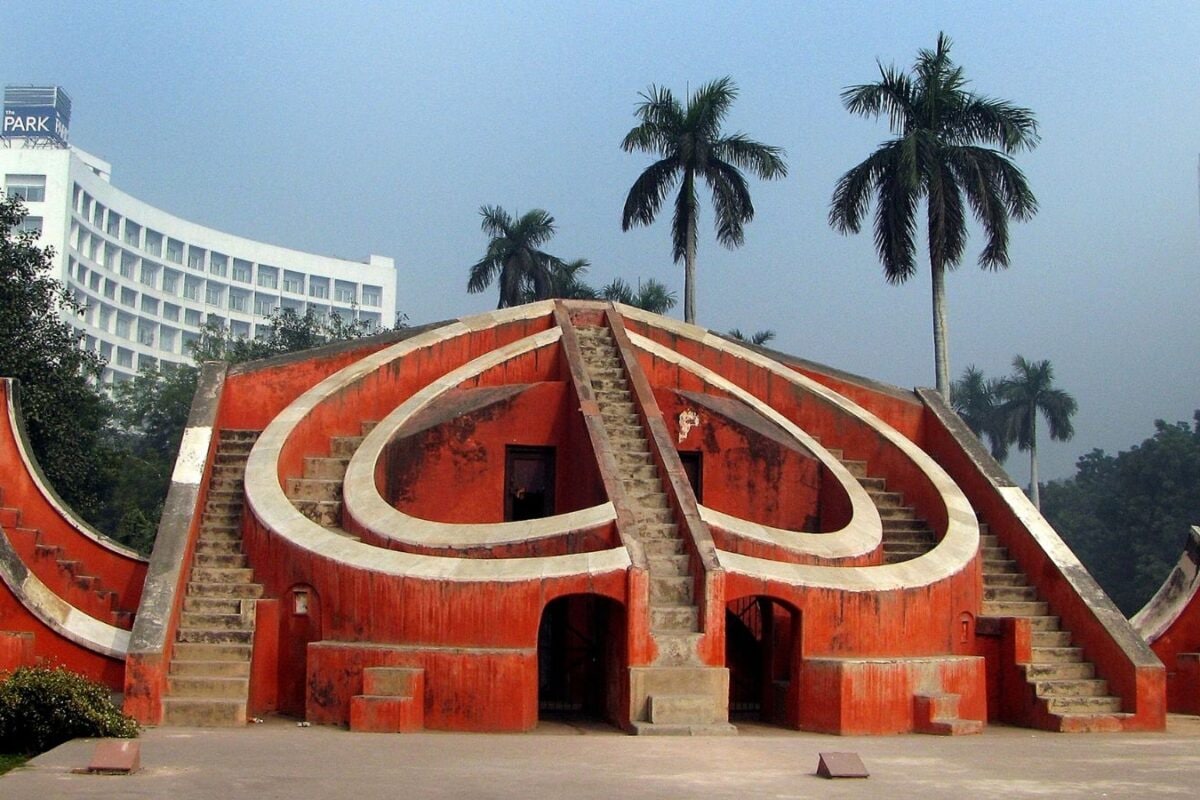
From Boat Club To Jantar Mantar: How Delhi's Protest Map Changed Over The Decades Written By, Last Updated: July 22, 2026, 13:30 IST The evolution from Boat Club to Jantar Mantar shows how the Indian state has sought to balance protecting the democratic right to protest while securing an administrative zone Rapid Read Jantar Mantar was constructed in 1724 by Maharaja Sawai Jai Singh II as an astronomical observatory to study celestial movements using giant stone instruments. (AFP) For generations, if Indians wanted to make the government listen, they came to Delhi. The capital has long been the country’s political pressure valve, where everyone—from freedom fighters and farmers to students, pensioners, anti-corruption activists and Olympic medallists—have gathered to demand accountability. But while Delhi has remained the destination, the geography of dissent has steadily changed. There was a time when protests unfolded on the sprawling lawns of Boat Club, directly opposite the corridors of power on Rajpath (now Kartavya Path). Today, most demonstrations are confined to a narrow stretch outside the 18th-century astronomical observatory at Jantar Mantar, a site that was never meant to be political. The recent resurgence of Jantar Mantar, with activist Sonam Wangchuk’s month-long protest and the Cockroach Janta Party (CJP) movement once again drawing crowds, has revived an old question: How did Delhi’s principal protest site move from Boat Club to Jantar Mantar? When Delhi’s Streets Became India’s Political Stage Delhi’s association with political protest predates Independence. An article in The Times of India recalls how demonstrations against the Rowlatt Act in 1919, protests over the INA trials at the Red Fort in 1945, Jayaprakash Narayan’s call for “Total Revolution" from Ramlila Maidan in 1975, the Mandal Commission protests, and later Anna Hazare’s anti-corruption movement all turned different parts of the capital into symbols of resistance. Boat Club: The OG Protest Square Before the 1990s, there was no location more politically significant than the Boat Club lawns near India Gate. Stretching along Rajpath between India Gate and Vijay Chowk, the venue offered what every protest movement sought: visibility. Demonstrators gathered within sight of Parliament, Rashtrapati Bhavan and the country’s most important ministries.
Television cameras had unobstructed views, and governments could not easily ignore massive crowds assembled at the heart of Lutyens’ Delhi. Virtually every major national agitation before the 1990s gravitated towards Boat Club because of this proximity to power. The Rally That Changed Everything The turning point came in October 1988. More than five lakh farmers, led by Bharatiya Kisan Union leader Mahendra Singh Tikait, occupied the Boat Club lawns and Rajpath for nearly a week, demanding higher sugarcane prices and relief on electricity and water charges. The demonstration effectively paralysed central Delhi. The sheer scale of the mobilisation convinced authorities that such gatherings near Parliament and Rashtrapati Bhavan posed growing administrative and security challenges. The protest fundamentally altered how governments viewed demonstrations in the capital. 1993: The State Moves Dissent Five years later came the decisive shift. In 1993, authorities prohibited large public rallies at Boat Club, citing security concerns and the difficulty of managing massive gatherings so close to Parliament, North Block, South Block and Rashtrapati Bhavan. But Boat Club’s closure wasn’t merely about crowd control; it reflected a broader effort to create greater distance between mass protests and the seat of executive power. The designated protest venue then became Jantar Mantar Road. The new site remained centrally located and easily accessible, yet was significantly easier for police to regulate than the expansive lawns of Rajpath. Retired IAS officer Ramesh Negi told The New Indian Express that choosing Jantar Mantar was a “pragmatic decision". “This place is in the heart of the city… It has higher visibility; it is convenient in terms of transportation and even for the authorities to keep a vigil." An Observatory Becomes India’s Protest Address Jantar Mantar was constructed in 1724 by Maharaja Sawai Jai Singh II as an astronomical observatory to study celestial movements using giant stone instruments. It was never intended to host political demonstrations. But its transformation into India’s most recognised protest venue was entirely the product of administrative decisions made centuries later. Over time, the observatory acquired an entirely different identity. Its giant sundials became the backdrop to hunger strikes, dharnas, candlelight vigils and demonstrations by groups too small for Ramlila Maidan but determined to remain visible.
 The BriefWire