Did You Know That Manhole Covers In This Indian City Are Shaped Like Maps?
Did You Know That Manhole Covers In This Indian City Are Shaped Like Maps? Published By, Last Updated: July 22, 2026, 12:16 IST In 2007
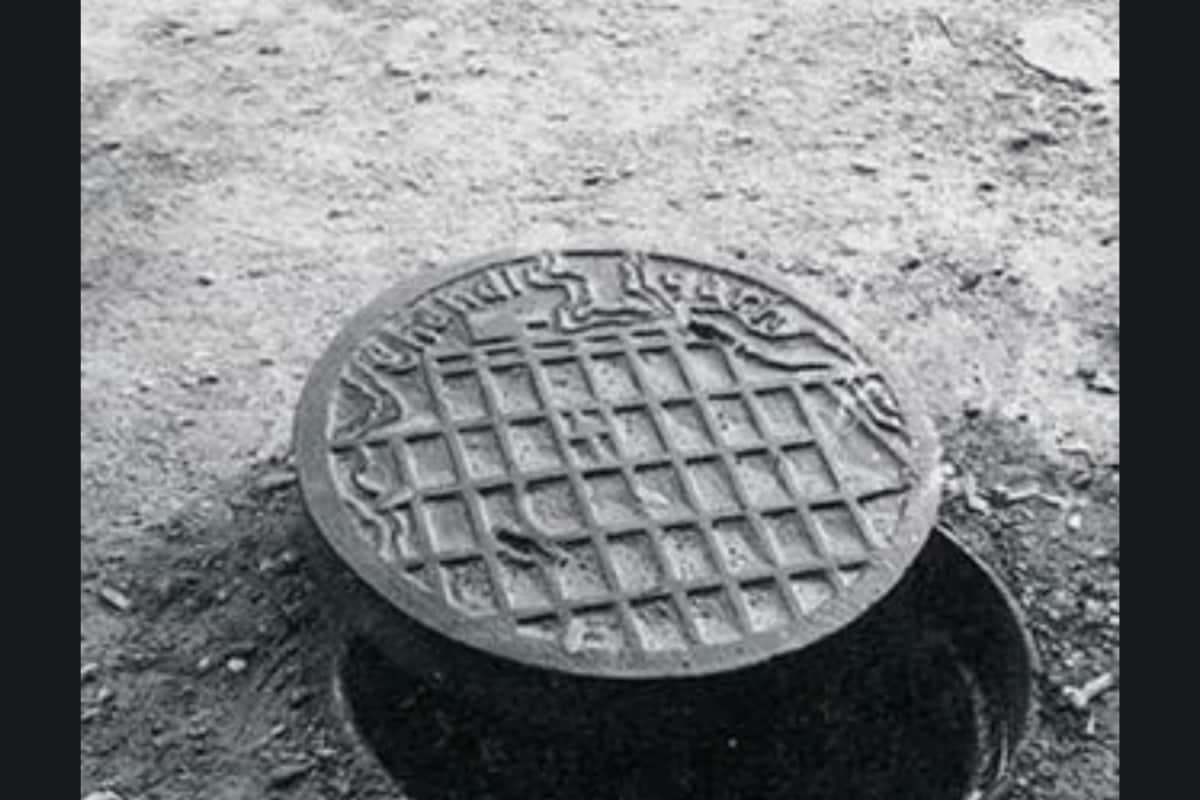
Did You Know That Manhole Covers In This Indian City Are Shaped Like Maps? Published By, Last Updated: July 22, 2026, 12:16 IST In 2007, an original Chandigarh manhole cover appeared at an art auction in Paris, selling to a private collector for over $21,000 USD (approx. Rs 17 Lakhs). Roughly 2,000 of these custom-designed cast-iron covers were manufactured in local Punjabi foundries and installed across the city. If you walk down the tree-lined avenues of Chandigarh and look closely at the rusted iron beneath your feet, you’ll notice something strange: the manhole covers aren’t decorated with generic geometric lines. Instead, they feature a detailed grid pattern flanked by flowing curves. What you are looking at is a literal map of Chandigarh- cast in solid iron over 70 years ago. Today, these unassuming street fixtures are considered rare design masterpieces, causing them to be targeted by art thieves and sold for tens of thousands of dollars at luxury auction houses in Paris and New York. Here is the story behind India’s most famous underground utility lids. Why Do Chandigarh Manholes Have Maps On Them? In the early 1950s, following the Partition of India, Prime Minister Jawaharlal Nehru wanted to build a futuristic, modern city to serve as the new capital of Punjab.
He hired legendary Swiss-French modernist architect Le Corbusier, along with his cousin Pierre Jeanneret and architects Jane Drew and Maxwell Fry, to design Chandigarh from scratch. Le Corbusier believed in total design harmony- meaning everything in the city, from government palaces down to the street furniture and storm drains, had to follow a unified aesthetic. When Jeanneret was tasked with designing the municipal drainage covers, he didn’t just pick a standard factory pattern. He created a functional, industrial diagram of the city itself The Rectangular Grid: Represents Chandigarh’s iconic, self-contained Sectors (Sector 1 to Sector 30 in the original phase). The Curving Lines: Depict Sukhna Lake at the top and the seasonal rivulets (Patiali Rao and Sukhna Choe) that form the natural eastern and western borders of the city. The Directional Flow: The lines were cast to indicate the direction in which rainwater drained away from the nearby Shivalik hills. Roughly 2,000 of these custom-designed cast-iron covers were manufactured in local Punjabi foundries and installed across the city. Why Are Chandigarh’s Manholes Considered Art Pieces? For nearly 50 years, the covers sat in the dirt and asphalt, completely ignored by everyday commuters.
But in the late 1990s and early 2000s, the global art world experienced a massive boom in demand for Mid-Century Modernist design. Foreign art dealers began visiting Chandigarh, realizing that the city was essentially an open-air museum filled with original 1950s furniture, light fixtures and street items designed by Le Corbusier and Jeanneret. Soon, original manhole covers started mysteriously disappearing from city streets at night. In 2007, an original Chandigarh manhole cover appeared at an art auction in Paris, selling to a private collector for over $21,000 USD (approx. Rs 17 Lakhs). Over the next decade, similar lids surfaced at prestigious auction houses like Sotheby’s and Christie’s in London and New York, routinely fetching anywhere from $10,000 to $25,000. What Happened Next? The realization that municipal property was being stolen and smuggled abroad sparked widespread outrage among local heritage activists in India. In response to the international thefts, the Indian Ministry of Home Affairs placed a strict ban on the unauthorized export of any Le Corbusier- or Jeanneret-designed items from Chandigarh, classifying them as protected cultural heritage. The Chandigarh Municipal Corporation systematically removed most of the remaining original iron covers from public roads, replacing them with generic concrete slabs to stop thieves.
 The BriefWire