How a bloodied Rahul Gandhi gave Congress the image it wanted
It is no secret that politics thrives on symbolism and optics. On Tuesday, the dramatic scenes that played out outside Prime Minister Narendra Modi's residence
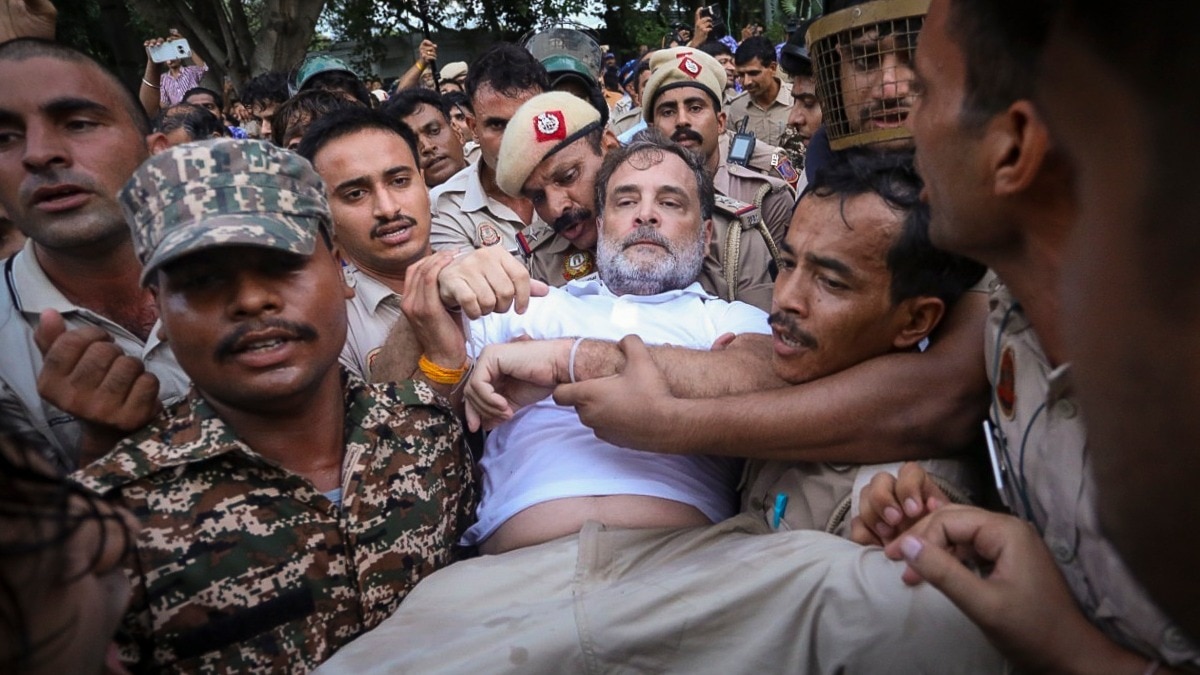
It is no secret that politics thrives on symbolism and optics. On Tuesday, the dramatic scenes that played out outside Prime Minister Narendra Modi's residence delivered both. Images of Leader of the Opposition Rahul Gandhi being dragged by police, bleeding from the nose, his clothes soiled, and one shoe lost in the tussle before being detained dominated the news cycle. It gave the Congress exactly what it wanted - reclaiming the opposition space on the paper leak issue after the massive Cockroach Janta Party (CJP) protests seized the spotlight. Read Full Story Senior journalist Rajdeep Sardesai opined that Rahul's detention is likely to be seen as a political self-goal for the Modi government. On Tuesday, Rahul and senior Congress leaders, including Priyanka Gandhi, were staging a peaceful protest outside 7, Lok Kalyan Marg, over the brutal police crackdown on protesting youngsters before they were dragged and detained. "Instead of allowing a peaceful protest or allowing a discussion in Parliament, the authorities have handed the Congress perhaps exactly what it wanted - the image of an opposition leader being stopped from raising questions of public concern," Sardesai said.
Rahul Gandhi suffered a nosebleed during the police action on Tuesday RAHUL GANDHI'S FLASH PROTEST NEAR PM'S HOUSE Yes, the scenes were unprecedented. No Leader of Opposition has perhaps protested outside the prime minister's house before. In fact, the last such protest outside the prime minister's residence happened way back in 1999 after the IC-814 hijack. Then, families of the hostages staged a sit-in outside Atal Bihari Vajpayee's residence, forcing the government to engage with the hijackers. Now, whether Rahul's flash protest outside a high-security zone like the PM's residence was justified is a matter of debate. Rahul said it was important to bring the students' concerns to national spotlight as the government had "no interest" in holding a debate on exam paper leaks. The government justified the crackdown citing security concerns. In politics, a single picture can shape a narrative. For the Congress, Tuesday's visuals did exactly that. In one frame, Rahul was seen lying on the road as police personnel attempted to lift him. The next moment, the Congress MP, bleeding from his nose, is seen being held by both arms and legs as police tried to forcibly remove him.
"Democracy in India is happening right now," Rahul said, taunting the government. Blood spots were also seen on his white T-shirt as he was forced into a police bus. "Sometimes governments strengthen their critics by reacting more aggressively than the situation demands," Sardesai further said. WHY RAHUL TOOK PROTEST AT PM'S DOORSTEP? For the Congress, the developments gave it ammo to reclaim the opposition space on the issue. The Monday protests reflected there was considerable anger among a section of the youth against the government. Ever since the Cockroach Janta Party began its protest at Jantar Mantar last month, the Congress has had reservations in supporting it. The party didn't want to burn its fingers amid speculation that the CJP was propped up by the Aam Aadmi Party (AAP). It was only last week that Congress MP Pawan Khera went to the protest site to meet activist Sonam Wangchuk, who has been on hunger strike for the past three weeks. Rahul Gandhi, however, has stayed away from the CJP protest. While the CJP agitation gained momentum, the Congress's own campaign, 'Chhatron Ki Goonj', lost its steam as Rahul extented its foreign trip.
 The BriefWire