Natanz To Pickaxe Mountain: Inside Tehran's Underground Nuclear Network At The Heart Of US-Iran War
Natanz To Pickaxe Mountain: Inside Tehran's Underground Nuclear Network At The Heart Of US-Iran War Published By, Last Updated: July 22, 2026, 09:51 IST Reports
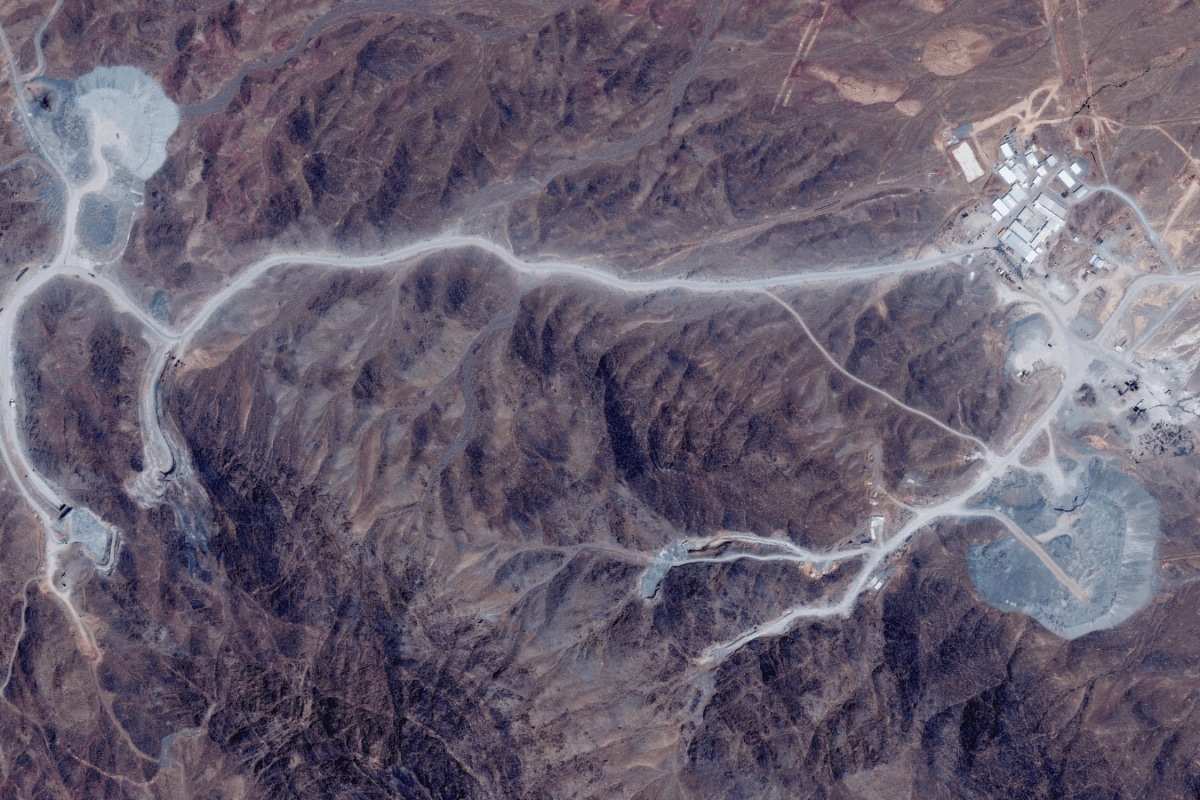
Natanz To Pickaxe Mountain: Inside Tehran's Underground Nuclear Network At The Heart Of US-Iran War Published By, Last Updated: July 22, 2026, 09:51 IST Reports have emerged that Iran has shifted thousands of uranium-enrichment centrifuges into the heavily fortified Pickaxe Mountain complex. Rapid Read A satellite view shows tunnel entrances at Pickaxe Mountain, of the Natanz nuclear facility, near Natanz, Iran. (Source: Reuters) Iran’s nuclear programme has never revolved around a single facility. Over the past two decades, Tehran has built a sprawling network of enrichment plants, uranium conversion centres and underground bunkers – many of them carved into mountains or buried deep beneath layers of rock to survive airstrikes. That network is once again under intense global scrutiny after reports emerged that Iran has shifted thousands of uranium-enrichment centrifuges into the heavily fortified Pickaxe Mountain complex, raising concerns in US and Israel that Tehran may be attempting to preserve or rebuild key elements of its nuclear programme following months of attacks. The reports, first published by The Wall Street Journal, cited Israeli intelligence assessments claiming that thousands of centrifuges have been moved into tunnels beneath Pickaxe Mountain, also known as Mount Kolang Gaz La, near the Natanz nuclear complex. Iran has not confirmed the claim, and the International Atomic Energy Agency (IAEA) has not had access to inspect the facility. The development comes as the United States and Israel continue military operations against Iran, with President Donald Trump publicly warning that Pickaxe Mountain itself could become a future military target. There have been reports that the site is among the options under discussion as Washington weighs further action against Iran’s nuclear infrastructure. Here’s a look at the key sites that make up Iran’s underground nuclear network. Natanz: Iran’s Main Uranium Enrichment Hub Located around 220 kilometres southeast of Tehran, Natanz is the centrepiece of Iran’s uranium enrichment programme. The complex houses the Fuel Enrichment Plant (FEP), where thousands of gas centrifuges enrich uranium, alongside the Pilot Fuel Enrichment Plant used to test more advanced centrifuge models.
Over the years, Iran has installed several generations of centrifuges here, including the IR-1, IR-2m, IR-4 and IR-6 models. Natanz has repeatedly been targeted in covert and military operations. It was damaged by the Stuxnet cyberattack, widely attributed to the US and Israel, suffered sabotage explosions in 2020 and 2021, and became one of the principal targets during the US-Israel military campaign against Iran. During the ongoing conflict, both Israeli and later US strikes hit Natanz. President Trump confirmed that the United States targeted Natanz along with Fordow and Isfahan during coordinated attacks intended to degrade Iran’s nuclear capabilities. While Washington initially claimed severe damage, subsequent intelligence assessments suggested that although infrastructure suffered major damage, Iran’s overall nuclear programme was not eliminated. Fordow: The Mountain Fortress If Natanz is the heart of Iran’s enrichment programme, Fordow is its most heavily protected site. Situated near the holy city of Qom, Fordow was secretly built inside a mountain and publicly acknowledged by Iran only after Western intelligence agencies exposed it in 2009. The enrichment halls are buried roughly 80-90 metres below rock, making them among the hardest military targets in the world. The facility has long been used for enriching uranium to higher purity levels than Natanz. Because of its depth, Fordow became the primary target for America’s GBU-57 Massive Ordnance Penetrator (MOP), commonly known as the bunker-buster bomb. During the conflict, US B-2 stealth bombers used these weapons against Fordow in an attempt to destroy underground enrichment infrastructure. While satellite imagery showed damage to ventilation shafts and tunnel entrances, the full extent of destruction underground remains disputed. Isfahan: Where Uranium Becomes Nuclear Fuel Unlike Natanz and Fordow, Isfahan is not primarily an enrichment facility. Instead, the Isfahan Nuclear Technology Centre performs several critical functions within Iran’s nuclear fuel cycle, including uranium conversion, fuel fabrication, research reactors and laboratories. Before uranium can be enriched, it must first be converted into uranium hexafluoride gas (UF6), the feedstock used in centrifuges.
 The BriefWire