India's debt-to-GDP ratio eases to 58.2% in FY26
Live Events as a Reliable and Trusted News Source Addas a Reliable and Trusted News Source Add Now! (You can now subscribe to our (You
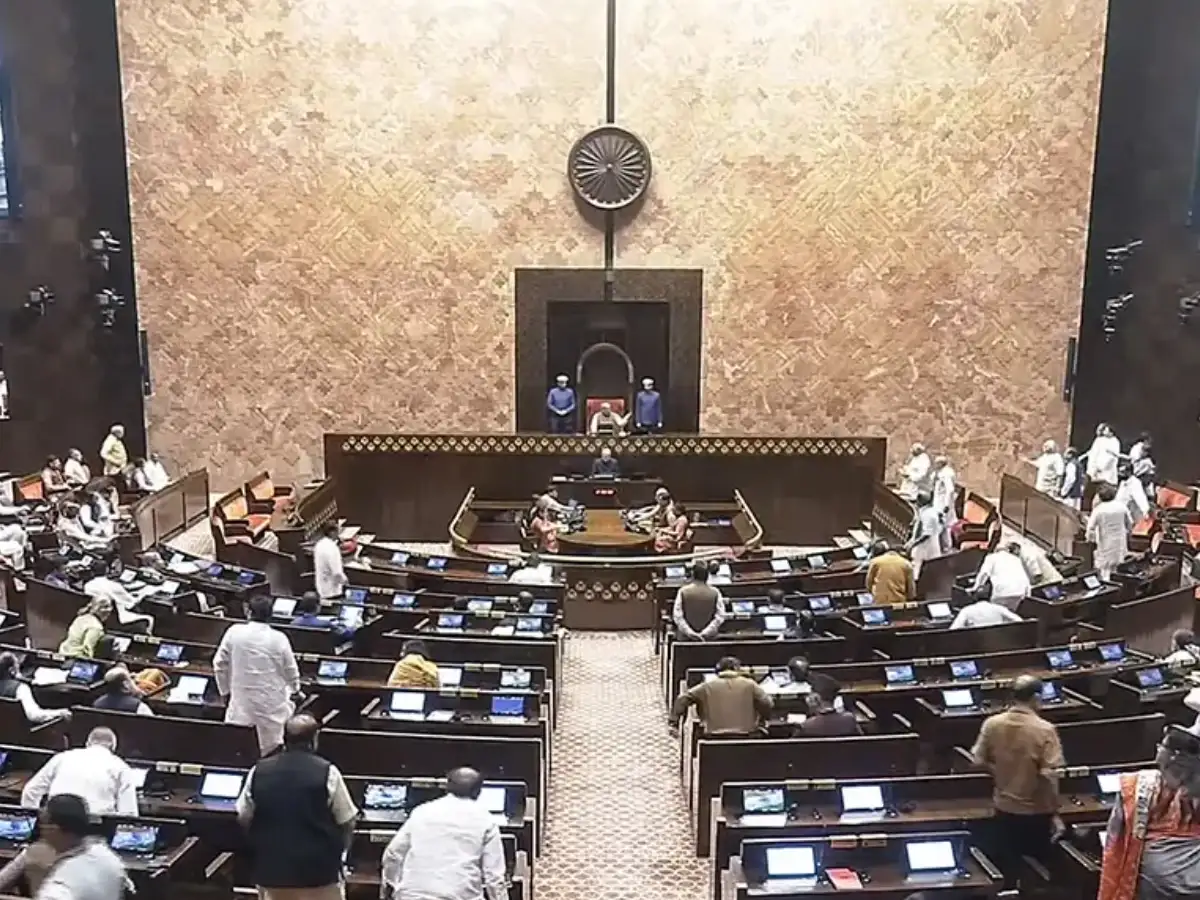
Live Events as a Reliable and Trusted News Source Addas a Reliable and Trusted News Source Add Now! (You can now subscribe to our (You can now subscribe to our Economic Times WhatsApp channel New Delhi: The country's debt-to-GDP ratio has moderated to 58.2 per cent (provisional) in FY26 as against 58.5 per cent in the previous financial year, Parliament was informed on Tuesday.As of March 31, 2026, the total debt of the Centre stood at Rs 201.17 lakh crore (provisional), Minister of State for Finance Pankaj Chaudhary said in a written reply to the Rajya Sabha.Post-Covid, the ratio of debt service (interest payment) to revenue receipts has broadly declined from 41.6 per cent in 2020-21 to 37.6 per cent in 2025-26 (provisional), being indicative of the government's ability to finance requirements of debt servicing through revenue receipts, he said.It may also be mentioned that in BE 2026-27, the effective capital expenditure of Rs 17.15 lakh crore is higher than fresh debt receipts (fiscal deficit) of Rs 16.96 lakh crore of the government, he said.This implies that borrowings are entirely used for creation of assets, he said.Replying to a question by Independent member Dilip Kumar Ray, the minister said the debt burden of the Union government is projected at Rs 228.27 lakh crore in FY27 as against Rs 211.06 lakh crore in FY26.Liabilities as per the FRBM definition of debt are net of cash balance and cash investment.Replying to another question, Chaudhary said the central government's capital expenditure during FY21-FY26 was Rs 44.03 lakh crore.The increase in capital expenditure as a percentage of GDP has led to an increase in infrastructure development, including roads, railways, urban infrastructure, energy and digital connectivity, he said.The increased capex has led to improved logistics efficiency, generated employment and crowded-in private investment, he said.The government continues to prioritise effective capital expenditure through budgetary allocation towards infrastructure and support states and UTs through the Scheme for Special Assistance to States for Capital Investment (SASCI) to incentivise capital expenditure, he said.The government's steps to accelerate effective capital outlay in the coming years include focus on initiatives such as the PM GatiShakti Master Plan, the Logistics Policy, and the PM GatiShakti Public Platform, he said.These have strengthened integrated planning, inter-agency coordination and technology-enabled project implementation, thereby enhancing the efficiency and quality of infrastructure development, he added.
 The BriefWire