'Sri Lanka, Bangladesh, Now Delhi?' Congress March Towards PM Residence Sparks Debate Over Protest Rights & Security
'Sri Lanka, Bangladesh, Now Delhi?' Congress March Towards PM Residence Sparks Debate Over Protest Rights & Security Published By, Last Updated: July 21, 2026, 19:39
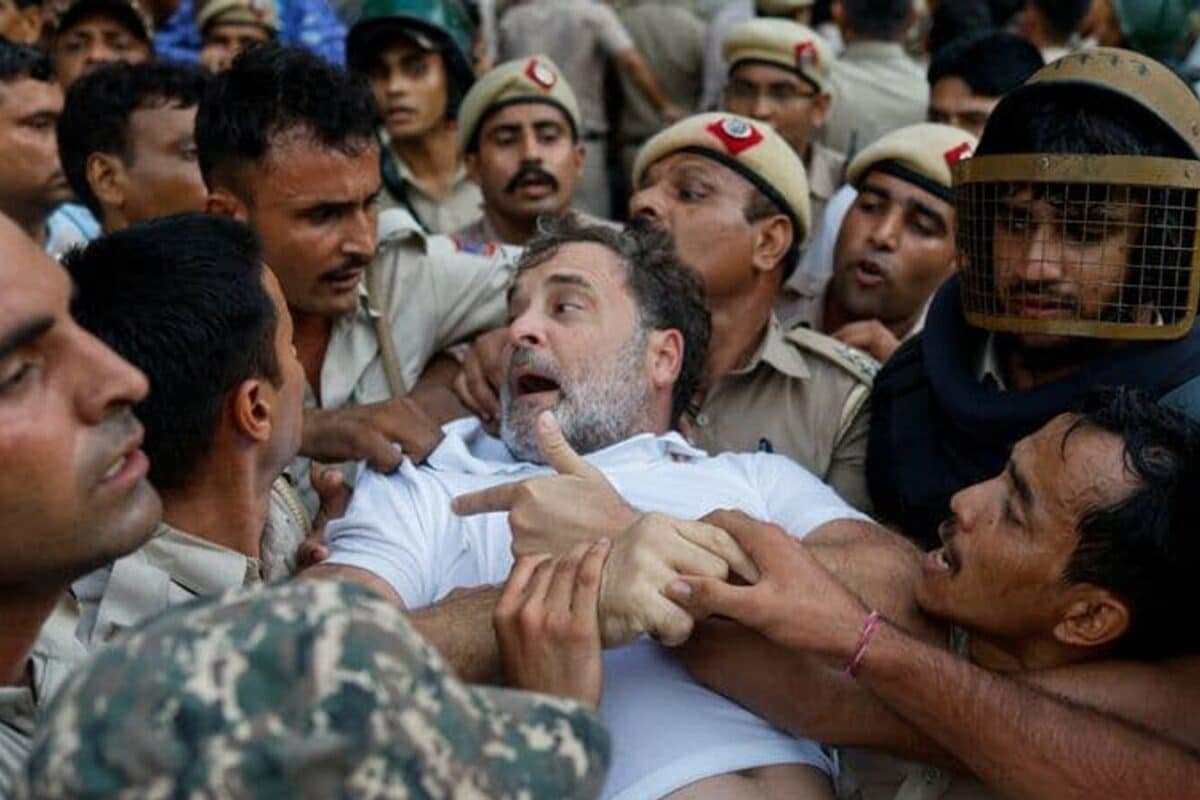
'Sri Lanka, Bangladesh, Now Delhi?' Congress March Towards PM Residence Sparks Debate Over Protest Rights & Security Published By, Last Updated: July 21, 2026, 19:39 IST Congress leaders, including Rahul Gandhi and Priyanka Gandhi Vadra, were removed from near Prime Minister Narendra Modi’s residence on Tuesday after staging a protest Rahul Gandhi is detained by police during a sit-in protest outside Prime Minister Narendra Modi's residence, demanding accountability for police action against students in Delhi. Image/Reuters As political tensions escalate, a major controversy has erupted following the Congress-led opposition’s decision to direct demonstration marches towards the Prime Minister’s official residence. The tactical shift away from designated protest sites like Parliament has sparked intense debate over the fine line between democratic dissent and national security risks. The matter snowballed as Congress leaders, including Rahul Gandhi and Priyanka Gandhi Vadra, were removed from near Prime Minister Narendra Modi’s residence, Seva Teerth at 7, Lok Kalyan Marg, on Tuesday after staging a protest. The move has drawn direct comparisons from some social media users to recent regional crises, where mass crowds stormed presidential and prime ministerial residences in Sri Lanka and Bangladesh during periods of severe political and economic instability.
While organisers maintain that the march is a peaceful exercise of constitutional rights, the decision to target one of the nation’s highest-security zones has raised serious concerns regarding safety, intent, and public order. Dissent versus Security: The Growing Debate Social media users and political analysts have expressed sharp criticism of the protest trajectory, warning against the normalisation of marching on key executive residences. Critics argue that challenging a government must occur through democratic institutions, parliamentary debates, and electoral processes rather than high-stakes physical confrontations at executive premises. Key concerns raised by observers include Precedent and Stability: Fears that targeting executive residences risks mirroring the chaotic government collapses seen elsewhere in South Asia. Security Escalation: Pushing large crowds toward restricted, high-security zones creates unnecessary friction with law enforcement and increases the potential for violence. Institutions vs Street Power: A growing sentiment that grievances should be resolved within legislative frameworks rather than through aggressive street mobilisation. The Right to Protest and Its Boundaries On the other side of the discourse, opposition leaders and civil liberties advocates defend the march as a necessary expression of public frustration.
 The BriefWire