How India's 'Cockroach' movement challenges PM Modi
What started as a satirical protest against exam leaks in India has grown into a wider movement voicing young Indians' anger over jobs and education
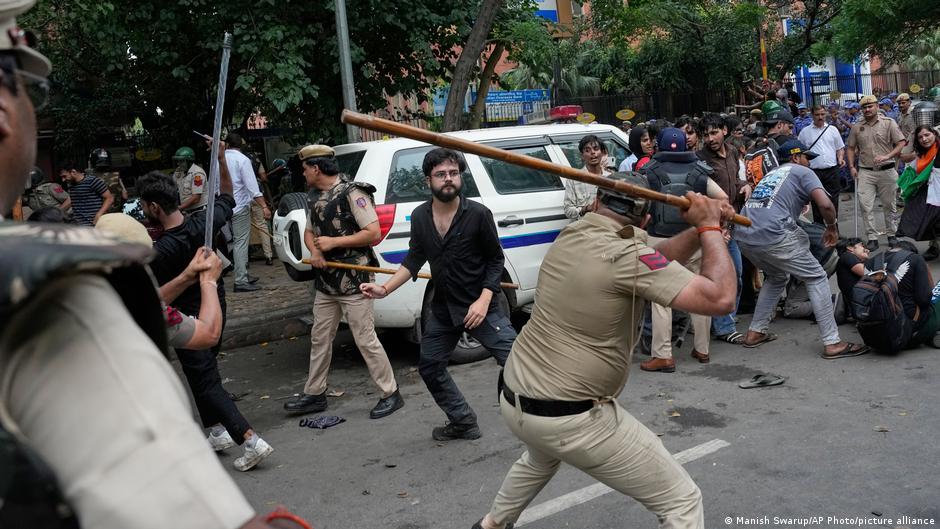
What started as a satirical protest against exam leaks in India has grown into a wider movement voicing young Indians' anger over jobs and education. Riot police fired tear gas and used batons in New Delhi as tens of thousands of supporters of the satirical Cockroach Janta Party (CJP) marched towards India's Parliament on Monday (July 20). Police in the Indian capital said 60 protesters and 118 police officers were injured in the clashes between demonstrators and security forces. Mobile internet was suspended in parts of the city, including around the Jantar Mantar protest site, during the violence. Protesters are demanding the resignation of Education Minister Dharmendra Pradhan. Earlier this year, authorities canceled the high-stakes NEET medical entrance exam over a leaked question paper, affecting millions of students and sparking outrage across India. What is India's Cockroach Janta Party? The CJP began as an online campaign in May and rapidly evolved into a Gen Z street movement, giving a voice to a generation frustrated by unemployment, shrinking opportunities and a failing education system. The protesters attempted to march toward India's Parliament Image: Manish Swarup/AP Photo/picture alliance The youth-led "Cockroach" party is now posing an unexpected challenge for Prime Minister Narendra Modi's government, prompting a response that combines political outreach with police action. Modi's rivals have also tried to step in and take advantage of the youth's frustrations. "Is this how a government behaves? Using tear gas and baton charges against students? This is a worthless government," Renuka Chowdhury, an MP from India's opposition Congress party, told DW. Lessons from earlier protests in India The CJP movement gained fresh momentum over the weekend after veteran reform activist Sonam Wangchuk, whose three-week hunger strike has become a symbol of the protests, was forcibly taken to a hospital by police.
It is not the first time India has experienced major protest movements. Hunger strikes, famously used by Mahatma Gandhi, remain a common and peaceful form of protest in India. India Against Corruption (IAC) led by veteran activist Anna Hazare, managed to mobilize millions in 2011 and reshape the country's political landscape. A decade later, yearlong farmers' protests forced Modi to repeal controversial farm laws. However, a 2023 Olympic wrestlers' protest over allegations of sexual harassment achieved few of their goals, despite widespread sympathy. Analysts say the CJP lacks a nationwide organizational network, which the farmers had at their disposal. Yet like the IAC movement, it has tapped into a broader public mood. "This protest is different because it reflects a much broader cross-section of Indian society," said Yamini Aiyar, an analyst and senior visiting fellow at Brown University. "They are expressing their frustration with a country whose long-atrophied education system has left them with very little hope of a better future." "Like the IAC movement, it has drawn the middle class onto the streets," Aiyar told DW. "But this is a far more coercive political environment. From the anti-citizenship protests to the farmers' movement, citizens have increasingly looked beyond political parties to hold governments to account." Police response sparks backlash among Indian protesters This week's clashes have done little to quell the anger among India's Gen Z. "Like many young people across India, I am angry about a lack of jobs and an education system that crushes my aspirations. Even though my family supports the BJP, I managed to get away," Rukmini Singh, a student from Meerut, told DW. "This was an attack against our children.
 The BriefWire