Small Change, Big Hint? Why Nepal's New Re 1 Coin Is Being Seen As Olive Branch To India
Small Change, Big Hint? Why Nepal's New Re 1 Coin Is Being Seen As Olive Branch To India Written By, Last Updated: July 21, 2026
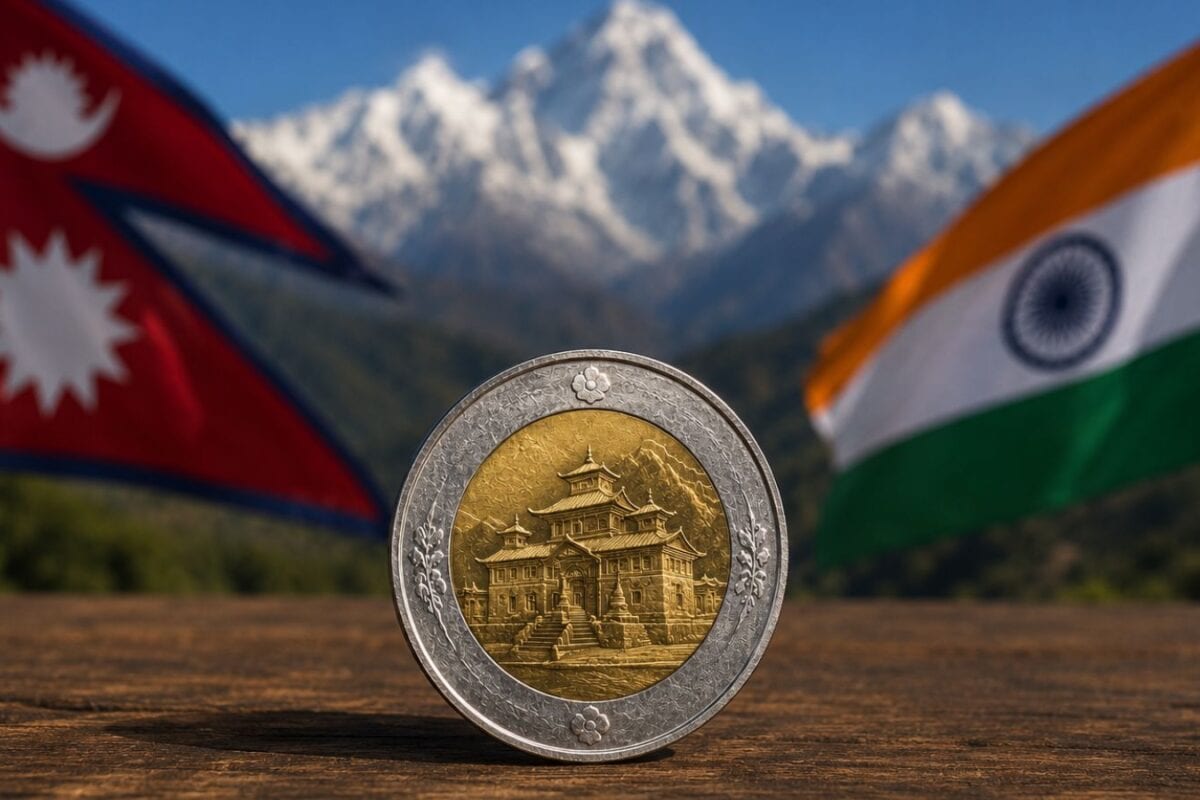
Small Change, Big Hint? Why Nepal's New Re 1 Coin Is Being Seen As Olive Branch To India Written By, Last Updated: July 21, 2026, 13:43 IST The earlier version of the coin carried Nepal’s revised political map that included Kalapani, Lipulekh and Limpiyadhura---3 Himalayan territories claimed by both Nepal and India Rapid Read By removing one of the most visible symbols of the dispute from a coin used every day by millions, Kathmandu appears to be signalling that it wants to dial down tensions with New Delhi. (AI-Generated Image for Representation) A small design change on Nepal’s Re 1 coin is being seen as a potentially significant diplomatic signal. Six years after Nepal’s then KP Sharma Oli government put a controversial political map featuring Kalapani, Lipulekh and Limpiyadhura on the country’s Re 1 coin, the government has decided to remove it. In its place, the redesigned coin will feature the Lo Ghyakar Monastery, one of Nepal’s oldest Buddhist monasteries, PTI reported. The Cabinet has approved the proposal, and Nepal Rastra Bank will mint the new coin. While the decision may not mean Nepal has abandoned its territorial claims, by removing one of the most visible symbols of the dispute from a coin used every day by millions, Kathmandu appears to be signalling that it wants to dial down tensions with New Delhi even as the border issue remains unresolved. What Has Changed? The biggest change is on the Re 1 coin. The earlier version carried Nepal’s revised political map that included Kalapani, Lipulekh and Limpiyadhura—three Himalayan territories claimed by both Nepal and India. The redesigned coin replaces that map with Lo Ghyakar Monastery, located in Marang village in Mustang district. Believed to date back nearly a millennium, it is regarded as one of Nepal’s oldest Buddhist monasteries and an important cultural landmark. Interestingly, the change applies only to the Re 1 coin. According to cabinet sources quoted by PTI, the Rs 2 coin will continue to carry the political map introduced after the 2020 border dispute.
The redesign is also part of a broader overhaul of Nepal’s coinage, with the central bank reducing the coins’ size and weight and switching from a mixed-metal composition to steel. How Did The Dispute Begin? The controversy dates back to 2020. In May that year, India inaugurated an 80-km road connecting Dharchula in Uttarakhand to the Lipulekh Pass, an important route for pilgrims travelling to Kailash Mansarovar. Nepal objected, saying the road passed through territory that belonged to it. Soon afterwards, the Oli government unveiled a new political map incorporating Kalapani, Lipulekh and Limpiyadhura into Nepal. Parliament unanimously amended the Constitution to give the map official status, triggering one of the sharpest diplomatic confrontations between the two neighbours in recent years. India rejected the move, saying the revised map was based on “artificial enlargement" of territorial claims and not historical evidence. Why Are These Territories Disputed? The dispute centres on the interpretation of the 1816 Treaty of Sugauli, signed between the Kingdom of Nepal and British India. The treaty fixed the Kali River as Nepal’s western boundary. But Nepal argues the river originates farther west than India recognises, placing Kalapani, Lipulekh and Limpiyadhura within its territory. India, however, maintains that the territories are part of Uttarakhand and has administered Kalapani since the 1962 India-China war. Lipulekh is also strategically important because it connects India to Tibet and serves as the main route for the Kailash Mansarovar Yatra. What Does It Mean For India? To begin with, it removes a major symbolic irritant. The disputed map wasn’t confined to government files. After 2020, it appeared on official documents, educational material and even the Re 1 coin. That made it one of the most visible reminders of the border dispute. By removing the map from the country’s most widely circulated coin, Nepal has softened one of the dispute’s strongest public symbols. While the legal position remains unchanged, New Delhi is likely to view the redesign as a confidence-building gesture rather than a provocative assertion of sovereignty.
 The BriefWire