India-US Trade Deal, MSP And More: Why Farmers Are Marching To Delhi Again
India-US Trade Deal, MSP And More: Why Farmers Are Marching To Delhi Again Published By, Last Updated: July 21, 2026, 13:03 IST The protest has
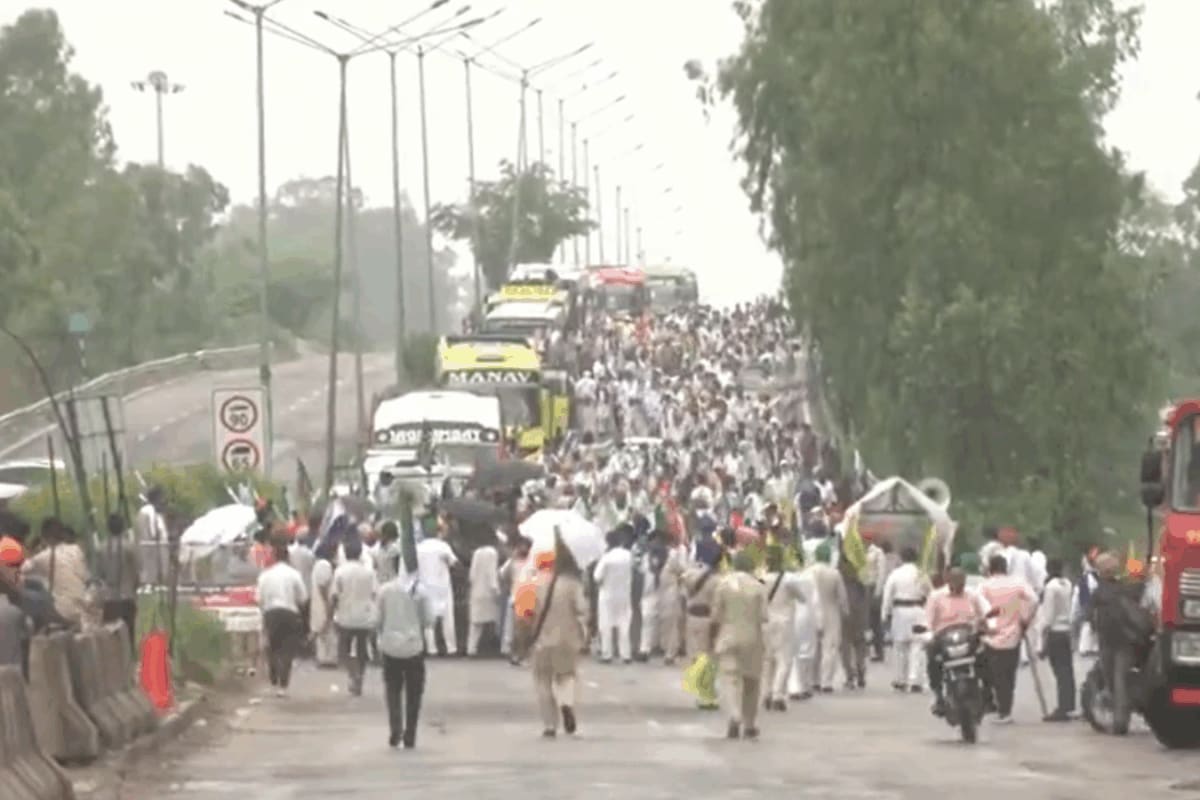
India-US Trade Deal, MSP And More: Why Farmers Are Marching To Delhi Again Published By, Last Updated: July 21, 2026, 13:03 IST The protest has been called by several farmers' organisations, including the Samyukta Kisan Morcha and Kisan Mazdoor Morcha, ahead of a planned "Mahapanchayat" in Delhi. Rapid Read Punjab farmers march towards Delhi. (Image: ANI) Farmers from Punjab are attempting to march towards Delhi on Tuesday, July 21, reviving memories of the year-long farmers’ agitation that dominated India’s political landscape between 2020 and 2021. Protesters were stopped at the Shambhu border by Haryana Police, while security was stepped up at Delhi’s Singhu border and traffic restrictions were imposed across parts of the Capital Region. Unlike the previous movement, which centred on three controversial farm laws, this protest is focused on the proposed India-US trade agreement that farmers fear could open India’s agriculture sector to cheaper imports and weaken the country’s food security framework. Why Are Farmers Protesting? The protest has been called by several farmers’ organisations, including the Samyukta Kisan Morcha and Kisan Mazdoor Morcha, ahead of a planned “Mahapanchayat" in Delhi. Their biggest concern is the possibility that ongoing India-US trade negotiations could lead India to lower import duties on key agricultural commodities such as maize, soybean, pulses, dairy products and other farm goods. Farmers argue that heavily subsidised agricultural products from the United States could enter the Indian market at lower prices, making it difficult for domestic producers to compete. Farmer unions say they are not opposing trade itself. Instead, they want the government to ensure that agriculture remains outside any market-access commitments that could adversely affect Indian farmers. They have demanded that no agreement be signed without consulting farmer organisations and assessing its impact on domestic agriculture.
Another key concern is the future of the Minimum Support Price (MSP) system. Although the government has repeatedly maintained that MSP procurement will continue, farmer groups fear that greater market liberalisation could gradually weaken government procurement and expose farmers to volatile international prices. Many unions are also reiterating older demands that remain unresolved, including a legal guarantee for MSP, farm debt relief and stronger measures to protect farmers’ incomes. India and the United States have been negotiating a bilateral trade agreement aimed at expanding trade between the two countries. Agriculture remains one of the most sensitive areas in the talks. The US has long sought greater access to India’s agricultural market, particularly for products such as dairy, corn, ethanol, almonds and other farm commodities. India, on the other hand, has traditionally maintained higher tariffs and other protections to safeguard the livelihoods of millions of small and marginal farmers. Farmer organisations argue that Indian agriculture differs fundamentally from that of developed countries. While American farming is largely mechanised, large-scale and backed by substantial government subsidies, the average Indian farmer cultivates only a few hectares of land and has limited financial support. They contend that direct competition would place Indian farmers at a significant disadvantage. What Government Has Said On Farmers’ Concerns The Centre has sought to allay farmers’ fears, maintaining that no trade agreement will be signed at the expense of Indian agriculture. Commerce and Industry Minister Piyush Goyal has repeatedly said that protecting the interests of Indian farmers remains the government’s top priority and that India will not make concessions in sensitive sectors simply to secure a trade deal. According to the government, agriculture and dairy are among the areas being approached with caution during negotiations, and any market-access commitments will take domestic interests into account.
 The BriefWire