As temperatures soar, dozens of donkeys in UK are wearing pyjamas and 'don-gerees' to stop painful insect bites, and the clever reason is winning hearts
Why are the donkeys in the UK wearing pyjamas? What are 'don-gerees'? Why clothing works better than sprays University donations support the project About The
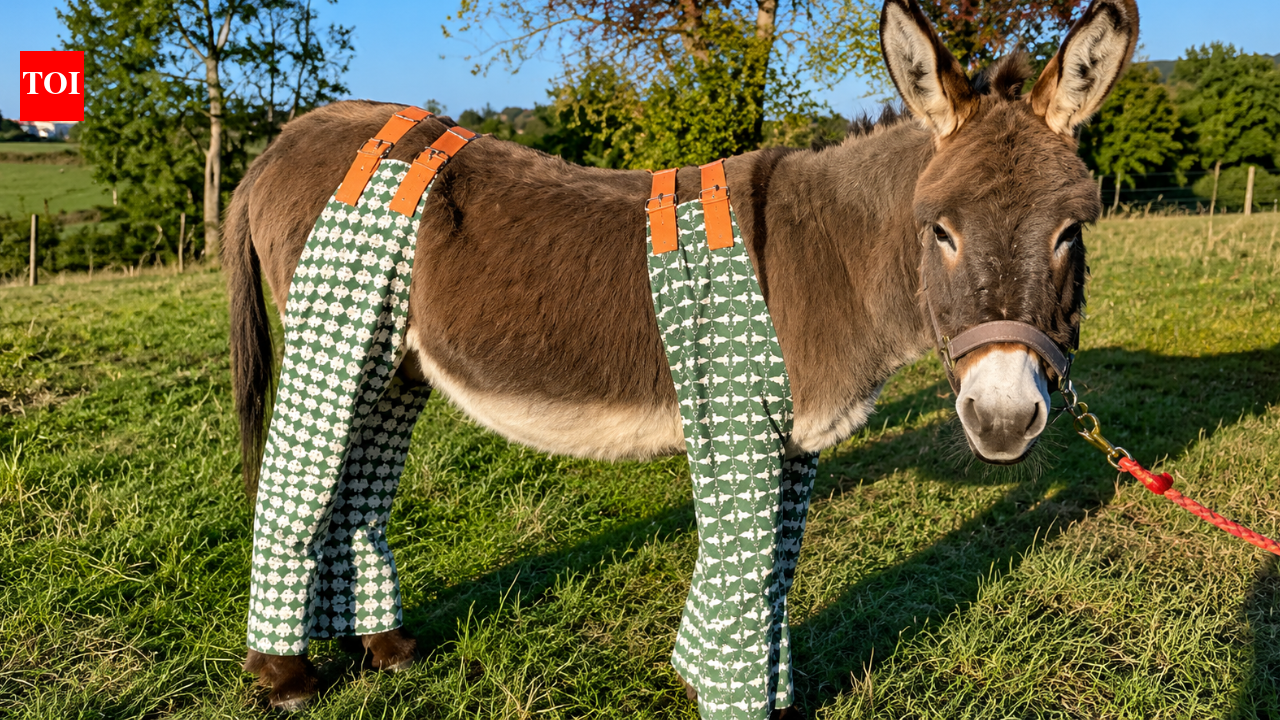
Why are the donkeys in the UK wearing pyjamas? What are 'don-gerees'? Why clothing works better than sprays University donations support the project About The Donkey Sanctuary A simple idea with a big impact As soaring summer temperatures bring swarms of biting insects across the UK, one animal charity in Devon has found an unexpectedly charming solution to keep its rescued donkeys comfortable. Around 40 donkeys at The Donkey Sanctuary in Sidmouth are now wearing adapted pyjama bottoms, leggings and specially designed "don-gerees" to shield their legs from painful fly bites. While the unusual outfits have attracted smiles online, they serve a serious purpose. The simple clothing hack helps prevent irritation, sores and skin infections caused by biting insects, while also giving unwanted clothes a useful second life and reducing textile waste.The clothing has been introduced to protect the donkeys during fly season, when biting insects are most active. Flies often target the animals' lower legs, causing painful bites that can lead to itching, open wounds and long-term skin problems.Older donkeys are particularly vulnerable because they may struggle more with repeated insect attacks and slower healing.
Staff at the sanctuary wanted a practical, long-lasting way to improve their comfort throughout the warmer months.The idea evolved through trial and error. Caretakers initially experimented with socks to cover the donkeys' legs, but they repeatedly slipped off as the animals walked around their fields.They then tried adapting larger garments, including loose-fitting pyjama bottoms, maternity trousers and leggings. These stayed securely in place while allowing the donkeys to move naturally, making them a much more effective solution.Some of the customised outfits are affectionately called "don-gerees", a playful combination of the words donkey and dungarees.Each garment is carefully altered by staff to fit individual donkeys comfortably. The loose fabric moves gently as the animals walk, making it harder for flies to land and bite.Unlike insect repellents, which need to be applied repeatedly throughout the day, the adapted clothing provides continuous protection.The garments act as a physical barrier between the insects and the donkeys' skin while remaining lightweight enough for the animals to graze, walk and rest comfortably.
Staff say the donkeys have adapted well to wearing their unusual outfits.The initiative is also helping reduce textile waste.The Donkey Sanctuary is encouraging people to donate unwanted loose-fitting clothing, including pyjama bottoms, maternity trousers and leggings. Garments in women's size 16 and above or men's large and above are especially useful because they can be adapted for the donkeys.Instead of ending up in landfill or being discarded, these clothes are transformed into protective wear that directly benefits rescued animals.The campaign recently received support from the University of St Andrews in Scotland.Through the university's Reuse Shop, students donated unwanted clothing that was no longer suitable for resale. Rather than being thrown away, the garments travelled more than 500 miles to Devon, where they were repurposed into protective clothing for the sanctuary's donkeys.Founded in 1969, The Donkey Sanctuary is an international animal welfare charity based near Sidmouth, Devon. It provides lifelong care for donkeys rescued from neglect, abuse and abandonment, while also supporting donkey welfare projects in countries around the world.The charity has cared for more than 11,000 donkeys over the years and continues to promote better welfare through veterinary care, education, research and rescue programmes.Although the sight of donkeys wearing pyjamas and "don-gerees" may seem amusing at first, the initiative reflects a thoughtful approach to animal welfare.
 The BriefWire