No Internet, No Problem: Soon, You'll Be Able To Tap And Pay Offline Using UPI
No Internet, No Problem: Soon, You'll Be Able To Tap And Pay Offline Using UPI Written By, Last Updated: July 21, 2026, 11:27 IST This
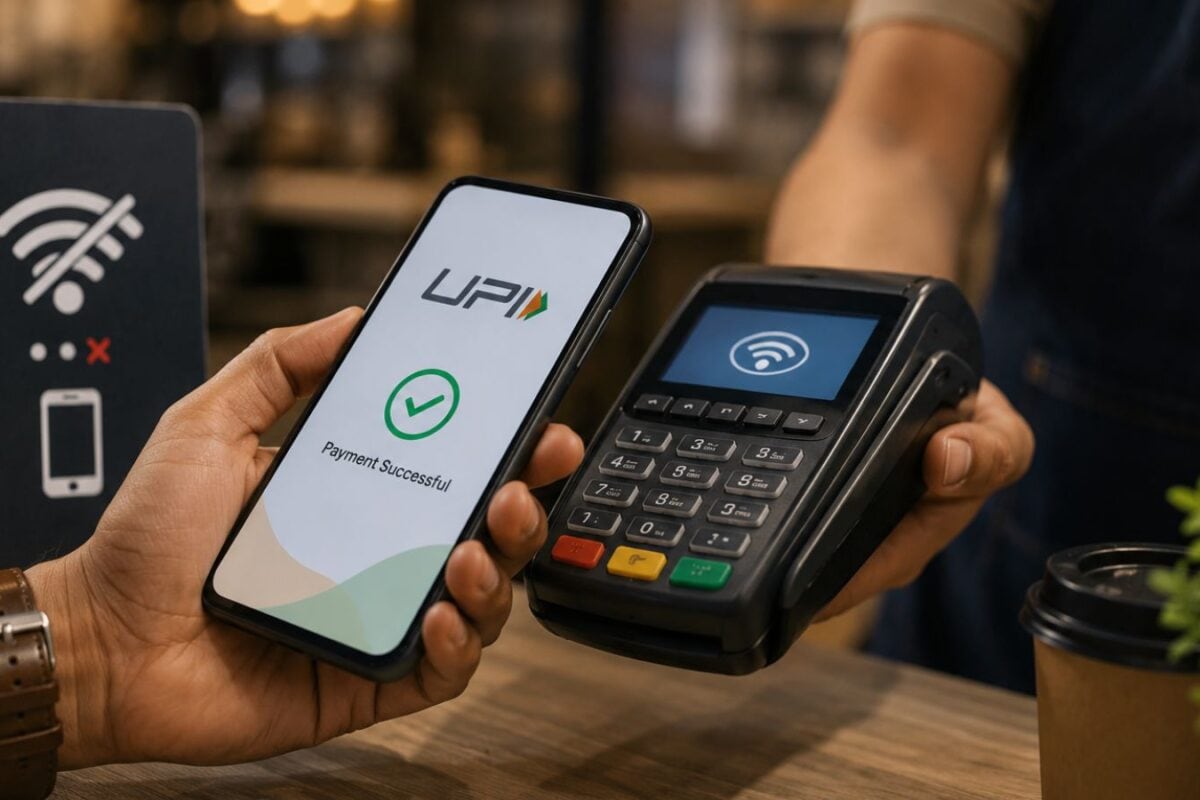
No Internet, No Problem: Soon, You'll Be Able To Tap And Pay Offline Using UPI Written By, Last Updated: July 21, 2026, 11:27 IST This technology is intended to work in locations that lack Internet connectivity or have intermittent connectivity, such as airplanes, underground Metro stations and rural areas Rapid Read The suggested feature will be powered by Near Field Communication (NFC) technology, which works in the same way as the tap and pay functionality that already exists in debit and credit cards. (AI-Generated Image) Imagine paying for your coffee on a flight or buying a snack on the Delhi Metro even when there’s no internet. That could soon become a reality. India has started work on an offline ‘tap and pay’ function of the Unified Payments Interface (UPI) that will allow consumers to pay even when both their phones and PoS machines are offline, according to a report by Business Standard. This would plug a major gap in India’s digital payment infrastructure, bringing UPI even where there is no internet connectivity. How Will It Work? The suggested feature will be powered by Near Field Communication (NFC) technology, which works in the same way as the tap and pay functionality that already exists in debit and credit cards.
According to Business Standard, users will first have to load money into their UPI Lite wallet while connected to the internet. Once the wallet is funded, they can simply tap their NFC-enabled smartphone on a compatible PoS terminal to make a payment, even if neither device has an internet connection. The merchant terminal will store the payment authorisation and sync it with the banking network once connectivity is restored. Since the money comes from the preloaded UPI Lite balance, users will not have to enter a UPI PIN for these transactions. Where Could This Be Useful? This technology is intended to work in locations that lack Internet connectivity or have intermittent connectivity, such as airplanes, underground Metro stations, rural areas, and large buildings where the cellular network is congested. These are environments where conventional UPI transactions often fail because they require both the payer and merchant to be online. What’s The Transaction Limit? The offline tap-and-go scheme, as per sources quoted in the Business Standard, will be able to process payments of Rs 2,000. For now, there has not been any official release on the guidelines for the new feature from NPCI yet. The current guidelines laid down by RBI for offline payment schemes have varied limits.
How Is It Different From UPI Lite X? This is not India’s first attempt at enabling offline UPI payments. In 2023, the Payments Corporation of India (NPCI) launched UPI Lite X, which allows offline transactions between two NFC-enabled smartphones. The new capability takes that a step further. Instead of requiring two phones, it would enable customers to pay any merchant equipped with an NPCI-certified offline PoS terminal, making offline UPI acceptance much more practical for everyday retail transactions. What Needs To Happen Before Launch? According to Business Standard, NPCI is expected to begin certifying PoS devices from major terminal manufacturers this year. Banks and third-party UPI apps are also working to integrate the capability into their platforms. Once the certification process is complete, merchants will be able to deploy compatible terminals capable of accepting offline UPI payments. Why It’s A Welcome Step UPI has transformed digital payments in India, but it still depends heavily on internet connectivity. An offline tap-and-pay feature could significantly improve payment reliability in low-connectivity environments while making UPI a stronger competitor to contactless card payments. If rolled out successfully, it would also expand digital payment options in regions where patchy mobile networks have long remained a barrier to seamless transactions.
 The BriefWire