Behind the barricades: Inside Parliament as CJP protest shook Delhi
The day began with one certainty: it wouldn't be routine. The opening day of Parliament session is rarely uneventful. This time, it carried even more
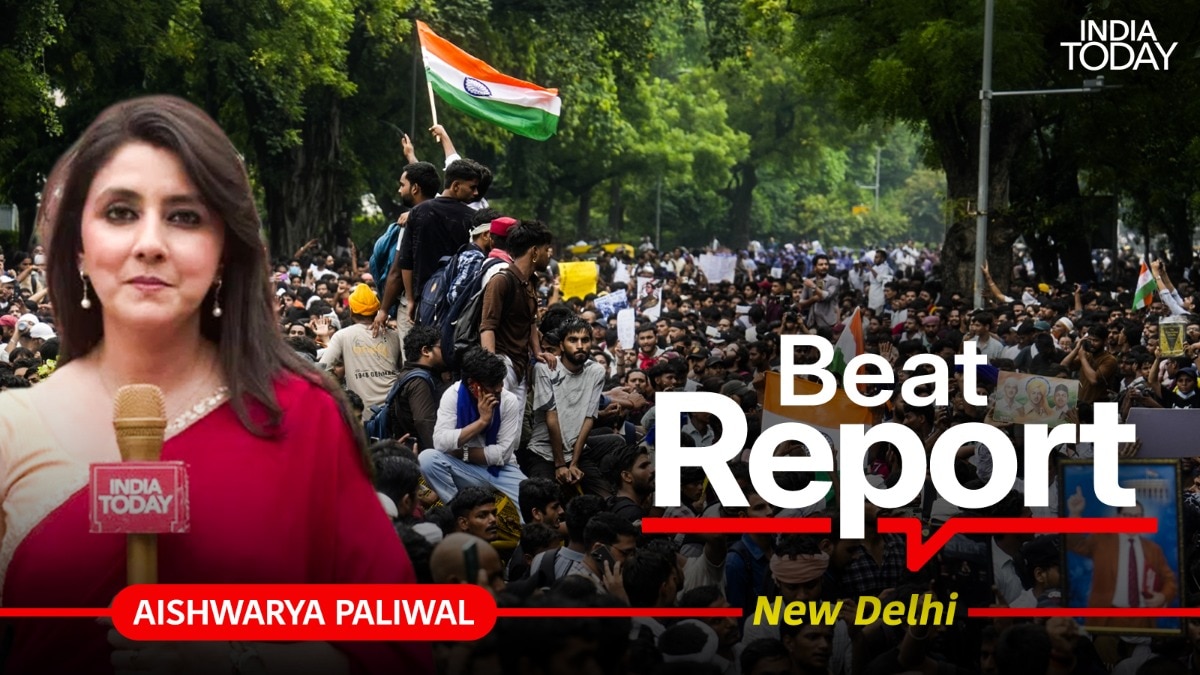
The day began with one certainty: it wouldn't be routine. The opening day of Parliament session is rarely uneventful. This time, it carried even more weight. On Day 1 of Parliament, the silence inside felt louder than the slogans outside. For weeks, the Opposition had been raising a host of issues. Outside Parliament, the Cockroach Janta Party (CJP) had called for a massive 'Chalo Sansad' march. Having covered several protests in the national capital over the years, I knew the streets wouldn't remain quiet. If the battle outside was about numbers, the battle inside would be about strategy. Read Full Story I reached Parliament early. What I didn't know then was that over the next few hours, I would witness two parallel stories unfolding -- one on Delhi's streets and another inside the country's most powerful corridors. A CITY UNDER BARRICADES The closer I got to Parliament, the clearer it became that this wasn't going to be an ordinary session. Central Delhi had turned into a fortress. Barricades stretched across roads. Police personnel stood at almost every turn. Around Le Meridien and Railway Bhavan, security was impossible to miss. By 9.45 am, I entered the Parliament complex and made my way to Makar Dwar. Exactly as the clock struck 10, MPs began arriving. One after another, they stepped out of their cars, not talking about legislation or politics, but about the traffic. Almost everyone had a story about the massive jams they had endured before reaching Parliament. Sometimes, the mood of the day reveals itself long before the House assembles. TWO NARRATIVES, ONE PARLIAMENT The divide inside Parliament was as visible as the barricades outside. Opposition MPs largely viewed the CJP protest sympathetically. NDA leaders, however, argued that the demonstrations were inconveniencing ordinary citizens. The contrast wasn't subtle, it was striking.
Congress leaders chose their words carefully whenever they were asked about the protest. The Samajwadi Party, however, looked ready. I noticed party president Akhilesh Yadav walking alongside Ayodhya MP Awadhesh Prasad. The two were deep in conversation, clearly discussing the day's strategy. Then came another moment that caught my attention. As reports of swelling crowds outside Parliament began trickling in, I saw Dimple Yadav speaking with Akhilesh Yadav and other Samajwadi Party leaders. Minutes later, the women MPs moved away together. At around 11.20 am, Dimple Yadav led a march inside the Parliament premises, holding placards alongside other women MPs from her party. While several Opposition parties appeared to be weighing their options, the Samajwadi Party had already made its move. Sometimes, politics isn't announced from a podium, it begins with who starts walking first. Behind closed doors, the government was moving just as fast. At around 11:30 am, I went back inside Parliament. The atmosphere had changed. Meetings were happening simultaneously. Corridors buzzed with hurried conversations. Officials walked briskly between offices. The corridor outside Home Minister Amit Shah's chamber had become one of the busiest spots in Parliament. Union Minister JP Nadda met Amit Shah before leaving Parliament around 11.40 am for his residence, where he held the first round of talks with CJP representatives. Soon after, Union Education Minister Dharmendra Pradhan entered Amit Shah's room. The government was clearly working on its response even as events continued to unfold outside. THE FIRST NEGOTIATION The first meeting between JP Nadda and CJP representatives had begun earlier, around 11.50 am. When I learnt that Nadda had left Parliament, I made a series of calls. People familiar with the discussions told me that Nadda first asked the representatives what exactly their demands were. They presented a list.
 The BriefWire