Archaeologists uncover 7,000-year-old fish traps that rewrite the story of life before farming in Scandinavia
AI Generated 7,000-year-old fishing traps uncovered in Norway's mountains PC: ScienceNorway How brown trout reached isolated mountain lakes Evidence places fish introductions before the age
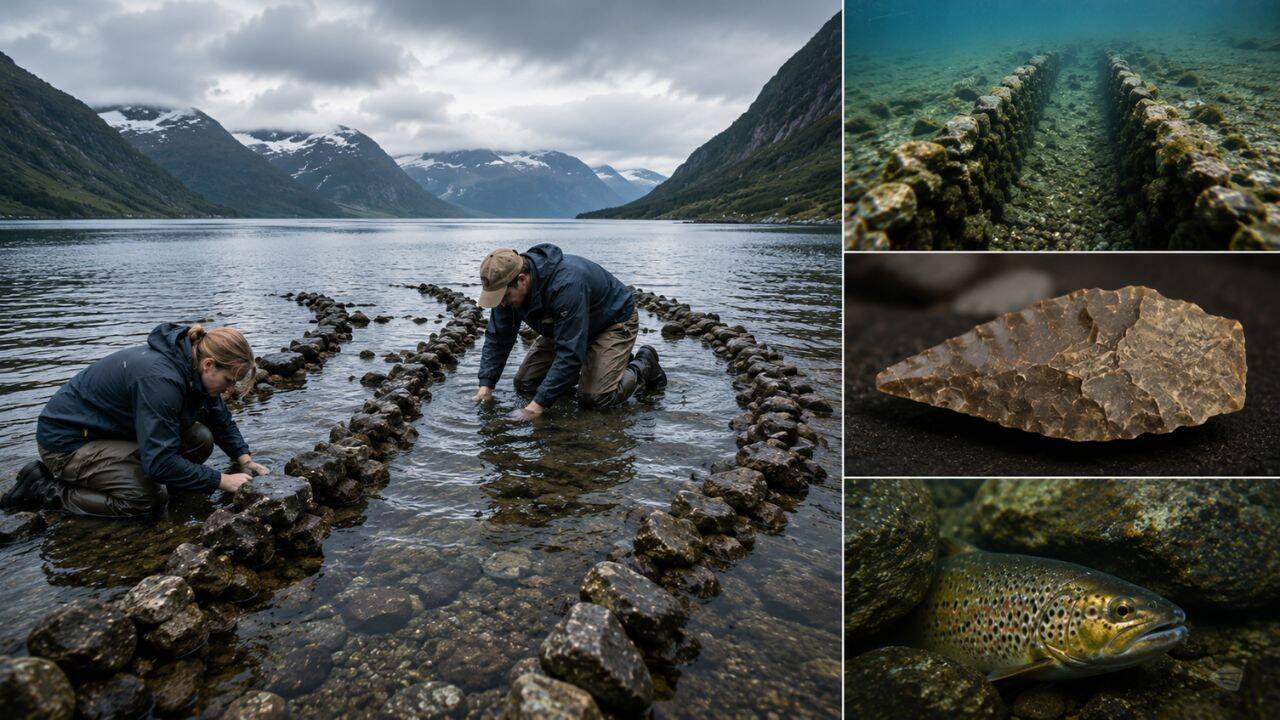
AI Generated 7,000-year-old fishing traps uncovered in Norway's mountains PC: ScienceNorway How brown trout reached isolated mountain lakes Evidence places fish introductions before the age of farming Why brown trout made sense Lasting changes to the landscape A different picture of early communities Long before crops were planted or livestock were kept, people living in what is now southern Norway were already making lasting changes to the natural world around them. High in the mountains, where lakes lay beyond the reach of naturally migrating fish, communities appear to have carried brown trout into isolated waters and created places where they could reliably catch them. New archaeological evidence suggests this practice was already taking place around 7,000 years ago. The discovery offers a glimpse into a period when hunting, fishing and gathering remained the foundation of daily life, yet people were already altering landscapes in deliberate ways that would continue to shape local ecosystems for thousands of years.As reported by Cambridge University, Lake Tesse in southern Norway, where archaeologists uncovered a series of remarkably preserved wooden fishing structures. Waterlogged conditions helped protect the timber, allowing parts of the ancient traps to survive long after similar features elsewhere had disappeared.Radiocarbon dating placed the construction and use of these traps around 5000 BC.
Their age makes them some of the earliest direct evidence linked to organised freshwater fishing in Norway's mountain landscape.The location itself is significant. Lake Tesse sits within an upland region where natural obstacles prevented fish from reaching many lakes after glaciers retreated at the end of the last Ice Age.As the ice sheets withdrew roughly 10,000 years ago, rivers and lakes gradually formed across the Norwegian interior. People soon followed into these newly accessible landscapes, taking advantage of hunting grounds and seasonal resources.Fish faced a different challenge. Waterfalls and steep river sections created barriers that brown trout could not pass, leaving many mountain lakes naturally empty.That left only one realistic explanation for the presence of thriving trout populations in these isolated waters. At some point, people had carried live fish upstream and released them into lakes where they could establish new populations.For decades, archaeologists understood that many fish found in Norway's mountain waters had originally been introduced by humans. The unanswered question was when that process began.The dating of the Lake Tesse traps now places that activity firmly within the Scandinavian Mesolithic, centuries before agriculture became established in the region.This matters because it shifts the timeline for intentional environmental management.
 The BriefWire