A Quebecer noticed a strange circular pit on Google Maps; scientists confirm it's a crater
Photo caption:Cross-section of bristle worm jaw showing labeled indentation test sitesPhoto Credit: Zelaya-Lainez et al. From “this can’t be real” to “maybe it is” A
Photo caption:Cross-section of bristle worm jaw showing labeled indentation test sitesPhoto Credit: Zelaya-Lainez et al. From “this can’t be real” to “maybe it is” A cautious scientist, a rugged expedition How do you prove it’s a crater? PC: AI Generated Naming Uhackatik and joining a short list PC: AI Generated From a road trip plan to deep time In late 2023, amateur astronomer Joël Lapointe was doing something very ordinary: Mapping out forest roads for a summer road trip in Quebec. While zooming around northern regions on Google Maps, he spotted something that looked anything but ordinary. It was a neat, circular depression in the landscape, about 100 kilometers north of the town of Magpie.On screen it appeared as a ring-like pit in the middle of the forest. For someone who loves space and meteorites, it was enough to make him pause. “For an amateur astronomer who loves to connect with space and loves meteorites, it was just amazing,” Lapointe later recalled, reported CTV News.Lapointe’s first reaction wasn’t to celebrate; instead it was to doubt himself. Surely, he thought, if this really were anything important, scientists would already know about it.“I told myself, ‘You haven’t discovered anything, Joël, it’s not possible, they must already know about this,’” he said, as per the report.But the more he looked, the more the circular shape nagged at him. He checked known crater databases and couldn’t find any listing that matched the location. That absence planted a seed: Maybe this wasn’t just a random geological feature.Maybe it really was something undiscovered.Instead of brushing the idea aside, Lapointe decided to reach out to experts.It wasn’t instant. It took a few attempts before he found researchers who were willing to investigate. Eventually, a French research centre took interest in the strange pit he had flagged.
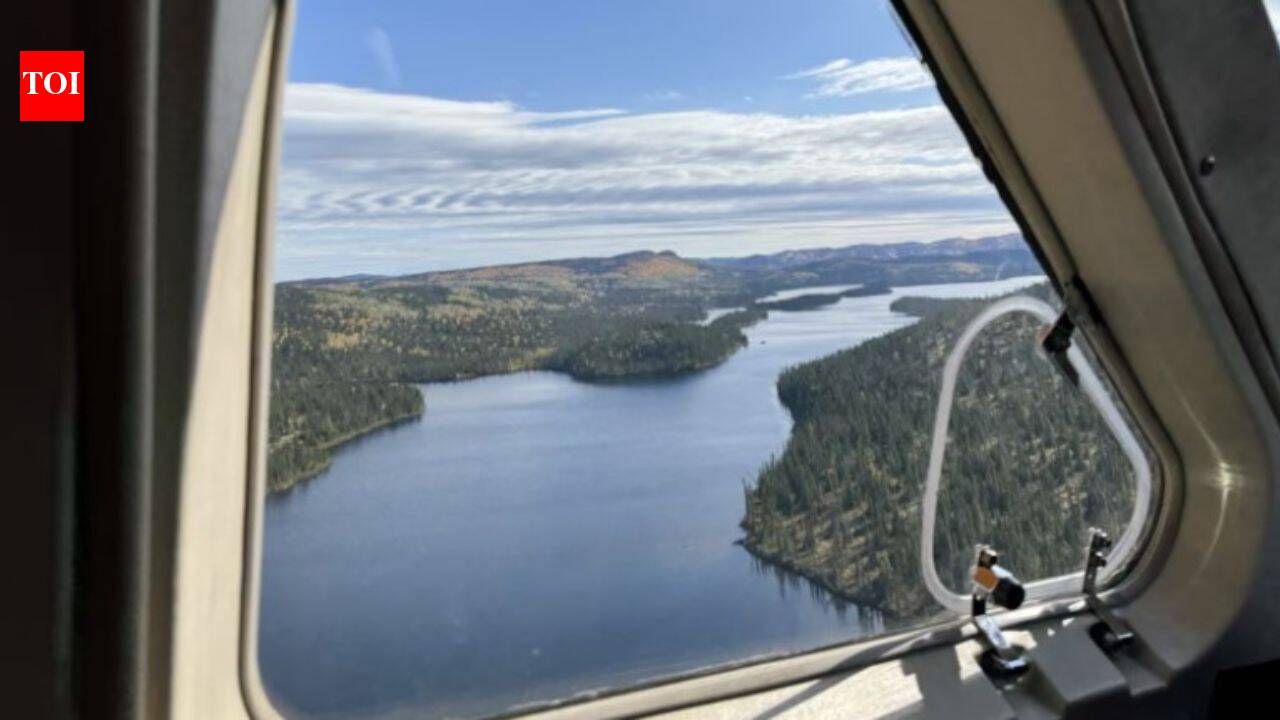
For Lapointe, that was both exciting and nerve‑racking.“It was exciting, I wanted to have the latest news as soon as possible, but I didn’t bother them, because they’re professionals,” he further shared. He knew that good science takes time.News of the potential crater reached Gordon Osinski, a professor of earth sciences at Western University in London, Ontario, who studies impact craters and runs the public reporting site Impact Earth. He’s no stranger to enthusiastic emails about “craters” that turn out to be quarries, lakes, or natural depressions, as per The Canadian Press.So when he first heard about Lapointe’s find via his French colleagues, he was skeptical. Many supposed discoveries don’t survive a closer look.But this case stood out. The pit’s circular topography looked intriguing, and preliminary analysis of rock samples suggested something unusual. Curiosity overcame skepticism, and Osinski eventually co‑led an expedition to the site in 2025.The team travelled by float plane to reach the remote location. What they found on the ground was rugged, challenging terrain, which is far from a tidy, easy‑access field site.“We didn’t really know what to expect, where we could land to get to shore and where we could set up camp. So it was going into the unknown, which I enjoy, a bit of an adventure,” Osinski said.To confirm that the pit was actually a meteorite impact crater, the researchers needed specific kinds of evidence. There are two main routes:Finding the meteorite itself, or fragments of it, in or around the structure.Finding signs in the surrounding rock that it has been subjected to the extreme pressures and energies of an impact.For a crater roughly 25 kilometers in diameter, much larger than many of the more recent, small impacts, finding meteorite fragments is unlikely.
 The BriefWire