Of MGR, Sivaji Ganesan, and Tamil Nadu’s star-studded politics
The spectacular rise of former AIADMK general secretary and Chief Minister M.G. Ramachandran (MGR), who was essentially embedded with the Dravidian movement even as an
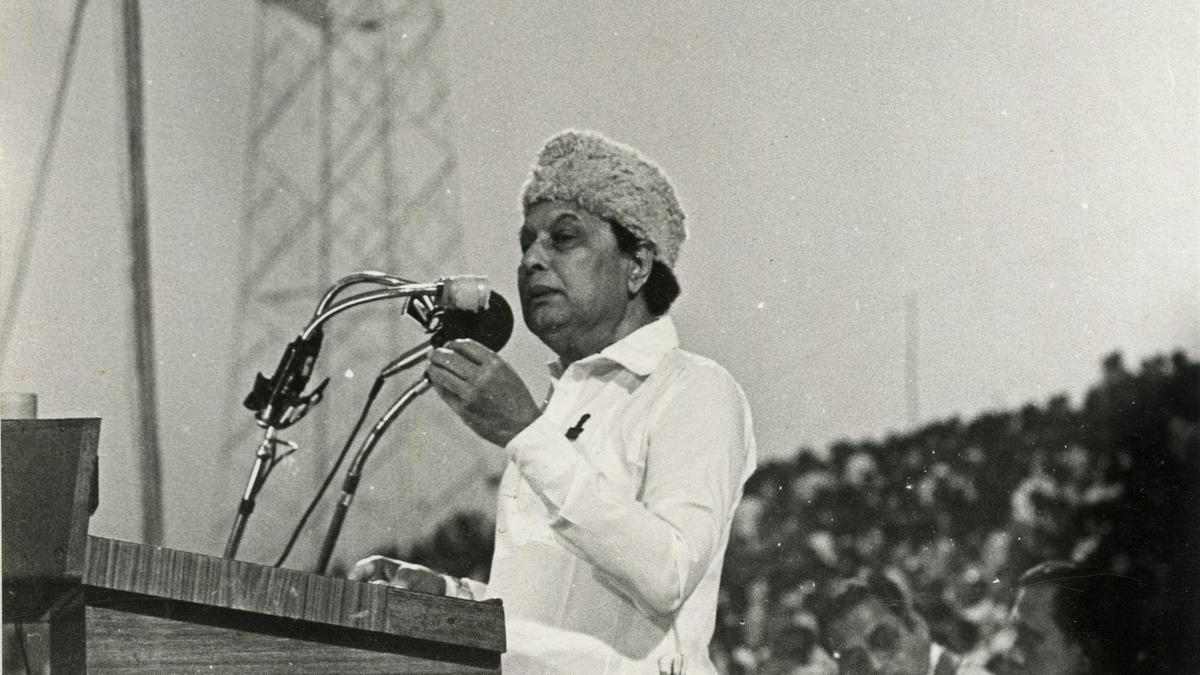
The spectacular rise of former AIADMK general secretary and Chief Minister M.G. Ramachandran (MGR), who was essentially embedded with the Dravidian movement even as an actor, to the top job in the State after splitting from the DMK, has fed – and continues to feed – the fantasy of several popular actors in Tamil Nadu. Actors with huge fan followings, such as Sivaji Ganesan, Kamal Haasan, and Vijayakant, as well as popular stars like K. Bhagyaraj, Karthik, and Ramarajan, have tried their luck in elections with limited success. Now, ahead of the 2026 Assembly polls, actor C. Joseph Vijay – arguably Tamil cinema’s biggest star today – has launched the Tamizhaga Vettri Kazhagam (TVK), hoping to replicate MGR’s historic success in 1977. MGR’s journey to power took more than two decades from the time he joined active politics. The earliest record of his involvement, as published in The Hindu, was his inauguration of the Dravida Munnetra Kazhagam’s (DMK) district conference in Kancheepuram in 1954. He was a part of political discourse for 23 years before he became the Chief Minister. His persistent identification with the Dravidian movement, the DMK, and its founder C.N. Annadurai, through his public appearances, speeches, and in movies throughout the late 1950s and 1960s, is well-documented history. Riding the wave against Congress MGR rode the ‘ideological wave’ against the Congress to win the St. Thomas Mount (Parangimalai) seat in 1967, which also saw the DMK elected to power in the State.
After he became the leader of the AIADMK in 1972, he benefitted from a ’divided’ political space, ensuring consolidation. A report published in The Hindu on June 15, 1977, notes that MGR actually won a 12-cornered contest, triumphing over a Janata party candidate, Muthuvel Servai, by polling 29,328 votes – with a margin of more than 8,000 votes – in Aruppukottai. Barring the Janata Party candidate, all others lost their deposits. MGR, who formed an alliance with the Communists and the Muslim League, had a number of factors in his favour, including the dismissal of the M. Karunanidhi government, and the DMK, Congress, Janata Party contesting independently. This, perhaps, galvanised the electorate to perceive him as the most ‘acceptable face’, around which anti-DMK and anti-Congress voters could consolidate. Jayalalithaa’s rise Actor J. Jayalalithaa, who emerged as MGR’s political heir, did not have it easy either. She had to battle it out with MGR’s wife Janaki Ramachandran in 1989, before becoming the Leader of the Opposition. She rode to power, heading a unified AIADMK in alliance with the Congress, on a sympathy wave following the assassination of former Prime Minister Rajiv Gandhi in Sriperumbudur. Legendary actor Sivaji Ganesan, who allied with the AIADMK (Janaki) faction in 1989, was defeated, proving that ‘star power’ alone could not ensure victory, unless accompanied with a host of factors. Director-actor K. Bhagyaraj, who was identified as MGR’s heir in the film world, failed in politics.
 The BriefWire