Six decades of Blue Cross: from humble beginnings to setting the standard for animal welfare
Animal rescue and welfare have long been synonymous with the Blue Cross of India (BCI) in Chennai. That familiarity is the product of more than
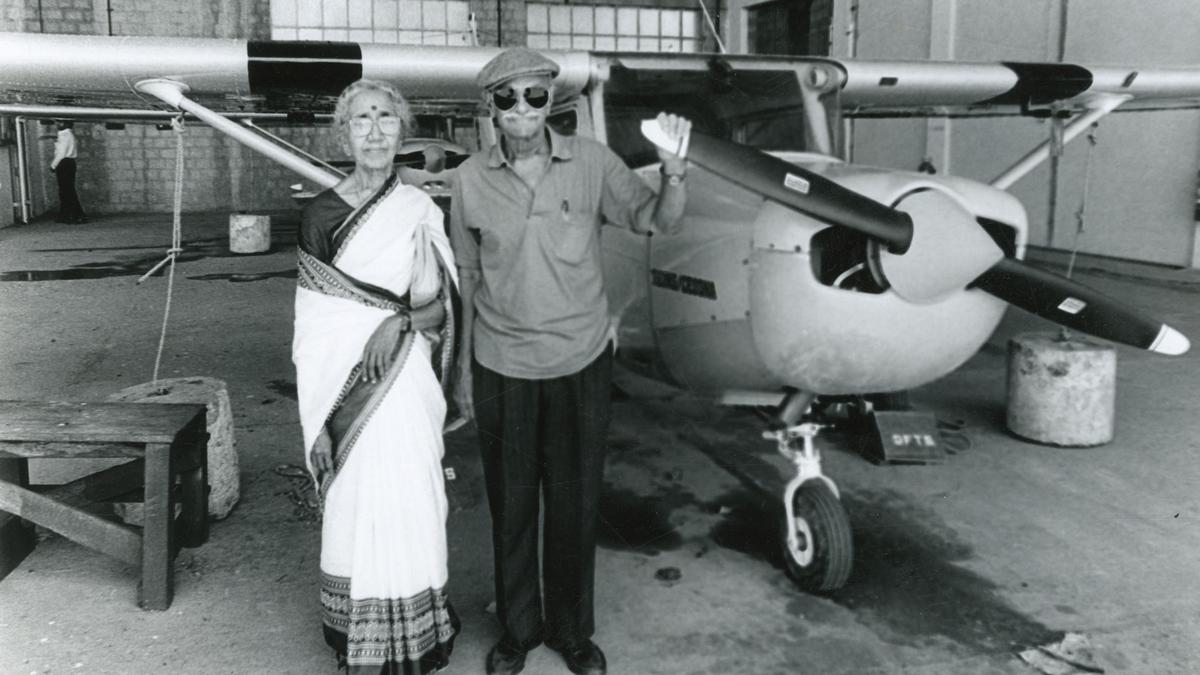
Animal rescue and welfare have long been synonymous with the Blue Cross of India (BCI) in Chennai. That familiarity is the product of more than six decades of work. The organisation’s beginnings, however, were modest. In 1959, in Madras, Captain V. Sundaram, a pilot, brought home two stranded puppies he found on a flooded street near his house at T. Nagar. With his wife, Usha, also a pilot, and their children, Suresh, Chinny Krishna, and Vijayalakshmi, he built makeshift kennels at home. Injured and abandoned animals soon began to be rescued from across the city and brought here. It started as an informal network, known as the Animal Aid Association, before being registered in 1964 as the BCI, with nine founding members, including Sundaram, his family, and early supporters like Daivasigamony, then secretary of the Indian Football Association. Gaps in civic systems From the outset, the BCI functioned less as a shelter and more as a response to gaps in the city’s civic systems. Over the decades, it would grow into one of India’s most influential animal welfare organisations. “In the early years, everything was run entirely by volunteers,” Mr. Krishna recalls. “That worked for a while, but we soon realised, perhaps a little too late, that goodwill alone can only take you so far.
If you want to succeed, you need a professionally run organisation.” While volunteers remained central to its ethos, the organisation began moving towards structured systems, trained staff, and professional accountability. “What always reassured me,” he says, “was that every rupee the BCI received went directly towards animal welfare.” By the late 1980s, support from international organisations helped accelerate this transition. Visitors from the U.K. offered assistance for building some of the early shelters. But, for Mr. Krishna, the organisation was never only about rescue and shelter. His deepest engagement with animal welfare came from witnessing cruelty embedded in municipal policy. In the 1960s, he began visiting the Madras Corporation dog pound, where stray dogs were kept without food or water and killed by electrocution. “I used to carry water daily,” he recalls, “so that the dogs would not suffer dehydration before death. Ironically, hydration made electrocution faster.” When he examined Corporation records, he discovered that dog killing in the city dated back to 1860. Initially, a few hundred dogs were killed annually. By 1966, the number had risen to around 16,000. Yet rabies cases and stray dog populations kept increasing. “The stated purpose was public safety and rabies control,” Mr. Krishna says. “But despite decades of killing, the policy had failed completely.” Hence, the BCI developed what would become one of its most significant contributions: the Animal Birth Control (ABC) programme.
 The BriefWire