170 years ago, a debate in Britain parliament on torture in Madras
Dehumanising third-degree torture meted out to people in Madras was the subject matter of discussion in the Britain parliament 170 years ago. On April 4
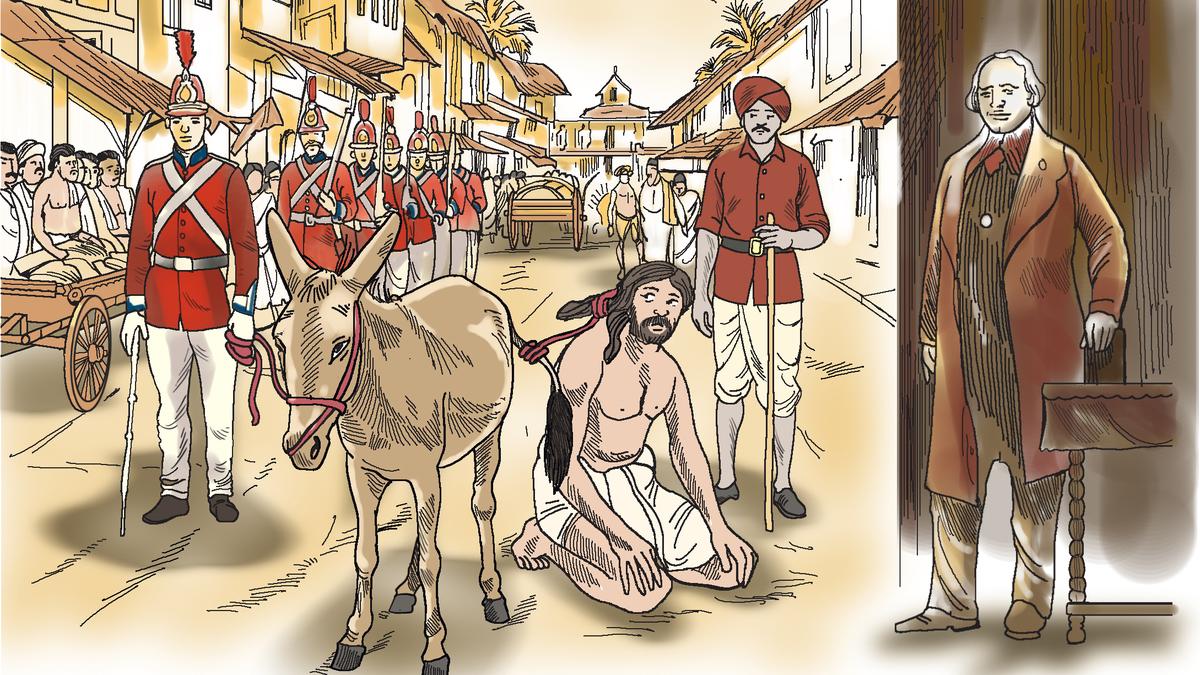
Dehumanising third-degree torture meted out to people in Madras was the subject matter of discussion in the Britain parliament 170 years ago. On April 4, 1856, George Thomas Keppel, the Earl of Albemarle, moved a resolution in the Britain parliament to present a petition from certain inhabitants of Madras – then a British colony – complaining of the infliction of torture by the officers of the Government. Keppel went on to narrate some of the cruel punishments meted out to the citizens. These included tying a man by the hair of his head to the tail of an ass, and parading him though the public market. Apart from depriving a man of food and water and hindering the victim from sleeping, a necklace of bones or other disgusting materials were hung on the neck. He described this punishment “peculiarly offensive to a Hindoo (Hindu).” Compelling a man to sit on his heels, with brickbats or sharp stones under his hams; tying two persons together in a stooping posture by the hair of their heads; tying a man in a stooping posture to the wheel of a cart; forcing a man into a stooping posture with another man on his back; binding a man to one tree and hoisting his leg by a rope attached to another; suspending a man by his heels to the bough of a tree; suspending him by the wrist, and scourging him while in the air, were also common forms of torture.
“If my recollection serves me right, there is in that Report an instance of a woman who died under the infliction of this torture,” he said. “Tying to a tree with a fire underneath, in order to produce partial suffocation; forcing a man to whirl his head in a peculiar manner with his hair dishevelled, sitting in the sun, the process being assisted by scourging (called in the native collector’s office, “extracting the devil”); suspending a man by his arms tied behind his back, which, I believe, is the Indian punishment of the strappado; plunging into wells and rivers, until the victim is half, or sometimes wholly, drowned;....” the Earl told the House. Keppel brought to the notice of the House that the petitioners were anxious that the Report of the Commission that had gone into the torture must not be considered as one adequately conveying the quantum of “suffering endured by the inhabitants of the Presidency of Madras.” This was because the Commissioners themselves had acknowledged the incompleteness of their report. Ideally, the full inquiry would have been completed in two years but in the instant case, it was done in just three months. “Besides this, the Commission sat in the town of Madras, where, owing to the want of means of internal communication, and the extent of the Presidency, being an area of 144,889 statute square miles, or within one-fourth part of being twice as large as Great Britain, it was impossible that many of the sufferers should attend to make their complaints.
 The BriefWire