2026 World Cup: What remains after football's biggest show?
A worthy world champion, a call from the US president, security concerns and a few pleasant surprises. The 2026 World Cup is over. So what
A worthy world champion, a call from the US president, security concerns and a few pleasant surprises. The 2026 World Cup is over. So what will we remember about global football's biggest World Cup ever? Football didn't have it easy at the 2026 World Cup in the United States of America, Mexico, and Canada. There were questionable decisions by the sport's governing body FIFA, a lot of spectacle, and a final in which only one team actually played football. After a total of 104 games in this biggest-ever World Cup, Spain were deservedly crowned champions and for the first time, a country's men's and women's teams are both world champions at the same time. FIFA President Gianni Infantino described the tournament as the "greatest sporting, social and cultural event in humanity," while US President Donald Trump congratulated FIFA on what he called "one of the all-time greatest sporting events in history." But was it really one of the greatest events in human history?" Here's what will be remembered. How was the biggest-ever tournament received by viewers? Fears of empty stadiums—especially in the US, where football isn't the number one sport—proved unfounded. According to FIFA, a total of 6,810,966 fans attended the tournament, the first to be co-hosted by three countries. This set a new record for World Cup attendance. Given that the schedule featured 104 matches, instead of 64, a record attendance figure is no surprise. The average attendance was around 65,000, and according to FIFA, 99.7 percent of all available seats were filled. However, many empty seats were visible in stadiums, especially during the group stage. Hydration breaks draw criticism Fans criticized the newly introduced hydration breaks. Most coaches, however, supported the breaks—or at least did not complain about them. Uruguay’s now-former coach, Marcelo Bielsa, on the other hand, criticized the additional opportunity to influence the game.
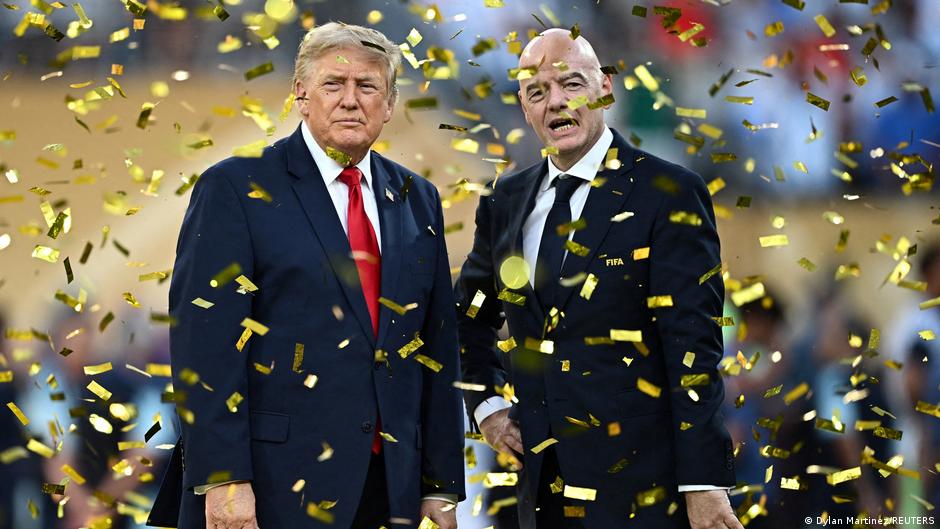
"Playing four halves instead of two changes the culturally shaped perception of football," he said. "These breaks add nothing to the game, but take a lot away from it." Germany felt both the advantages and disadvantages of the hydration breaks Image: Jan Woitas/dpa/picture alliance Were there any surprises at this World Cup? World Cup newcomer Cape Verde caused quite a stir. The small African nation held eventual world champions Spain to a 0-0 draw and narrowly lost to defending champions Argentina in extra time in the round of 32. The Democratic Republic of Congo celebrated a 1-1 draw against Portugal’s Cristiano Ronaldo, and Paraguay knocked Germany out of the tournament in the round of 32. Curacao, the smallest World Cup participant, made history by scoring their first-ever World Cup goal against Germany and earned their first-ever World Cup point against Ecuador. Price madness at World Cup The World Cup was expensive. Fans had to dig deep into their pockets for tickets, hotels, parking fees, or flights. However, prices inside the stadiums caused additional frustration. In the U.S., visitors had to pay up to €20 ($22) for a beer, more than €17 for French fries, or about €7 for a bottle of water. In Mexico, too, food and drinks were significantly more expensive than usual. At the Azteca Stadium, where the opening match took place, a beer cost the equivalent of about €15.50 —almost as much as the country's minimum daily wage. Tickets for the final were unaffordable and unattainable for most people Image: Martin Rickett/PA Wire/dpa/picture alliance What role did US President Trump play at the World Cup? There was widespread concern that Donald Trump might use the World Cup to advance his political agenda. After all, the US president had repeatedly declared the tournament to be his personal prestige project.
 The BriefWire