In 1928, a German architect planned to block the Strait of Gibraltar, drain the Mediterranean and create a new continent called Atlantropa
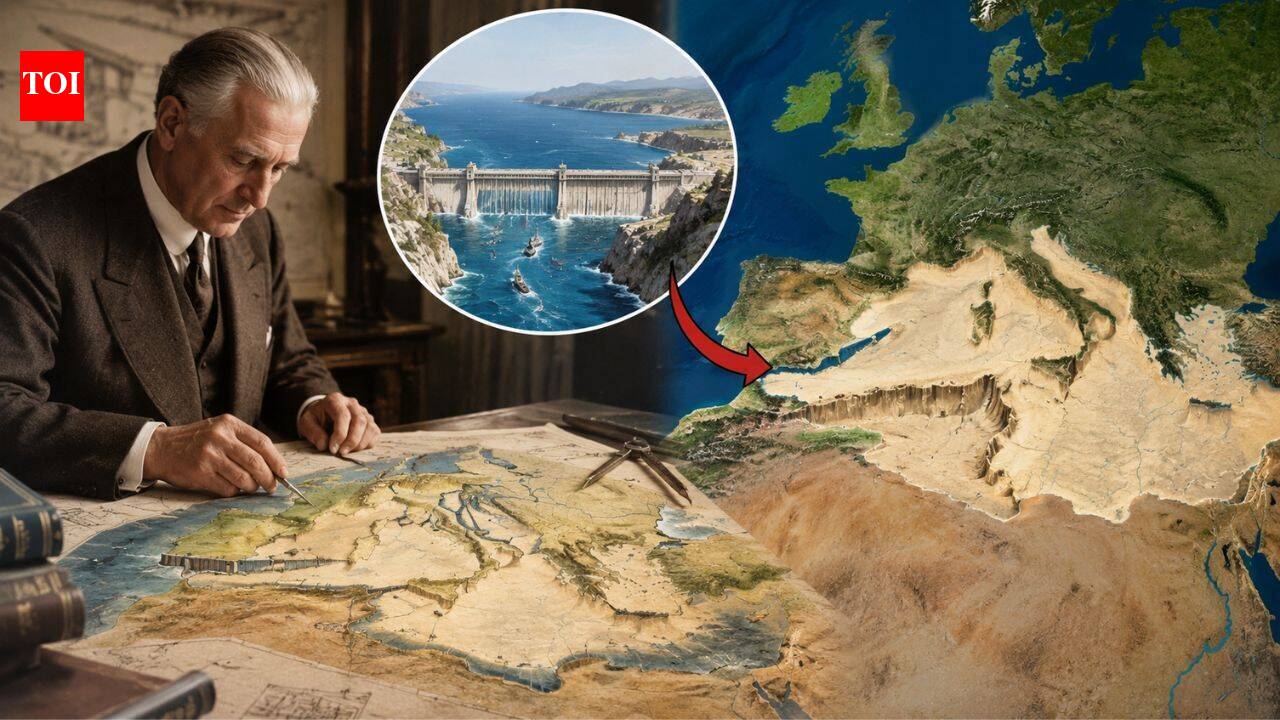
AI Generated Hermann Sörgel’s Atlantropa project: The 1928 plan to reshape the Mediterranean with a giant dam Atlantropa’s plan to lower the Mediterranean Sea level
AI Generated Hermann Sörgel’s Atlantropa project: The 1928 plan to reshape the Mediterranean with a giant dam Atlantropa’s plan to lower the Mediterranean Sea level and create new land How Atlantropa aimed to create a Europe-Africa land bridge Ecological cost of Atlantropa’s plan to reshape the Mediterranean Why the project never progressed The end of an ambitious dream In 1928, German architect Hermann Sörgel unveiled one of the most ambitious engineering visions ever imagined: Atlantropa, a plan to block the Strait of Gibraltar, lower the Mediterranean Sea level and create a new Europe-Africa supercontinent. The extraordinary proposal aimed to generate massive hydroelectric power, reveal vast areas of new land and reshape the relationship between two continents through a network of bridges, railways and settlements. Although the project was never built, Atlantropa remains one of history’s most fascinating examples of extreme human ambition; a forgotten dream of using technology to redraw the planet itself.Atlantropa was the work of German architect Hermann Sörgel, who introduced the concept in 1928, as reported by Environment & Society Portal. His proposal centred on the Strait of Gibraltar, the narrow stretch of water connecting the Atlantic Ocean with the Mediterranean Sea. By constructing a colossal dam across this gateway, Sörgel believed it would be possible to generate an unprecedented amount of hydroelectric power.The project was presented as far more than an energy scheme.
It was intended as the foundation of a completely new geographical and economic order.Electricity produced by the dam was expected to supply a significant share of Europe's growing demand, while the structure itself would become the key to transforming the Mediterranean basin.At a time when concerns about future energy supplies were gaining attention, the proposal attracted interest from people fascinated by technological progress. Large engineering works had become symbols of national ambition, making even extraordinary projects appear worthy of discussion.The idea depended on controlling the Mediterranean's connection to the Atlantic. Once the inflow of ocean water had been restricted, evaporation was expected to exceed the amount of water entering the basin from rivers. Over many decades, the sea level would gradually fall.As reported by Environment & Society Portal, Sörgel estimated that parts of the Mediterranean could eventually sit around 200 metres lower than their existing level. As the shoreline retreated, enormous areas of land would emerge from beneath the water. New plains would appear along large sections of the coast, fundamentally changing the appearance of southern Europe, North Africa and parts of the eastern Mediterranean.The proposal imagined these newly exposed landscapes becoming productive territory rather than empty ground. Agricultural development featured prominently, alongside transport networks, industrial zones and entirely new settlements planned on land that had previously been seabed.Perhaps the most striking aspect of Atlantropa was its political ambition.
 The BriefWire