APAAR Scheme: Supreme Court assures parents it will pass order requiring CBSE to provide opt-out, refusal option
The Supreme Court agreed to clarify on Monday (July 20, 2026) that the Central Board of Secondary Education’s (CBSE) implementation of the Automated Permanent Academic
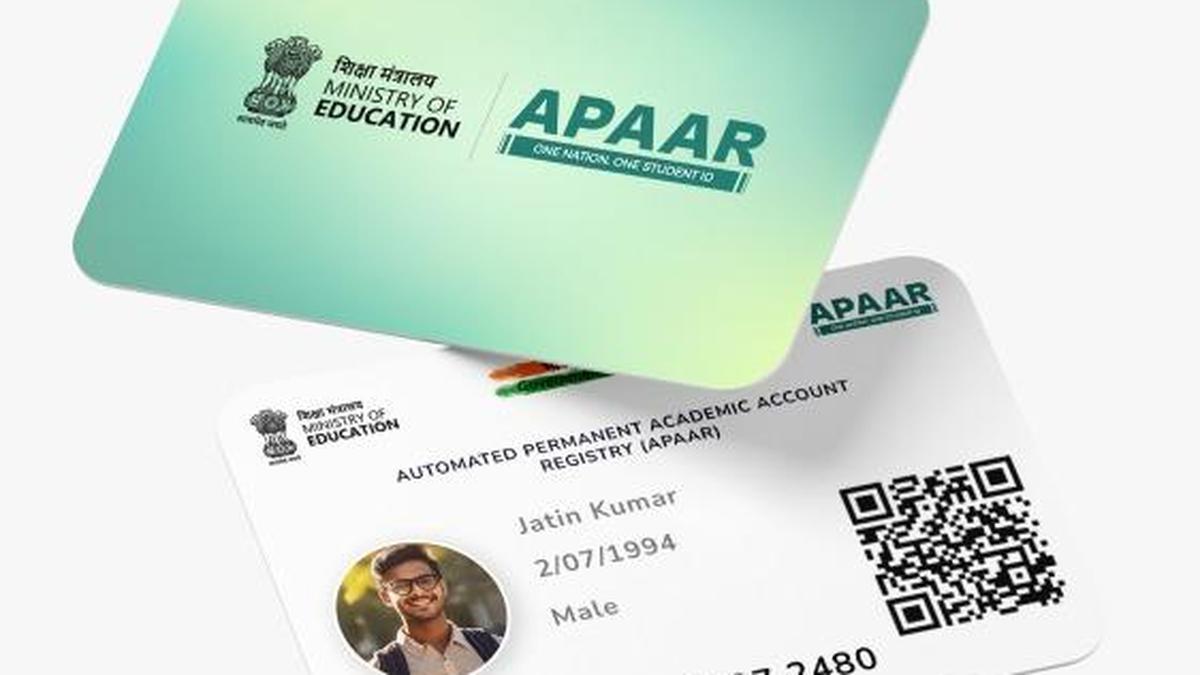
The Supreme Court agreed to clarify on Monday (July 20, 2026) that the Central Board of Secondary Education’s (CBSE) implementation of the Automated Permanent Academic Account Registry (APAAR) across India must be voluntary as per an Orissa High Court judgment of last year, which had directed a clear ‘opt-out/refusal option’ in the consent form. A three-judge Bench headed by Chief Justice of India Surya Kant told petitioner-parents led by Abhishek Baxi, represented by senior advocate Indira Jaising and Paras Nath Singh, in open court that it would pass an order requiring the CBSE to comply with an Orissa High Court judgment of December 12, 2025. The High Court judgment in Rohit Anand Das versus State Of Odisha had directed the APAAR consent form to “include an opt out/refusal of consent option”. “We will pass an order to the CBSE to give effect to the Orissa High Court judgment on a pan-India basis,” the Chief Justice addressed the petitioner side. Explained | Is the APAAR ID for students mandatory? Chief Justice Kant assured that the court would direct the CBSE to also “suitably clarify” the APAAR ID scheme. Justice Joymalya Bagchi said the APAAR scheme offered a layered storage of the educational trajectory of students solely for the “institutional use of the CBSE”.
“The Aadhaar judgment struck a balance between development and privacy. Here, the balance is between education and privacy. The CBSE is bound to use APAAR details only for institutional purpose,” Justice Bagchi observed orally. Also Read | Orissa HC asks Centre to allow opt-out option in APAAR ID consent forms The petition had sought the court to either strike the APAAR scheme on the ground of “coercive implementation” or put in place necessary safeguards to protect the privacy of students. Jaising said APAAR scheme forced biometric-based digital identity on minors in educational contexts, violating children’s privacy, a fundamental right under Article 21 of the Constitution. “These are just children… Education is a right and should not become a burden for them,” the senior counsel said. The government has projected the APAAR scheme as a mechanism to “accumulate and store students’ academic accomplishments, facilitating seamless transitions between institutions for the pursuit of further education”. The APAAR ID is linked to Aadhaar and is stored in the DigiLocker. The registry provides students with standardised data on their marksheets and institutional affiliation. Also Read | APAAR ID: A must for the future, but questions loom over data privacy of minors During the hearing the Chief Justice remarked that the “scheme seemed to be beneficial for students” and facilitated transfers from one school to another.
 The BriefWire