Narasu’s Coffee turns 100: The Hindu update
“Coffee-na Narasu’s Coffee thaan… Besh Besh, romba nalla irukku.” Long before jingles became viral and brands chased influencers and social media trends, this simple line
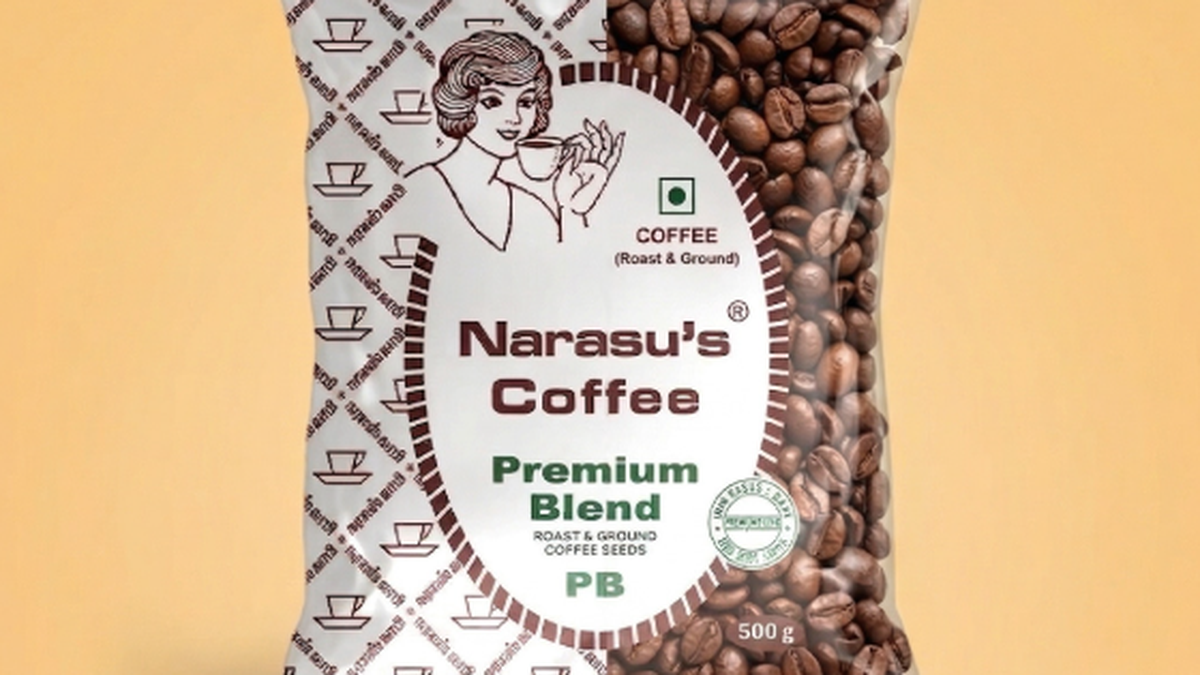
“Coffee-na Narasu’s Coffee thaan… Besh Besh, romba nalla irukku.” Long before jingles became viral and brands chased influencers and social media trends, this simple line in an on television earned a place in the hearts of many people of Tamil Nadu. And now, this Salem-based brand, that became a part of the coffee culture, is celebrating its centenary. The Narasu’s story began in 1926 with its founder, V. Lakshmi Narasimhan (fondly known as Narasu), introducing high-quality tea and coffee blends. The firm’s head office building was constructed in 1939 and inaugurated by V.V. Giri, who served as the Labour Minister during the British era and later became the President of India. According to a report in The Hindu dated April 25, 1953, U. Krishna Rao, Minister for Industries and Labour opened a coffee factory of Narasu’s Manufacturing Co. at Guindy, Chennai. At that time, V.L. Narasu, its managing director, recalled that in 1926, he started a small roasting factory actuated by an ardent desire to supply the coffee-consuming public with the right type of roasting and ground coffee. The roasting was done in Salem in a novel method and roasted coffee seeds were supplied to the several branches of his organisation to be ground and delivered to customers. Court auction and acquisition Following his demise and subsequent financial challenges, the company faced a pivotal court auction in 1966. It was acquired by Narasu’s Coffee Co., a partnership firm of R.P. Sarathy, father of P.
Sivanantham (now chairman of Narasu’s Coffee) and other family members. “We took over the business in 1966 through a court auction and have continued operations without interruption. My father and his brothers acquired the company. As our family was already involved in coffee trade and had considerable expertise in the sector, the takeover was easy.” Mr. Sivanantham, who took over the business in 1983, told The Hindu. In 1983, he travelled to exhibitions in Germany to master the nuances of advanced machinery and packaging technology. It culminated into a Form-Fill-Seal (FFS) automated packing system full-scale deployment by 1994. He designed and established the company’s coffee curing facility and drove the brand’s highest-ever retail store expansion. During his travels. Mr. Sivanantham observed a market gap in southern Tamil Nadu — consumers loved vara kaapi (black coffee) but lacked a blend with sufficient strength. He then formulated Delite Coffee — known as Pachchai Kaapi among consumers due to its vibrant green packaging. The rise of ‘Udhayam Filter Coffee’ Sivanantham recalled that in 1993, the economic liberalisation had introduced the “Free Sale Quota” system. This allowed growers to sell a portion of their coffee in the open market, eventually leading to the 1996 abolition of the pooling system. While this completely deregulated the market, it caused raw material prices to skyrocket by an unprecedented 250% to 300%. To shield daily coffee aficionados from prohibitive costs without compromising on quality, Mr. Sivanantham launched Narasu’s Udhayam Filter Coffee.
 The BriefWire