Wangchuk might end his hunger strike today. No two fasts end the same way
Every hunger strike begins with a belief — that refusing food can achieve what dialogue and petitions could not. For centuries, fasting has been a
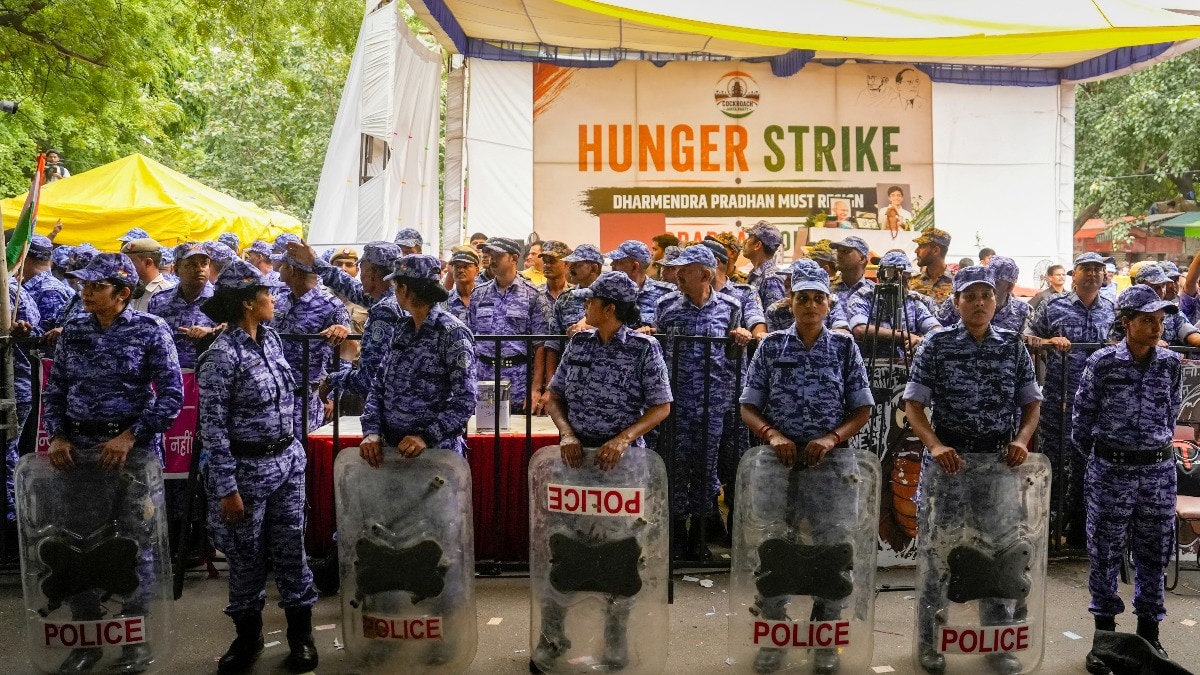
Every hunger strike begins with a belief — that refusing food can achieve what dialogue and petitions could not. For centuries, fasting has been a tool of protest. In the modern era, Mahatma Gandhi transformed hunger strikes into one of the world's most resilient forms of non-violent protests. But if one looks at the history of hunger strikes in India and across the world, it shows that no two protests have been resolved in the same way. Read Full Story Some hunger strikes concluded with negotiations, leading to policy changes. Others, with assurances of changes by the authorities. Some ended in death, with the protester's sacrifice not always resulting in the change they sought. And in prolonged cases, where the protesters didn't budge, authorities intervened through force-feeding to prevent deaths. That history is once again in focus as Ladakhi activist Sonam Wangchuk was shifted from New Delhi's Jantar Mantar protest site to Safdarjung Hospital on Saturday morning, on the 21st day of being on an indefinite hunger strike. Even after being admitted to the hospital as a precaution against health complications, Wangchuk has continued to refuse food and medical treatment. His wife, Gitanjali J Angmo, has shared a message saying Wangchuk wants the movement to continue, and has urged supporters to participate in the July 20 "Chalo Sansad" march to Parliament, against systemic accountability following NEET-UG paper leaks. In a note from the hospital, Wangchuk outlined three circumstances under which he said he was willing to end his hunger strike. Wangchuk, as of now, remains under continuous medical observation and is being counselled to accept treatment. Whether his hunger strike leads to negotiation with the authorities, medical intervention, or something else, remains to be seen, especially because there is no pattern in how such strikes have ended over the decades. Since Independence, some hunger strikes have reshaped India's political map, others have influenced legislation or public policy, while several have ended without any result. Every hunger strike tested the resolve of both the protester and the state. But more than the duration of the fast, it has been the political context, public support, and the willingness of stakeholders to engage that have shaped how these protests eventually concluded. Here's a look at some of Independent India's and the world's most defining hunger strikes, and the course they took.
A HUNGER STRIKE THAT CREATED ANDHRA, RESHAPED INDIA'S MAP Among the most consequential hunger strikes in Independent India was that of Gandhian activist Potti Sriramulu. On October 19, 1952, Sriramulu began a fast unto death in Madras (now known as Chennai), demanding a separate state for Telugu-speaking people. Before this, he had undertaken fasts on social issues, including temple entry for Dalits. Sriramulu continued his fast for 58 days. The central government, led by Prime Minister Jawaharlal Nehru, was initially reluctant to reorganise states on linguistic lines. Sriramulu died on the intervening night of December 15–16, 1952. His death triggered widespread protests and violence across Telugu-speaking regions. Public buildings were attacked, transport services were disrupted, and demonstrations intensified. Four days later, on December 19, 1952, Nehru announced that a separate Andhra State would be created. The state came into existence on October 1, 1953, carved out of the erstwhile Madras State, becoming India's first linguistic state. The episode later paved the way for the broader reorganisation of states on linguistic lines. SIXTEEN YEARS WITHOUT FOOD: IROM SHARMILA'S FIGHT AGAINST AFSPA If Sriramulu's fast showed the political impact of a protest ending in death, Manipur's activist Irom Sharmila's hunger strike shows how a hunger strike can continue for years without achieving its principal demand. Sharmila began her fast on November 5, 2000, after the killing of 10 civilians in Malom, Manipur. She demanded the repeal of the Armed Forces (Special Powers) Act (AFSPA), which grants special powers to the armed forces in areas declared disturbed. The law has long been contentious, with supporters describing it as essential for counter-insurgency operations, and critics arguing that it enables human rights violations by granting sweeping legal protections to security forces. Over the next 16 years, she was repeatedly arrested under the then-applicable law relating to attempt to suicide and was force-fed through a nasogastric tube while in judicial custody at a hospital. Her detention and release became a recurring cycle as she refused to end her protest. In August 2016, Sharmila finally broke her fast by tasting honey, saying she would pursue her campaign through electoral politics instead. In 2017, she formed her own political party, the Peoples' Resurgence and Justice Alliance (PRJA), and contested the Manipur Assembly election, although unsuccessfully. While AFSPA has since been withdrawn from several areas in the Northeast, her central demand for its complete repeal had not been met when she ended her fast.
 The BriefWire