Planet 48 light-years away has 3 key ingredients scientists seek for life
How is the planet like? The exoplanet or planet outside of our solar system was discovered in 2017 by a team led by astronomer Jason
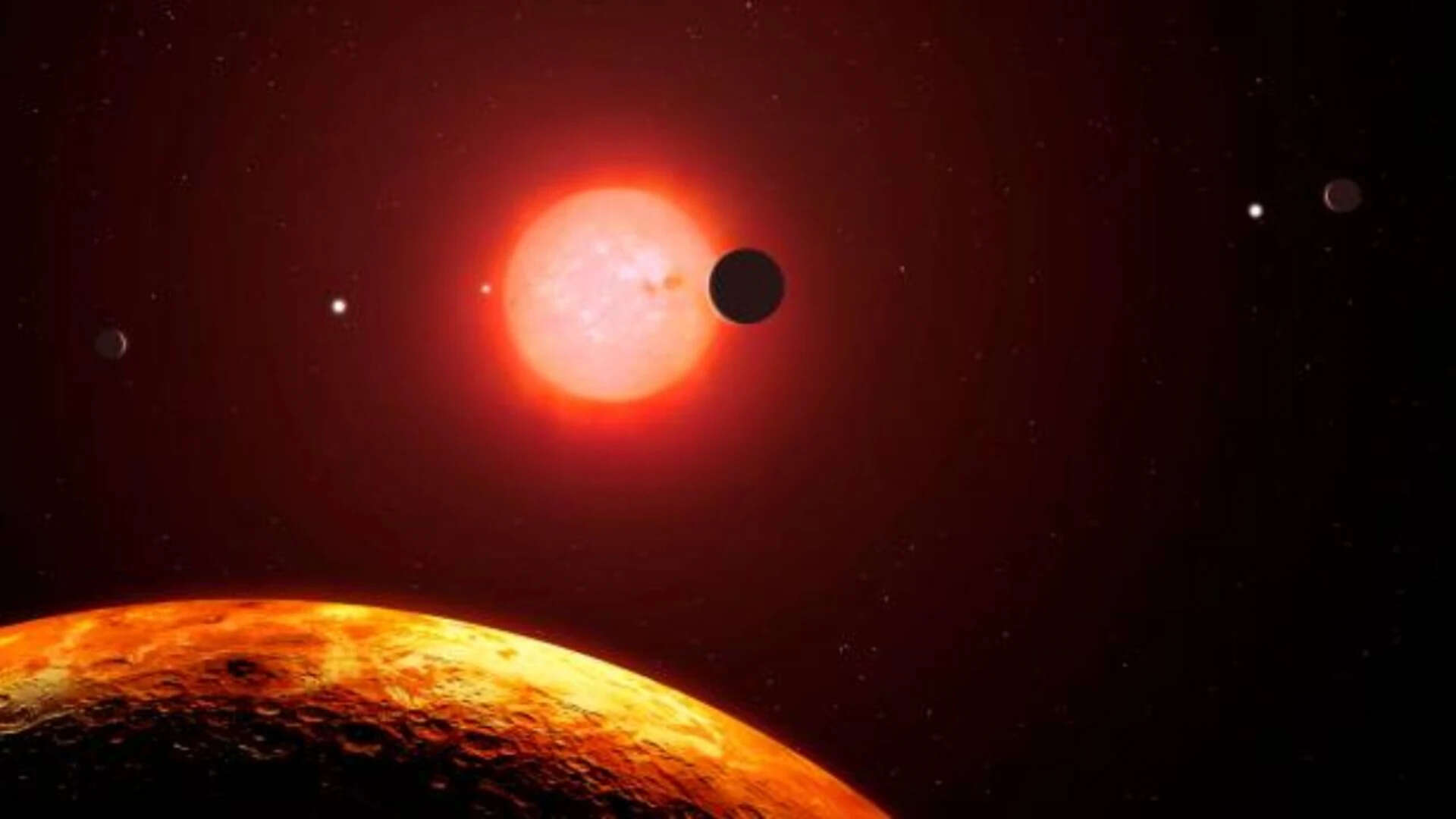
How is the planet like? The exoplanet or planet outside of our solar system was discovered in 2017 by a team led by astronomer Jason Dittman Searching for an atmosphere While a few rocky planets have been found in their star's habitable zone, none have had an atmosphere like this one. Are there alien inhabitants? Currently, the researchers lack enough data to make that conjecture This might be the closest humans have come to finding another planet that can support life. In a shocking discovery, astronomers have detected an atmosphere around an Earth-like, rocky planet about 48 light-years away.The planet, called LHS 1140 b, is orbiting in the habitable zone around its star meaning that it is at the right distance away from its star for liquid water to potentially exist on the planet. According to the new research published in the journal Science, it has an atmosphere that contains helium and is also the first rocky planet to have an atmosphere detected directly."We have actually detected directly the helium present in the atmosphere itself, and that's the first direct detection for any rocky exoplanet, which is really exciting … and then there's this added bonus that it's in the habitable zone, which is super exciting for astrobiology and habitability and searching for life," lead author Collin Cherubim, who recently earned his Ph.D. from Harvard University, told Space.com.
"It feels kind of surreal."The exoplanet or planet outside of our solar system was discovered in 2017 by a team led by astronomer Jason Dittman who is now a co-author on this new discovery. "This planet was found like 10 years ago, and we're just now saying, okay, that's an atmosphere," Dittman told Space.com. "We're slowly narrowing the gap and checking these boxes … we're finding a planet that's rocky, a planet that's of the right temperature and now … it's like okay, we finally found one that has an atmosphere.While it orbits a red dwarf star which is smaller and cooler than the sun, it orbits closer than Earth does to its star, maintaining a temperature that keeps the planet in the 'Goldilocks zone' where liquid water could exist on its surface. "It probably also has a lot of water," Cherubim said. "If it has some amount of atmosphere that can provide a bit of a greenhouse effect, which we know that it does now … it will very likely be what we consider to be habitable conditions on Earth, and conditions that would likely support liquid water. "But is it a second Earth? While it's certainly not a copy of Earth, this planet resembles it in two main ways. One is its overall composition: The planet is rocky, likely with an iron core and it has an atmosphere.
 The BriefWire