Vikram-1's ‘Sky-Route’ Paves Way For 400+ Startups: Decoding The Future After Successful Aagaman
Vikram-1’s ‘Sky-Route’ Paves Way For 400+ Startups: The Future After Successful ‘Aagaman’ Explained Published By, Last Updated: July 20, 2026, 12:31 IST Skyroot Aerospace successfully
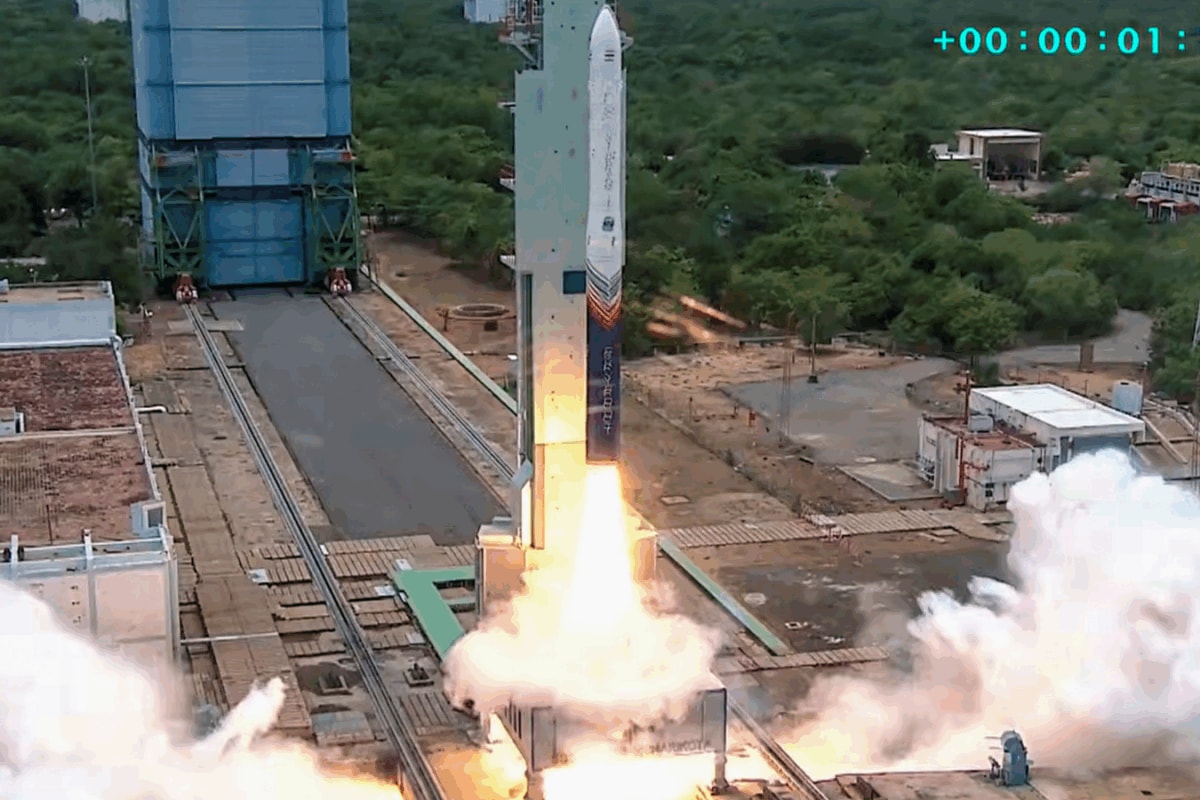
Vikram-1’s ‘Sky-Route’ Paves Way For 400+ Startups: The Future After Successful ‘Aagaman’ Explained Published By, Last Updated: July 20, 2026, 12:31 IST Skyroot Aerospace successfully launched its Vikram-1 rocket under 'Mission Aagaman' on Saturday. What does it mean for private startups aiming for commercial missions? Rapid Read Skyroot Aerospace successfully launches India’s first private orbital rocket Vikram-1 in space. (Source: PTI) On July 18, India’s indigenous Vikram-1 rocket became the world’s first privately developed orbital vehicle to successfully place multiple customer payloads into Low Earth Orbit (LEO) on its very first attempt. What does it mean for private startups aiming for commercial missions? News18 explains. This milestone has fundamentally altered the commercial space race, shifting investor focus from technology risk to execution risk, and providing global satellite operators an affordable alternative to legacy launch monopolies, say experts. WHAT WAS MISSION AAGAMAN? Skyroot Aerospace successfully launched its Vikram-1 rocket under the historic “Mission Aagaman" on Saturday. Lifting off from the Satish Dhawan Space Centre (SDSC) in Sriharikota, the maiden test flight successfully achieved orbit and deployed multiple payloads into a 450-km Low Earth Orbit (LEO). This monumental achievement makes India only the third country in the world to secure private orbital launch capability via a privately developed launch vehicle. It is India’s first privately developed orbital-class rocket to reach space, transitioning Skyroot from its 2022 suborbital test (Vikram-S) to full orbital capability. A seven-storey-tall (22-metre) multi-stage vehicle featuring an all-carbon composite structure, high-thrust solid-fuel boosters, and a 3D-printed liquid engine. Engineered to deliver up to 350 kg to Low Earth Orbit. The entire launch sequence spanning 14 flight phases concluded successfully in roughly 15.5 minutes. The mission safely injected a mix of technology demonstration and symbolic payloads into orbit Commercial/Tech Payloads: Included Skyroot’s SCOPE satellite, DCUBED’s tech demonstrator, Grahaa Space’s SOLARAS S3 satellite, and Cosmoserve Space’s Embrace—a robotic arm built to capture orbital debris. Symbolic Memorabilia: Carried a handwritten “Vande Mataram" postcard signed by Prime Minister Narendra Modi, an artwork called “Cosmic Bloom", and an 18-karat gold micro-rocket featuring microscopic engravings of legendary scientists C.V. Raman, Vikram Sarabhai, and A.P. J. Abdul Kalam. THE FUTURE OF PRIVATE STARTUPS NOT BUS, A CAB SERVICE FOR SPACE: While heavy-lifters like SpaceX operate like fixed-route “trains" that drop multiple payloads at a single destination, the Skyroot effect is built on custom flexibility. Operating as an “Uber for space", Vikram-1 offers customised orbital deployments.
 The BriefWire