JUI-F Chief Fazlur Rehman Accuses Pakistan Army Of Using Martyrs To Hide Its Failures
JUI-F Chief Fazlur Rehman Accuses Pakistan Army Of Using Martyrs To Hide Its Failures Reported By, Last Updated: July 20, 2026, 08:06 IST Rehman accused
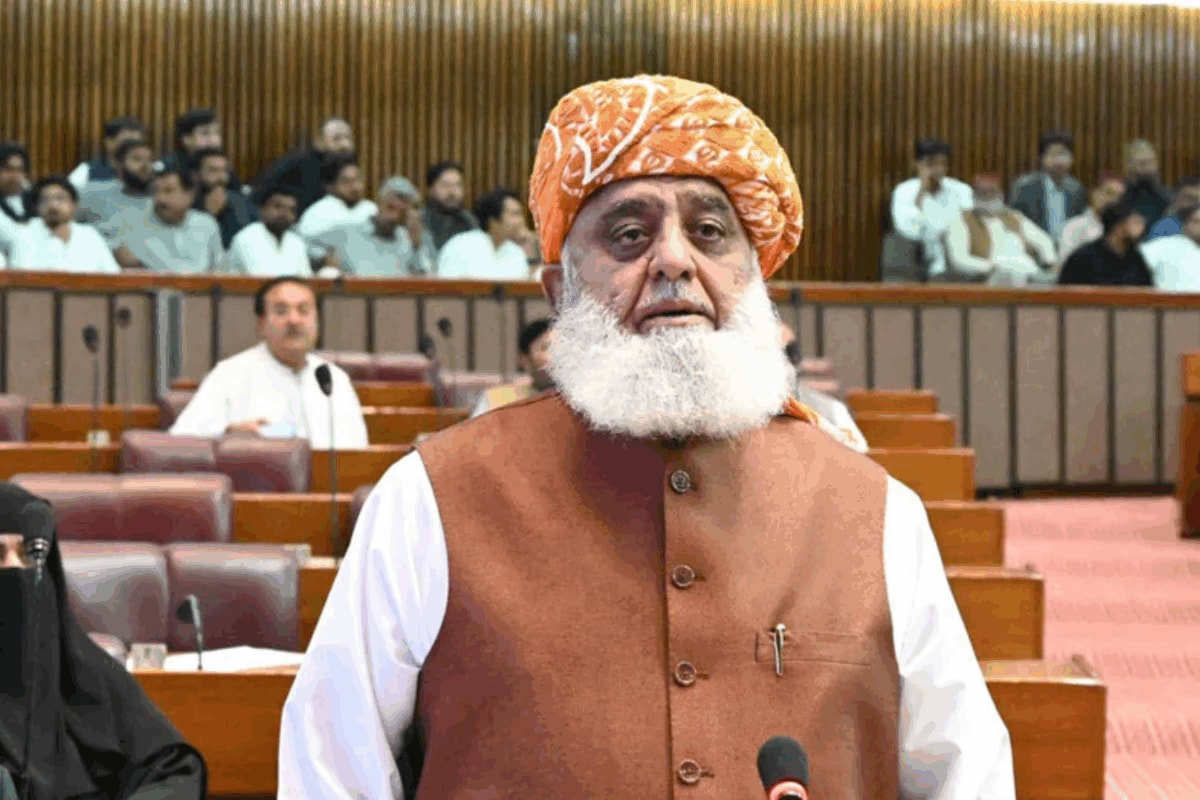
JUI-F Chief Fazlur Rehman Accuses Pakistan Army Of Using Martyrs To Hide Its Failures Reported By, Last Updated: July 20, 2026, 08:06 IST Rehman accused the Pakistan military leadership of dishonouring soldiers killed in Kargil while invoking their sacrifices to deflect criticism. Rapid Read Jamiat Ulema-e-Islam-Fazl (JUI-F) chief Maulana Fazlur Rehman. (Image: X) Jamiat Ulema-e-Islam-Fazl (JUI-F) chief Maulana Fazlur Rehman has launched a blistering attack on Pakistan’s military establishment, accusing generals of exploiting the blood of fallen soldiers to conceal institutional failures and strengthen their political grip. In a sharply worded address, Rehman accused the military leadership of disrespecting its own soldiers, mishandling security in Khyber Pakhtunkhwa and creating an atmosphere of mistrust between the armed forces, police and the public. “You are using the blood of the martyrs as fuel. You are using this blood to cover up your own crimes," Rehman said. ‘All Energies Being Used To Strengthen Political Grip’ The JUI-F chief alleged that the military establishment was focusing its energies on securing political dominance instead of performing its constitutionally defined responsibilities. “All energies are being utilised solely to strengthen the political grip," he said. Rehman said Pakistan was an institutional country where the jurisdiction of every institution was clearly defined. He argued that reminding the military leadership of its responsibilities should not be portrayed as an attack on the armed forces. “Did I create these circumstances? Understand the core of my argument; I merely made everyone realise their respective jurisdictions," he said. “If I have drawn your attention toward your responsibilities, my parents did not give birth to me to surrender." Warning Against Formation Of Militias Rehman also strongly opposed attempts to involve civilians in armed militias amid worsening security conditions, warning that such a strategy could create long-term hostility against the state. “The country is besieged. There is a shortage of essential commodities. The resentment stems from the fact that we questioned why we should form a militia," he said. Drawing a parallel with the 1971 conflict, Rehman referred to the formation of Al-Badr and Al-Shams in erstwhile East Pakistan.
“In East Pakistan, the public was told to form militias, and Al-Badr and Al-Shams were created. They fought shoulder-to-shoulder with the army, and that enmity still exists today. So, are you now creating enemies for us too?" he asked. He questioned why civilians were being mobilised when the state was allegedly unwilling to fully utilise the provincial police. “You are not ready to utilise the provincial government’s police, yet you want to use the public," Rehman said. Claims Of Growing Police-Army Mistrust In KP The JUI-F chief claimed that mistrust between the police and the military had deepened in parts of Khyber Pakhtunkhwa, including Bannu, Lakki Marwat and Tank. “How many times have cantonments been attacked in Bannu? The police announced that they would now fight on their own and not alongside the army. Furthermore, the Bannu police are not obeying their officer. The exact same situation occurred in Lakki Marwat," he said. Rehman also claimed that police personnel in Tank had taken an oath at a mosque that the army would not participate in their funerals. “In a mosque in Tank, the police took an oath on the Quran that the army would not participate in their funerals," he said. He blamed the establishment for creating what he described as an atmosphere of resentment and distrust. “Have you ever wept at my funerals? Yet, I have wept at every one of your funerals. You are the ones who created this atmosphere of mistrust," Rehman said. ‘You Abandoned Your Own Soldiers In Kargil’ Rehman’s strongest criticism centred on the military establishment’s treatment of soldiers killed during the Kargil conflict. “Did you ever tell the nation how many were martyred in Kargil and how many bodies were received? You were not even ready to receive the bodies of your own martyrs," he said. He alleged that Pakistan received the body of Captain Karnal Sher Khan only after India insisted that it do so. “We received the body of Colonel Sher Khan only after India’s insistence," Rehman said. “You handed over your martyrs to the Hindus; you were not ready to receive their bodies." He further claimed that Indian authorities had later issued a statement saying the bodies had been buried according to Islamic rituals.
 The BriefWire