Quote of the day by Confucius: 'If I am walking with two other men, each of them will serve...'
'If I am walking with two other men, each of them will serve as my teacher' philosopher Confucius “If I am walking with two other
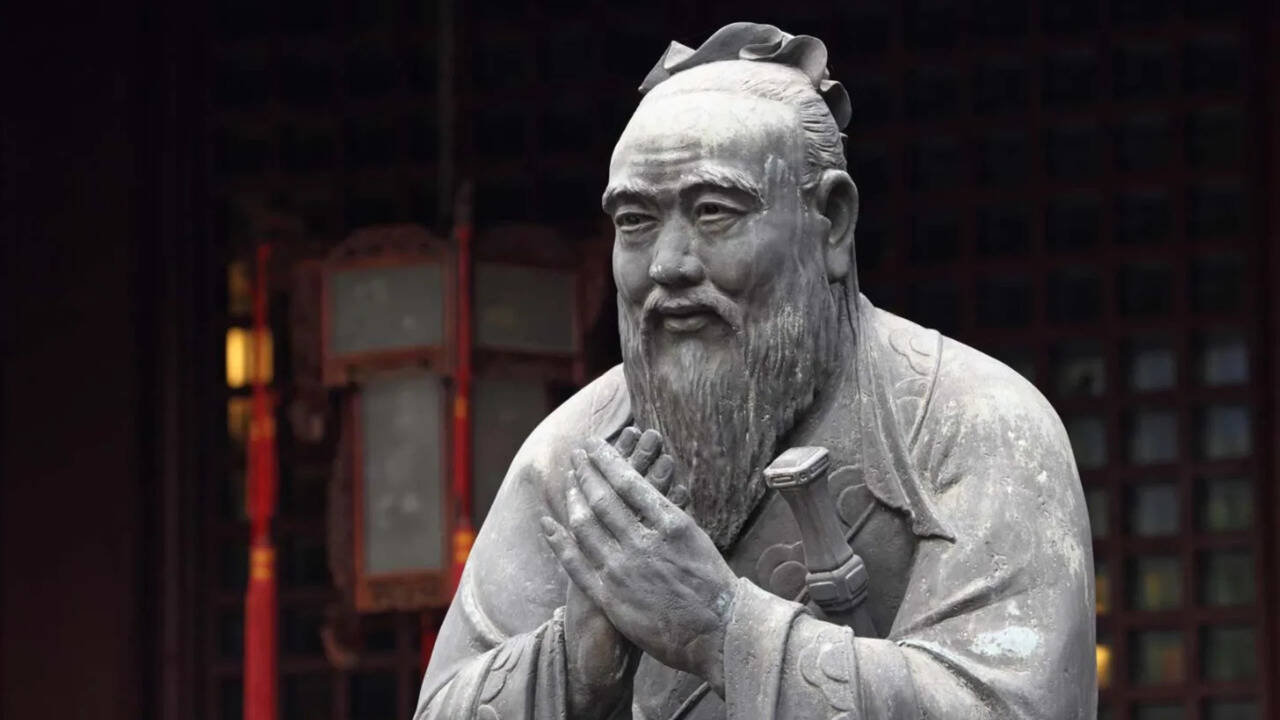
'If I am walking with two other men, each of them will serve as my teacher' philosopher Confucius “If I am walking with two other men, each of them will serve as my teacher. I will pick out the good points of the one and imitate them, and the bad points of the other and correct them in myself.” The historic road to self-cultivation Kong Fuzi "When three people walk together, one of them must be my teacher." The dual mirror of human nature Radical humility in the modern era Finding teachers in everyday life Imagine three people walking along a dusty road in fifth-century BC China. One walks with good posture, taking calm, respectful steps. The second keeps stumbling, complaining loudly, and pushing past others in frustration. The third person, quietly watching both companions, is the. Instead of seeing the second man as simply annoying or praising the first as naturally better, Confucius treats both as valuable teachers. He chooses to copy the dignity of the first man and uses the rude behaviour of the second as a chance to examine his own hidden weaknesses.This idea is at the centre of one of the best-known passages in the Analects:At its heart, this teaching removes the traditional and strict idea of who can be called a teacher. It suggests that wisdom is not something found only in famous schools or held only by respected masters. Instead, learning becomes an ongoing and active choice. The quote explains that every human interaction, no matter how ordinary or frustrating, can become a chance for personal growth if a person has the right mindset.It continues to remain relevant because it speaks to a common human habit: judging other people instead of using their actions to improve ourselves.This idea comes directly from, better known around the world as Confucius, who lived during China's Spring and Autumn period between 770 BC and 476 BC.
It was a time marked by the gradual decline of the Zhou Dynasty, political corruption, constant wars, and social unrest. In a divided society where rulers depended on force to control their people, Confucius travelled from one state to another, trying to persuade leaders to return to ethical government, proper rituals, and moral responsibility.These words were collected after his death by his loyal students in Book 7 of the Analects, a collection of sayings and conversations that became the foundation of Confucian philosophy. The original Classical Chinese phrase, San ren xing, bi you wo shi yan, literally means,Confucius was speaking to his students, young men preparing to become future government officials and advisers to kings.By presenting himself as someone who was always learning, Confucius taught an important lesson in intellectual humility. Although he was considered the most educated thinker of his time, he rejected the idea of being an all-knowing sage. Instead, he described himself as an ordinary traveller who stayed open to learning from everyone he met, creating an example his students were expected to follow throughout their public lives.From a philosophical point of view, this teaching supports the central Confucian idea of xiushen, or the careful improvement of one's own character. In the wider tradition of virtue ethics, becoming a good person is not about memorising fixed rules but about practising good behaviour every day. The image of walking beside two different companions creates two mirrors for understanding human nature. The first mirror encourages imitation, where seeing someone else's strengths inspires us to develop the same qualities. The second mirror, which reflects bad behaviour, may be even more important. Instead of creating pride or encouraging criticism, the faults of others become an early warning that helps us recognise similar weaknesses within ourselves.This idea also connects with modern psychology, especially the concept of psychological projection.
 The BriefWire