After Skyroot, more pvt spacetech startups set to reach for skies with commercial missions
After Skyroot, more pvt firms aim to take commercial dreams to sky Sriharikota: Vikram-1 Test Flight-1 (Mission Aagaman), India's first private orbital rocket launch, lifts
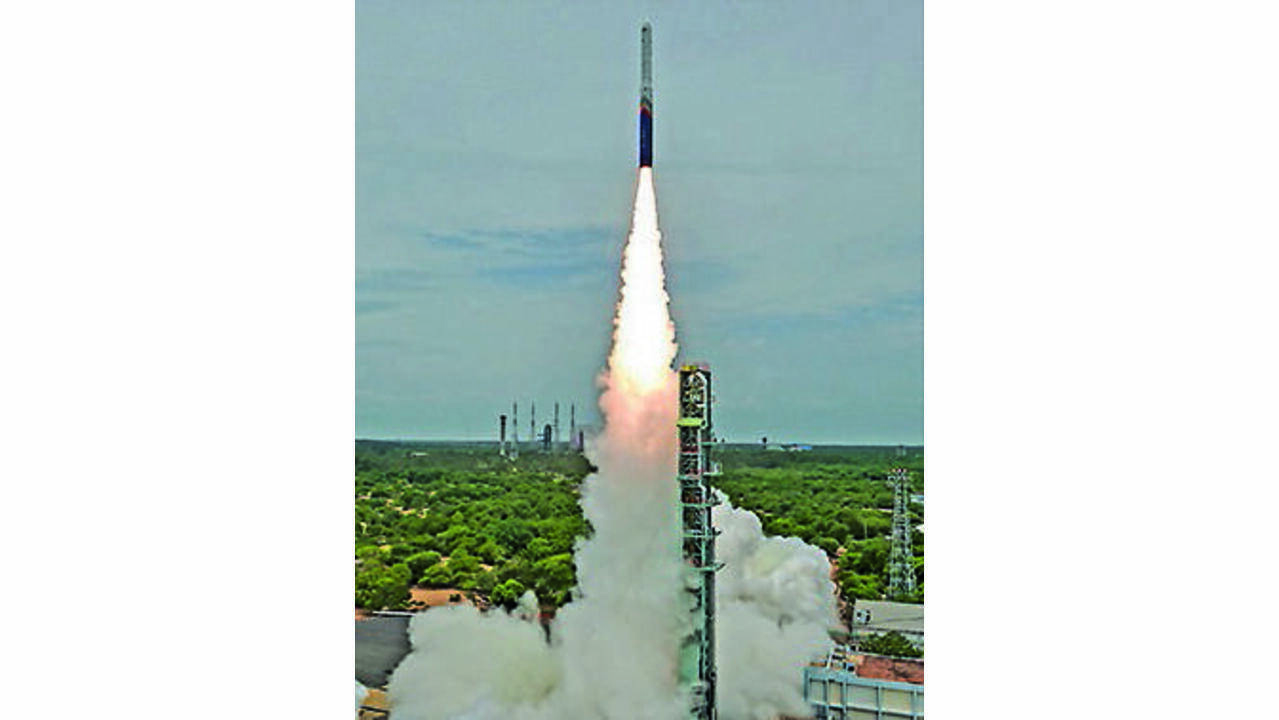
After Skyroot, more pvt firms aim to take commercial dreams to sky Sriharikota: Vikram-1 Test Flight-1 (Mission Aagaman), India's first private orbital rocket launch, lifts off from the Satish Dhawan Space Centre, in Sriharikota, Andhra Pradesh, Saturday, July 18, 2026. (PTI Photo/R Senthilkumar)(PTI07_18_2026_000284A) Hyderabad/Bangalore: India’s private space industry is set to accelerate its activity after Hyderabad-based Skyroot Aerospace created history by reaching orbit with Vikram-1 on its maiden mission, a feat no private launch company globally has matched.SpaceX, now the world’s dominant commercial launch provider, reached orbit after three failed attempts. Skyroot’s success has turned attention to Indian spacetech startups building rockets, including reusable ones, satellites, payloads, propulsion systems and space-data businesses as they prepare to shift from demonstrations to commercial missions.Skyroot is gearing up for at least one more Vikram-1 test mission by the end of this year and hopes to be ready with a 1,000kg payload capacity rocket -- Vikram-2 -- for launch by the end of next year, Pawan Kumar Chandana, co-founder, Skyroot Aerospace, told TOI a day after the successful Mission Aagaman. The ultimate goal is to reach a cadence of producing one rocket per month.Chennai-based Agnikul Cosmos too is planning Mission 02 within a year, carrying paying customer satellites and attempting to land the rocket’s lower stage on a sea barge.
Co-founder Srinath Ravichandran said Agnikul also wants to keep the upper stage in orbit as a satellite platform.“If it feels like a satellite and functions like a satellite, you may as well make it a satellite,” he said.Agnikul plans Missions 02, 03 and 04 within four to five months of one another, all with paying payloads. On reusability, Ravichandran said, “A typical rocket has one brain. A reusable rocket has two brains.”Bengaluru-based EtherealX expects to complete qualification tests for its Pegasus upper-stage engine and Stallion booster engine by year-end. Co-founder Manu Nair said reusability was part of the vehicle design from the start. “It is the same base vehicle,” he said. “No one can replicate SpaceX’s model outright,” Nair added. “Our default posture, and where the economics work best for us, is full reusability.”Satellite companies are also preparing for more frequent launches. GalaxEye, which launched its first satellite in May before the mission was disrupted by a solar storm, said the development could influence future launch choices.It is developing Opto-SAR satellites, combining optical imaging and synthetic aperture radar on the same spacecraft. “Our idea is now to put up two satellites in two years. These would again be Opto-SAR satellites, to kind of perfect it up there,” said co-founder Pranit Mehta.
 The BriefWire