'Have You Ever Negotiated Under A Bomb Threat': Iran FM Araghchi Reveals What He Told Trump's Envoy During Talks
'Have You Ever Negotiated Under A Bomb Threat': Iran FM Araghchi Reveals What He Told Trump's Envoy During Talks Published By, Last Updated: July 19
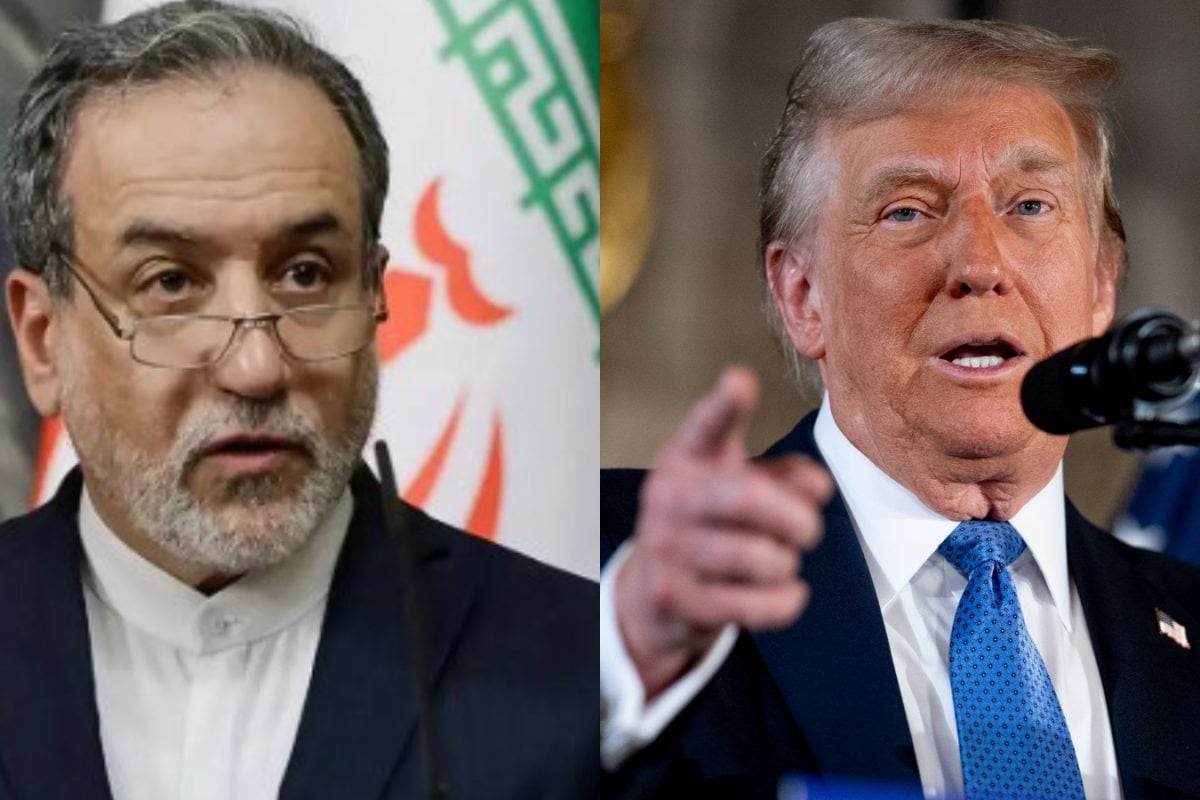
'Have You Ever Negotiated Under A Bomb Threat': Iran FM Araghchi Reveals What He Told Trump's Envoy During Talks Published By, Last Updated: July 19, 2026, 23:14 IST Iran FM Abbas Araghchi says he asked Trump's envoy if he had ever negotiated under a bomb threat during US-Iran talks. Iran Foreign Minister Abbas Araghchi and US President Donald Trump. (From left to right) US-Iran War: Iran’s Foreign Minister Abbas Araghchi on Sunday claimed that negotiations with the United States were conducted under the constant threat of military strikes, saying he raised the issue directly with US President Donald Trump’s Middle East envoy Steve Witkoff during talks. In an interview with Iran’s Mehr news agency, Araghchi said Tehran’s delegation attended negotiations knowing there was a possibility of being attacked at any moment. He also claimed that the security vulnerability that enabled the US and Israel to strike Iran’s leadership on February 28, triggering the war, still remains. What Araghchi said? Recalling his discussions with Witkoff and Trump’s son-in-law Jared Kushner in February, Araghchi said he asked the US envoy whether he had ever negotiated under the threat of an air strike.
“I told Witkoff, ‘Have you ever attended a meeting where there was a possibility of being bombed at any moment?'" Araghchi said during the interview. The Iranian foreign minister also said Tehran was not intimidated by Washington’s pressure during the negotiations. “This isn’t Venezuela where you take one person and everyone else gets scared and backs down," he said, referring to what he described as Iran’s response to US threats. Security vulnerability ‘still exists’ Araghchi also spoke about the US-Israel strike on the leadership compound in Tehran on February 28, which he said killed Supreme Leader Ayatollah Ali Khamenei and members of his family. According to Araghchi, the attack was made possible because of a security weakness within Iran. “The bombing was carried out through a security vulnerability, and this security vulnerability still exists," he said. Iran’s Hormuz plan The Iran foreign minister said that after learning of Ali Khamenei’s death, Iran had already prepared a response if the supreme leader became the target of an attack. He said plans to close the Strait of Hormuz had been made “from the very first day".
Araghchi added that he immediately contacted foreign ministries across the region and informed them of Iran’s intended response. “We will strike US military bases; understand that this action is against America," he said. Araghchi has not seen Mojtaba yet Asked whether he had met Iran’s new Supreme Leader Mojtaba Khamenei, Araghchi said he has not yet met him in person since he was coronated after his father’s death. “Only a very small number of people have met with him," he said. Araghchi also argued that the US and Israel made “two miscalculations" when they launched their offensive against Iran. “They started the war… they didn’t account for the resistance," he said. Referring to Israel, Araghchi added, “The Zionist regime thought that with a short attack, they could destroy everything. When that didn’t happen… they were forced to stop the war." News18 Newsletter Handpicked stories, in your inbox A newsletter with the best of our journalism submit Key Questions Answered What are the current US-Iran relations like? Iran's Foreign Minister Abbas Araghchi stated that negotiations with the US were conducted under the threat of military strikes, a point he raised with Trump's envoy Steve Witkoff.
 The BriefWire