Algeria seeks larger EU energy role amid regional tensions
Algeria and Germany agreed to deepen energy ties during President Abdelmadjid Tebboune's recent visit to Berlin. But Algiers is still grappling with tensions at home
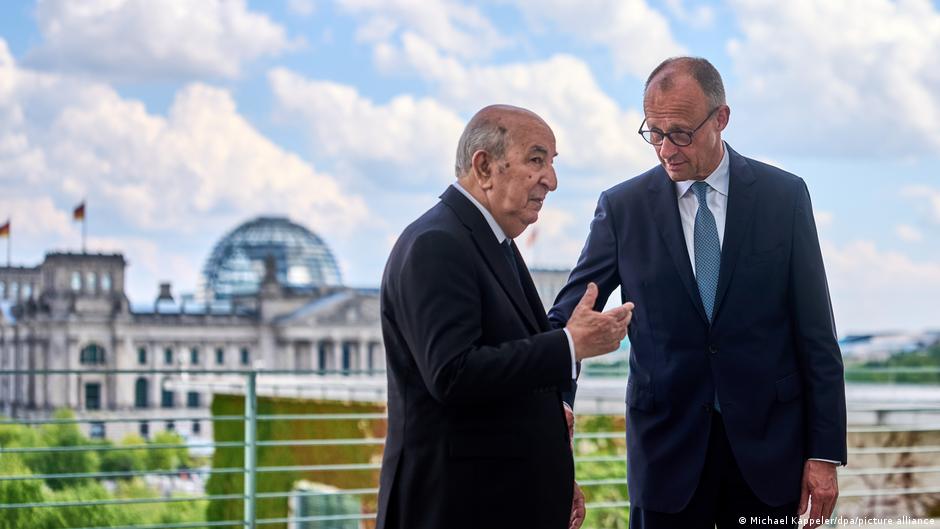
Algeria and Germany agreed to deepen energy ties during President Abdelmadjid Tebboune's recent visit to Berlin. But Algiers is still grappling with tensions at home, over Western Sahara and instability in the Sahel. For Algerian President Abdelmadjid Tebboune, this week's visit to Berlin marked his first official trip to Germany since he was elected president in 2019. The two-day visit was highlighted in a joint statement with German Chancellor Friedrich Merz, in which the two leaders emphasized "the quality of cooperation" between their countries and pledged to deepen long-term energy cooperation. "Algeria is a central partner for Europe's energy security. Natural gas supplies and cooperation on renewable energies are to be expanded. In the long term, it is about establishing a southern hydrogen corridor — from North Africa to Germany," Cerstin Gammelin, the spokesperson for German President Frank-Walter Steinmeier posted on X on Thursday. Algeria is home to Africa's second-largest proven natural gas reserves after Nigeria. It is also Africa's largest natural gas producer. On July 2, Algeria's state-owned energy company Sonatrach delivered the first shipment of liquefied natural gas (LNG) directly to Germany's Wilhelmshaven 1 floating LNG import terminal. A direct pipeline to Germany would eliminate the need for liquefaction, LNG shipping and regasification for those volumes. This could reduce transport costs for gas deliveries, as is already the case with Algeria's two existing pipelines to Italy and Spain. Algeria's domestic demand for gas is increasing while the capacity of the two existing pipelines to southern Europe is limited Image: Billal Bensalem/NurPhoto/picture alliance "The war in Iran and the disruption of oil exports via the Strait of Hormuz have reinforced Algeria's energy importance," said Alice Gower, director of geopolitics and security at the London-based consulting firm Azure Strategy.
"Although Algeria cannot replace Gulf supplies, its pipeline gas reaches southern Europe without passing through Gulf shipping lanes, offering European governments supply diversification at a time of renewed concern about energy security," she said. This view is echoed by Hafed Al-Ghwell, director of the North Africa, Mediterranean and the Sahel program at the Washington-based think tank Stimson Center. Al-Ghwell told DW he recently met with Algeria's foreign minister and members of the cabinet. "You can sense very clearly that there is the political will at the highest level of government that Algeria needs to take advantage of what is happening globally as well as its unique position as a major gas producer," he said. Algeria at key strategic crossroads Algeria's value for Europe extends well beyond gas, Gower pointed out. "Algiers offers cooperation on counterterrorism, migration and Mediterranean stability," she told DW. For years, Algeria has cooperated with European countries on migration management, including returns, border issues and combating smuggling networks. Moreover, Algiers holds a distinctive diplomatic standing, maintaining relations with both Iran and the United States, as well as the Gulf countries, China and Russia. It is also located at a key strategic crossroads between North Africa and the Sahel region. "President Tebboune has also placed renewed emphasis on African cooperation, reflecting Algeria's ambition to act as a bridge between North Africa, the Sahel and the wider continent," said Gower. However, she also noted that this approach is a response to pressure. Algeria is increasingly isolated on the issue of Morocco's claim over the disputed Western Sahara territory.
 The BriefWire