'King Of The North' Andy Burnham Heads To 10 Downing Street: Why British PMs Keep Stepping Down
'King Of The North' Andy Burnham Heads To 10 Downing Street: Why British PMs Keep Stepping Down Published By, Last Updated: July 19, 2026, 18:49
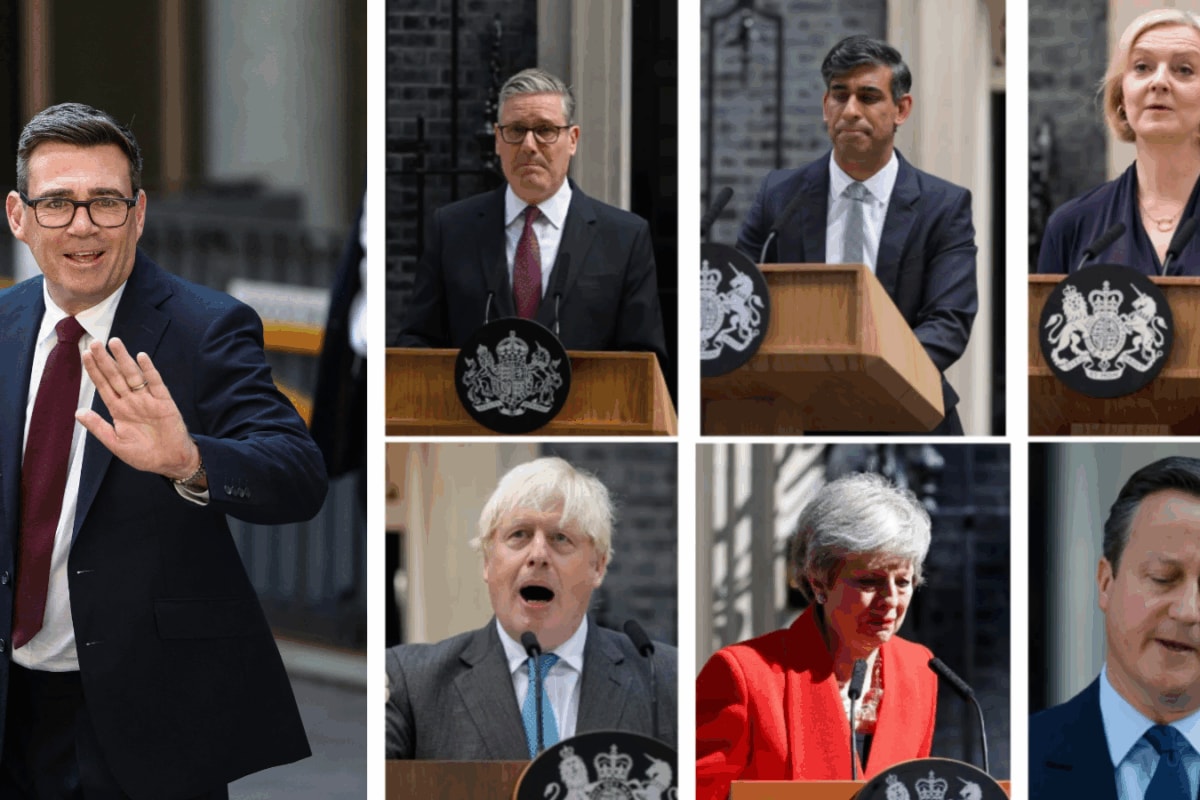
'King Of The North' Andy Burnham Heads To 10 Downing Street: Why British PMs Keep Stepping Down Published By, Last Updated: July 19, 2026, 18:49 IST One of the biggest reasons behind the revolving door at 10 Downing Street is the UK's internal party system. File photo of Andy Burnham (L) and former British PMs, including Keir Starmer, Rishi Sunak, and Liz Truss (Top row, from left). Bottom row, from left, Boris Johnson, Theresa May, and David Cameron. (Image: AP/AFP) The United Kingdom has witnessed an extraordinary political churn over the past decade, with six prime ministers stepping down before the completion of their five-year term in office. From David Cameron to Keir Starmer, leaders have been brought down by party rebellions, scandals, economic crises and electoral setbacks. The rapid turnover marks one of the most turbulent periods in modern British politics. Party Revolts And Brexit Turmoil One of the biggest reasons behind the revolving door at 10 Downing Street is the UK’s internal party system.
Unlike some countries, British prime ministers can be replaced by their own parties without a general election. Conservative Party rules, in particular, allow MPs to trigger confidence votes against sitting leaders, making their positions vulnerable to internal dissent. The instability began with the 2016 Brexit referendum. David Cameron resigned after voters backed leaving the European Union, despite his campaign to remain. His successor, Theresa May, struggled to secure parliamentary approval for her Brexit deal and eventually stepped down amid mounting pressure from her party. Scandals And Economic Crises Political controversies have also prompted resignations by some prime ministers. Boris Johnson’s government was rocked by the “Partygate" scandal and allegations surrounding former MP Chris Pincher, leading to a mass revolt within the Conservative Party and his resignation in 2022. Economic turmoil further deepened the crisis. Liz Truss’s ta cutting “Mini-Budget" triggered market chaos and forced her to resign after just 49 days in office—the shortest premiership in British history.
Her successor, Rishi Sunak, struggled to reverse the Conservatives’ declining fortunes and resigned after Labour’s landslide victory in the 2024 general election. Why Did Keir Starmer Step Down? Even Labour’s sweeping election victory failed to guarantee stability. Keir Starmer’s government faced criticism over policy reversals, welfare reforms and the controversy surrounding Peter Mandelson’s appointment as Britain’s ambassador to the United States. Poor local election results and growing support for Reform UK further weakened his authority within the party. With internal backing evaporating and Labour leaders increasingly viewing Andy Burnham as a stronger challenger to Reform UK’s rise, Starmer resigned in June 2026, becoming the latest British prime minister to leave office before completing a full term. Dubbed the “King of the North" for his work as mayor of Greater Manchester in northwestern England, Burnham will succeed Keir Starmer as PM on Monday. He is also expected to unveil his new cabinet, comprising his top ministers, on the same day.
 The BriefWire