Balochistan 'Declares Independence' From Pakistan: Why It Matters More To Islamabad Than PoK
Balochistan 'Declares Independence' From Pakistan: Why It Matters More To Islamabad Than PoK Published By, Last Updated: July 19, 2026, 16:13 IST For Pakistan, Balochistan
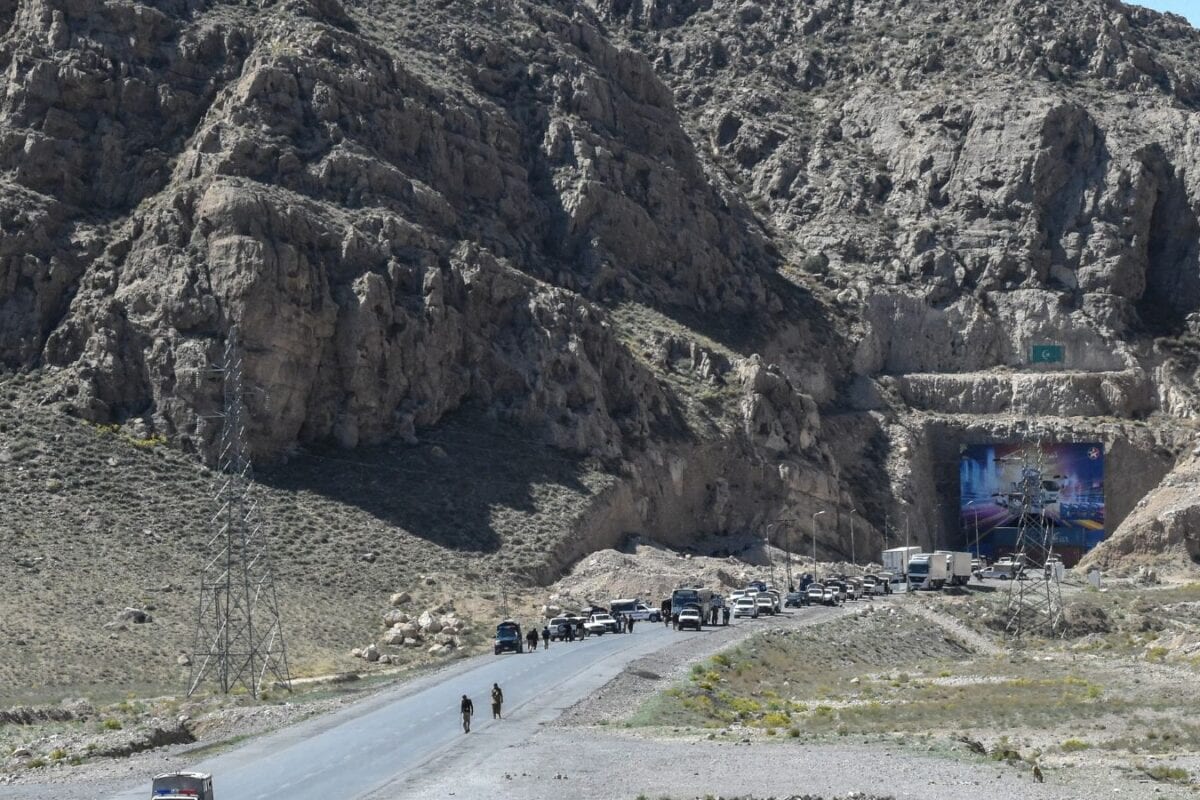
Balochistan 'Declares Independence' From Pakistan: Why It Matters More To Islamabad Than PoK Published By, Last Updated: July 19, 2026, 16:13 IST For Pakistan, Balochistan is arguably of greater strategic importance because of its geography, mineral wealth, trade corridors and maritime access. Balochistan is Pakistan's largest province by area, covering nearly 44% of the country's landmass. Despite its size, it remains one of Pakistan's least populated and least developed regions. (Photo: AFP File) Balochistan has ‘declared independence’ from Pakistan at a time when both the province and Pakistan-occupied Kashmir (PoK) are witnessing unrest. While PoK has seen sustained protests over economic issues and political rights, Balochistan has witnessed a rise in militant attacks targeting Pakistani security forces. The developments have once again drawn attention to Balochistan’s strategic importance for Pakistan. Although PoK remains central to Pakistan’s military rivalry with India, Balochistan plays a much larger role in the country’s trade, energy, maritime access and regional connectivity. Unrest in Balochistan and PoK Pakistan-occupied Kashmir has witnessed repeated mass protests driven mainly by economic hardship, rising electricity prices, increasing wheat and flour costs, and demands for greater local political rights. The latest wave of protests in 2026 escalated into deadly clashes and shutdowns led by the Joint Awami Action Committee (JAAC). At the same time, Balochistan has witnessed an increase in violence. On July 17, militants ambushed a Pakistani security convoy near Mastung. Reports said 45 Pakistani soldiers were killed, while the Baloch Liberation Army (BLA) claimed responsibility for the attack. Another report from the same day said five civilians were killed and 11 others were injured in the ambush. According to Reuters, Pakistan said 42 security personnel were killed in attacks across Balochistan during the week of July 8. The violence comes amid a broader surge in militant activity in the province this month.
Why Balochistan matters more strategically? Pakistan-occupied Kashmir (PoK) is central to issues of territorial sovereignty and border security. For Pakistan, however, Balochistan is arguably of greater strategic importance because of its geography, mineral wealth, trade corridors and maritime access. The province serves as Pakistan’s gateway to the Arabian Sea. It hosts the country’s key deep-sea port ambitions, lies along major energy and mineral corridors, and forms the backbone of Pakistan’s western maritime posture. Unlike PoK, which is strategically important mainly for territorial defence, water resources and military competition with India, Balochistan is central to Pakistan’s long-term trade, connectivity and geoeconomic ambitions. The province borders both Iran and Afghanistan, stretches along the Arabian Sea, and contains key ports, mineral-rich regions and the China-Pakistan Economic Corridor (CPEC) route leading to Gwadar. Because of this, even a symbolic independence claim in Balochistan has implications for Pakistan’s geography, energy infrastructure, trade routes and China’s long-term regional corridor plans. Why Balochistan is different from PoK? While PoK remains a high-profile territorial dispute, Balochistan presents a different challenge for Pakistan. The province is closely linked to the country’s access to the sea, major transit infrastructure and a significant share of its gas and mineral wealth. It therefore represents a deeper structural challenge to Pakistan’s state capacity and to Chinese investments than a border dispute alone. Balochistan’s strategic value extends beyond security concerns because it combines maritime access, energy resources, transport infrastructure and mineral wealth in one region. What CPEC faces? The China-Pakistan Economic Corridor (CPEC) has some of its most exposed assets in or around Balochistan. The Gwadar corridor is central to CPEC, making instability in the province a direct challenge to roads, ports, energy projects and the security of Chinese personnel working there. If Pakistan’s control over the region weakens, China could face higher security costs, construction delays and a possible weakening of Gwadar’s role as its access point to the Arabian Sea.
 The BriefWire