Sonam Wangchuk Taken To Hospital After 20 Days Of Hunger Strike, But How Did Irom Sharmila Go On For 16 Years?
Sonam Wangchuk Taken To Hospital After 20 Days Of Hunger Strike, But How Did Irom Sharmila Go On For 16 Years? Written By, Last Updated
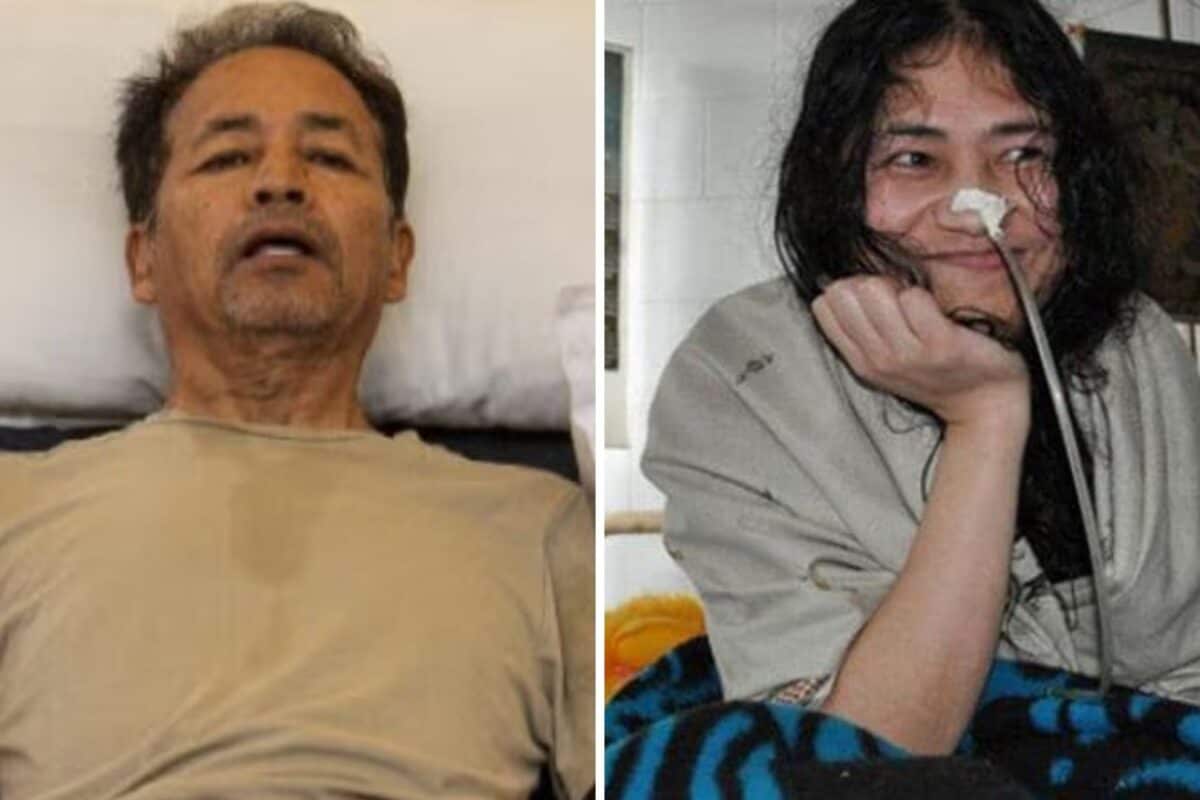
Sonam Wangchuk Taken To Hospital After 20 Days Of Hunger Strike, But How Did Irom Sharmila Go On For 16 Years? Written By, Last Updated: July 19, 2026, 15:36 IST Sonam Wangchuk Taken To Hospital After 20 Days Of Hunger Strike: How did Irom Sharmila manage her 16-year-old hunger strike? News18 explains Rapid Read Sonam Wangchuk and Irom Sharmila. (File) On the 21st day of his hunger strike, the Delhi Police on Saturday took activist Wangchuk forcibly to Safdarjung Hospital. He has been on an indefinite hunger strike since June 28 in support of the CJP-led protest over alleged irregularities in the NEET examination and the reported deaths of students linked to the controversy. How did Irom Sharmila manage her 16-year-old hunger strike? News18 explains. SONAM WANGCHUK’S CONDITION The sudden medical intervention for Sonam Wangchuk came after a directive by the Delhi High Court, which ruled that “life is precious" and ordered immediate health monitoring. Unlike Sharmila’s prolonged state-controlled situation, Delhi Police moved Wangchuk to Safdarjung Hospital after 20 days of fasting to prevent sudden multi-organ failure caused by a stark drop in his vital signs, including blood pressure and sugar levels.
Asserting that she has “lost faith" in the hospital, Wangchuk’s wife Gitanjali J Angmo said she wants to move the activist out of Safdarjung Hospital to a private facility of her choice before his health further deteriorates. Angmo, in her petition before the high court, said despite repeated requests, the Safdarjung authorities disclosed “only selective information" to her, and their refusal to let Wangchuk shift to another hospital has prevented an “independent verification of his medical condition". THE MECHANICS OF IROM SHARMILA’S 16-YEAR FAST Sharmila managed her fast through involuntary, state-mandated nasal force-feeding while remaining under judicial custody in a hospital ward. Because attempting suicide was a criminal offence under Indian law at the time, she was repeatedly arrested and legally kept alive by authorities who fed her liquid nutrients and baby formula through a nasogastric tube. Nasal Tube Feeding: Authorities inserted a tube directly through her nose into her stomach. Liquid Diet: She survived entirely on a mixture of liquefied nutrients, vitamins, and baby formula. Judicial Custody: She spent nearly the entire 16 years (2000–2016) confined to a special ward at Jawaharlal Nehru Institute of Medical Sciences in Imphal, Manipur.
The Legal Loophole: She was routinely released at the end of each one-year maximum sentence for “attempt to commit suicide" (Section 309 of the IPC), only to refuse food immediately, face re-arrest, and be placed back on the tube. Absolute Fast: Despite the forced physical nourishment, she never voluntarily allowed food or water to pass her lips until she ended her fast with a spoonful of honey on 9 August 2016. News18 Newsletter Handpicked stories, in your inbox A newsletter with the best of our journalism submit Key Questions Answered What are the legal implications of forced feeding in India? There is no specific law prohibiting hunger strikes in India, and they are globally recognized as a legitimate form of protest. However, the legal implications of forced feeding are complex. How do long-term hunger strikes affect the human body? Long-term hunger strikes affect the body by depleting glycogen stores within 24-48 hours, leading the body to burn fat for fuel. This adaptation can cause hunger pangs to subside, but it signifies the body entering survival mode.
 The BriefWire