Israel: How real is threat of gender segregation on street?
An Israeli city, with a large ultra-Orthodox Jewish population, wants to separate men and women on certain streets. Israeli politicians voted to allow university courses
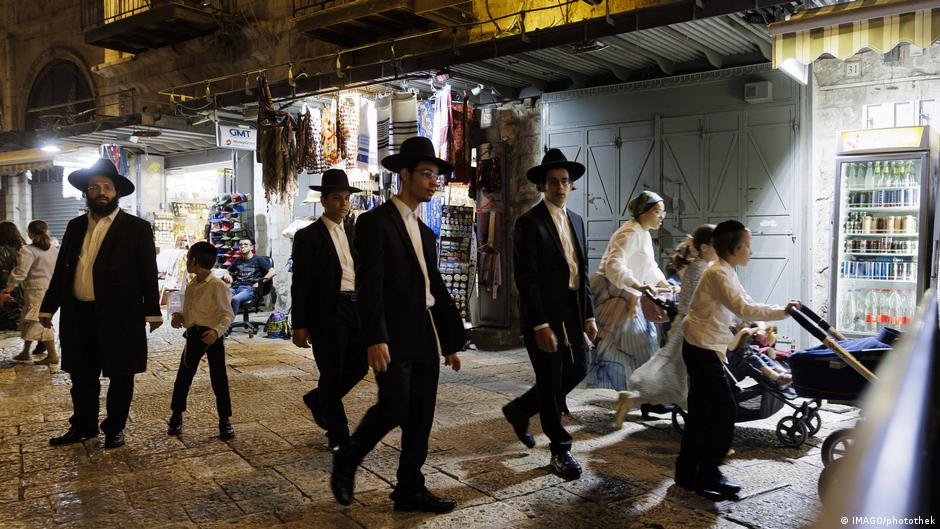
An Israeli city, with a large ultra-Orthodox Jewish population, wants to separate men and women on certain streets. Israeli politicians voted to allow university courses to do the same. An online view of Shlomo HaMelech street in Bnei Brak, an Israeli city of around 200,000 people, known as a center of ultra-Orthodox Judaism, isn't all that spectacular. So far, it's not possible to see any sign of the dispute that has erupted over the narrow asphalt road lined with residential buildings. A few pedestrians are visible on the sidewalks: mostly men in the frock coats and black hats typical of Orthodox Jews and a few women. And it is about those pedestrians' freedom of movement that a major debate has erupted. According to local reports, the Bnei Brak municipality had already started widening sidewalks, erecting barriers and putting up signs that are intended to physically separate male and female pedestrians from one another in the city just east of Tel Aviv. It would have made Bnei Brak the first city in Israel with gender-segregated streets. But the work was apparently halted after fierce criticism. Signs that had already been installed were removed. Conservative religious lobby Less conservative Israelis fear that Bnei Brak could set a precedent that will further strengthen Orthodox hardliners in society, especially just before the upcoming elections. A parallel bill being debated in Israels' parliament, the Knesset, also calls into question gender equality even though this is supposedly guaranteed by Israeli Supreme Court decisions.
Bnei Brak has a predominantly ultra-Orthodox population and young men there have protested against being forced to do military service, citing their Torah studies as a reason Image: Ohad Zwigenberg/AP/picture alliance Gender segregation is not unusual in Judaism. Orthodox synagogues have separate areas for men and women and conservative practitioners won't touch members of the opposite sex, even in greeting. At holiday ceremonies and weddings, Orthodox Jewish men and women typically sit in separate areas. The proposed gender segregation on Bnei Brak's streets originates from the latter issue. In that neighborhood, there are banquet halls usually booked for weddings and local rabbis want guests to be able to arrive already separated by gender. The problem is that Israeli taxpayer money would be used to impose the segregation in public — and therefore supposedly neutral — spaces. Reports in Israeli media say the city administrators have since backtracked. They say they will rearrange the streets temporarily when there are large events planned. Israeli demographics have been shifting in favor of the more conservative Jewish groups in the country for some time. Orthodox Jewish families have a higher birth rate than non-Orthodox ones. This is putting political pressure on the country. While Israel guarantees equality for citizens regardless of sex, the country's founders also promised to observe certain important religious rules that more conservative Jewish communities prioritize. The fact that men and women meet on campus, as seen here in Tel Aviv, is not being debated but a recent Knesset decision paves the way for gender-segregated master's and doctoral programs Image: Depositphotos/IMAGO Previous attempts to impose gender segregation have been struck down by the country's Supreme Court.
 The BriefWire