Trump's Iran woes spark Carter parallels
Jimmy Carter used to be one of President Donald Trump's favourite political targets, a catch-all foil for feckless Democrats that he could jeer at to
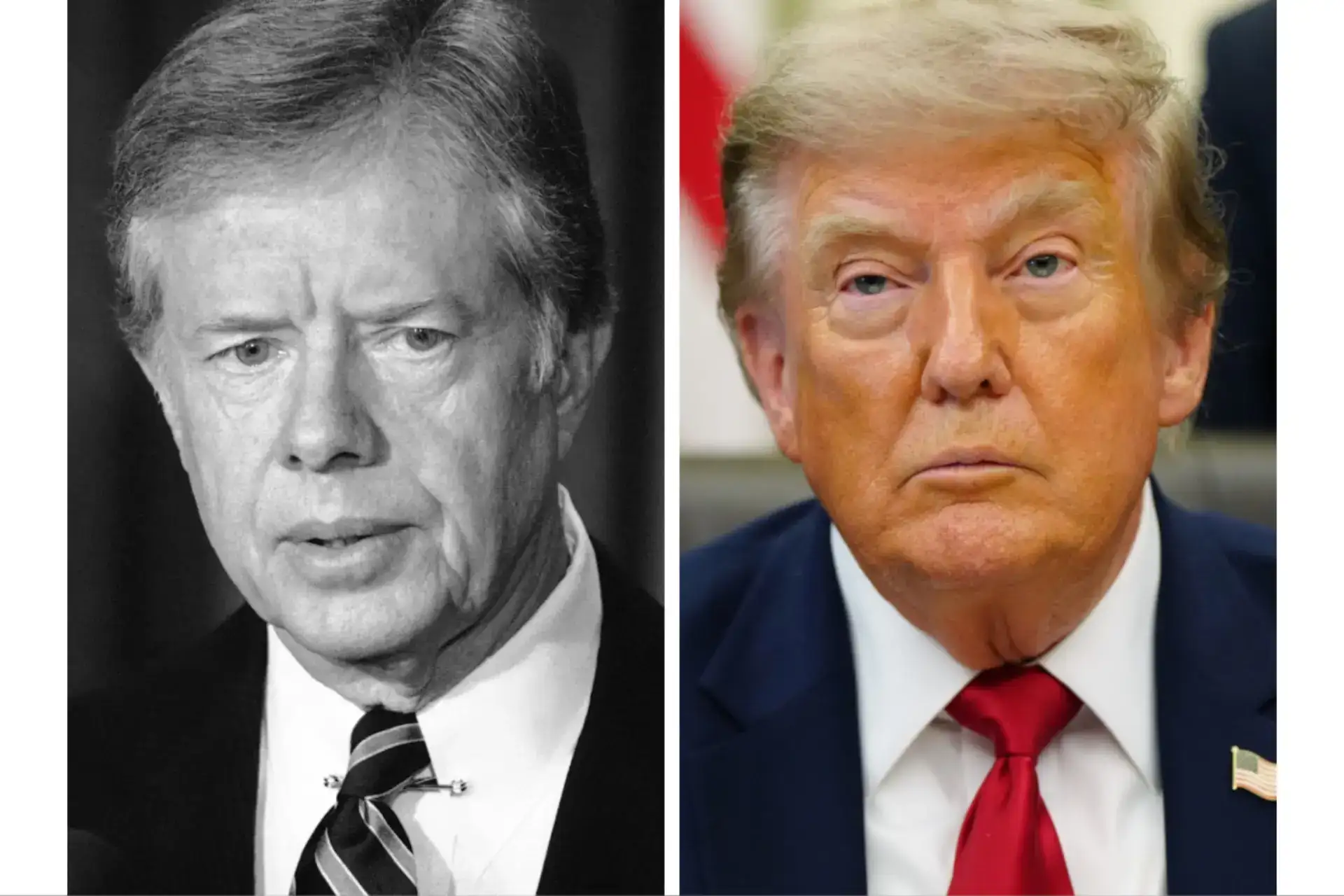
Jimmy Carter used to be one of President Donald Trump's favourite political targets, a catch-all foil for feckless Democrats that he could jeer at to make himself look strong and decisive. But lately, Trump's sentiments on the 39th president have become more wistful as he faces some of the same challenges the late Carter did.Also read: Trump back in World Cup spotlight after starring role in tournament's controversies Those include the war in Iran with no end in sight -- and now escalating as the US moves to control the Strait of Hormuz -- and inflation, a drag on the economy Trump hasn't tamed despite long insisting that his business background would wipe it out. The comparison seems to be on Trump's mind, too. Asked last month why he didn't dispatch US Special Forces into Iran to forcibly remove its enriched uranium, he responded, "I didn't feel like being Jimmy Carter." That recalled the failed 1980 raid to free US hostages that killed eight American servicemen. Trump also said in March that the unsuccessful mission "cost them the election" against Ronald Reagan in 1980, sounding cognisant of political realities in a way he didn't when using Carter as a punchline. The shift in tone coincides with Trump's increased focus on his personal legacy and comes as the parallels between the two presidents become harder to ignore. "I think it is dawning on him -- it's getting through even his thick skull -- that he's kicked over a hornet's nest and his presidency might be remembered for some of the same things Jimmy Carter's presidency is," said Johnathan Adler, author of "His Very Best: Jimmy Carter, A Life." Despite some similarities, the two had glaring differences Asked about Trump's change in tone on Carter and the two facing overlapping challenges, White House spokesperson Olivia Wales said, "Trump will never allow Iran to have a nuclear weapon" and "remains laser-focused on implementing his proven economic agenda to lower costs." "The president is a one-of-a-kind leader who will always unapologetically advance America's interests," Wales said in a statement.
"The only legacy he is concerned with is making America greater than ever before." Kori Schake, a former member of George W Bush's Security Council, said she doesn't think Trump is reassessing Carter. "He doesn't stitch facts together and create theories," she said. Still, Trump's more recent comments are a long way from his 2024 reelection campaign, when he routinely called Joe Biden "the worst" president who made Carter look "brilliant" by comparison. Trump still frequently mentions Carter, who died two years ago at age 100, but usually to incorrectly suggest that he was wary of mail-in ballots.Also read: Trump vows crackdown on immigrant truckers. How many Indians could be impacted? Other disparities between the two are legion. Carter was married to his wife, Rosalynn, for 77 years, was deeply religious and pledged to "never knowingly lie to the American people." Trump is twice divorced, relishes cursing publicly and offers a never-ending onslaught of falsehoods. As president, Carter placed his family's peanut business in a blind trust. Control of the Trump Organisation has transferred to Trump's sons, but the president took in nearly USD 1.2 billion from his crypto businesses last year while not being shy about turning his presidency into a major source of personal benefit in other ways. Speaking in 1977, Carter declared, "We are now free of that inordinate fear of communism." Trump has seized on primary wins by progressive Democrats to constantly stoke new fears about communism. Carter also won the Nobel Peace Prize in 2002. Trump hasn't, despite declaring himself more deserving than any of the award's past recipients. The two have inflation and Iran in common While inflation plagued both presidents, Carter had it much worse, facing a peak inflation rate of 14.7 per cent in April 1980. Consumer prices rose 4.2 per cent this May from a year earlier -- a three-year high -- and though they fell sharply from May to June, that decline included lower gas prices fuelled by a US-Iran ceasefire.
 The BriefWire