Balochistan's 'Independence Declaration' Also Spotlights India's Muslim & Hindu Baloch & A Surprising Bollywood Legacy
Balochistan's 'Independence Declaration' Also Spotlights India's Muslim & Hindu Baloch & A Surprising Bollywood Legacy Written By, Last Updated: July 18, 2026, 19:49 IST Scattered
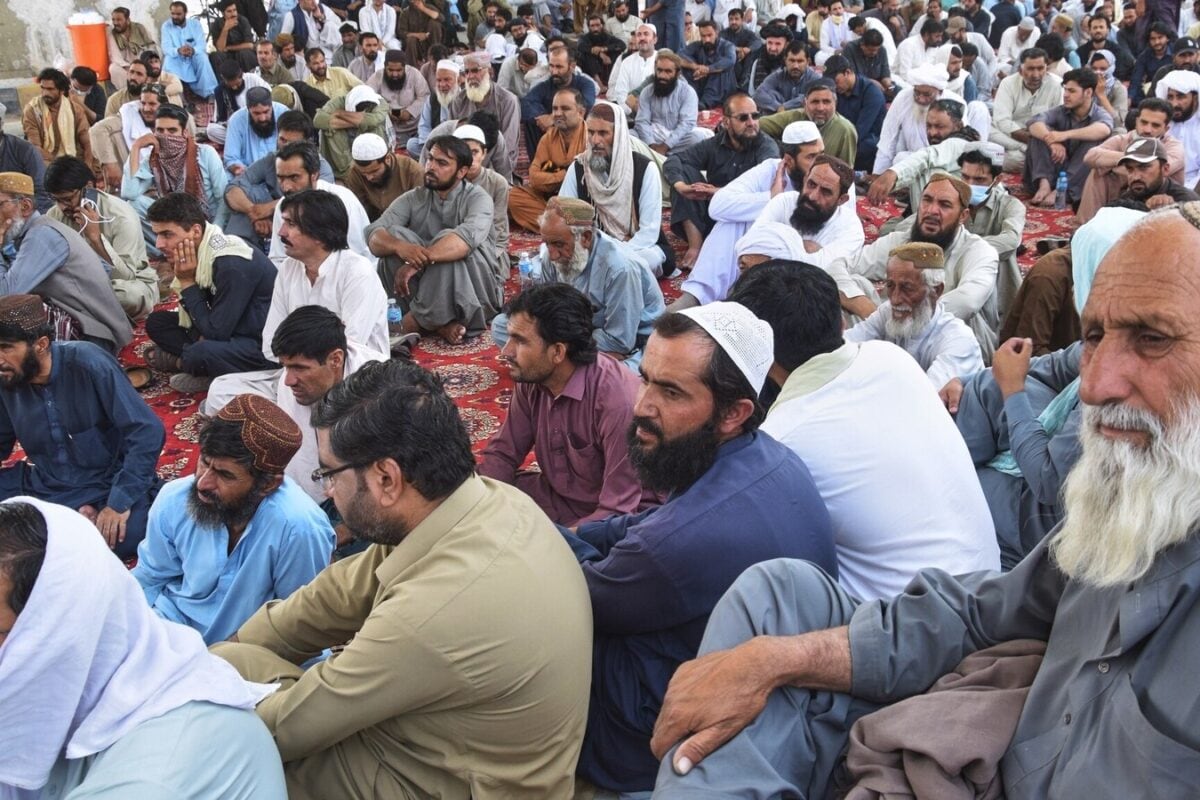
Balochistan's 'Independence Declaration' Also Spotlights India's Muslim & Hindu Baloch & A Surprising Bollywood Legacy Written By, Last Updated: July 18, 2026, 19:49 IST Scattered across specific pockets of western and northern India, these Baloch communities represent centuries of migration, cultural assimilation, and resilience Though fully modernised citizens of India, this diaspora remains a living bridge to a complex cross-border history. Representational pic/AP A sensational online declaration of independence issued in the name of the “Republic of Balochistan" has pushed South Asia’s longest-running separatist conflict back into the global media spotlight. The viral proclamation, purportedly shared by activist Mir Yar Baloch, claimed that local resistance forces had secured eighty-five per cent of the territory, established a national anthem, and introduced a new currency named the Balochi Falus. While international observers and ground reports confirm that Islamabad maintains administrative control over the mineral-rich province amid ongoing security operations, the massive digital footprint of the announcement has triggered immense curiosity. Beyond the geopolitical friction, this sudden focus has renewed public interest in a lesser-known internal reality: India’s own vibrant, historical Baloch diaspora. Scattered across specific pockets of western and northern India, these communities represent centuries of migration, cultural assimilation, and resilience. The Agrarian Heartlands of Uttar Pradesh The largest concentration of the Baloch diaspora in India resides in western Uttar Pradesh, numbering tens of thousands.
Their presence dates back to the late Middle Ages and the peak of the Mughal Empire. A significant wave arrived in 1555, when Baloch warriors accompanied the Mughal Emperor Humayun during his military campaign to reclaim the throne of Delhi. As a reward for their valour, these soldiers were granted land along the fertile Yamuna River and the Doab region. Today, prominent settlements thrive in and around the districts of Bulandshahr, Muzaffarnagar, Shamli, Meerut, and Aligarh. Hamlets like Bilochpura, Amirnagar, and Jasoi are home to thousands of families who are completely integrated into the local socio-economic fabric. Often using the surname Khan or Khan Baloch, these populations have transitioned away from the Balochi language to speak Urdu and the regional Khari Boli dialect. Over the generations, they have evolved from historical mercenaries and pastoral camel breeders into settled, small-to-medium-scale agrarian farmers. The Pastoral and Trade Footprint in Gujarat Further west, the state of Gujarat hosts another deeply rooted cluster of the Baloch community, whose arrival dates back to the fourteenth and fifteenth centuries via trade routes and pastoral migrations. Early settlers were granted fiefdoms by the Sultan of Gujarat, establishing roots in regions like Kutch, Radhanpur, Junagadh, and Bhavnagar. In the arid Banni grasslands of Kutch, subgroups such as the Theba Baloch have spent centuries blending their ancestral identities with local cultures, speaking a unique mix of Kachchhi and Sindhi dialects.
 The BriefWire