Why Balochistan Turned To India In 1948 After Pakistan's Annexation Move? Here's What History Says
Why Balochistan Turned To India In 1948 After Pakistan's Annexation Move? Here's What History Says Published By, Last Updated: July 18, 2026, 16:47 IST The
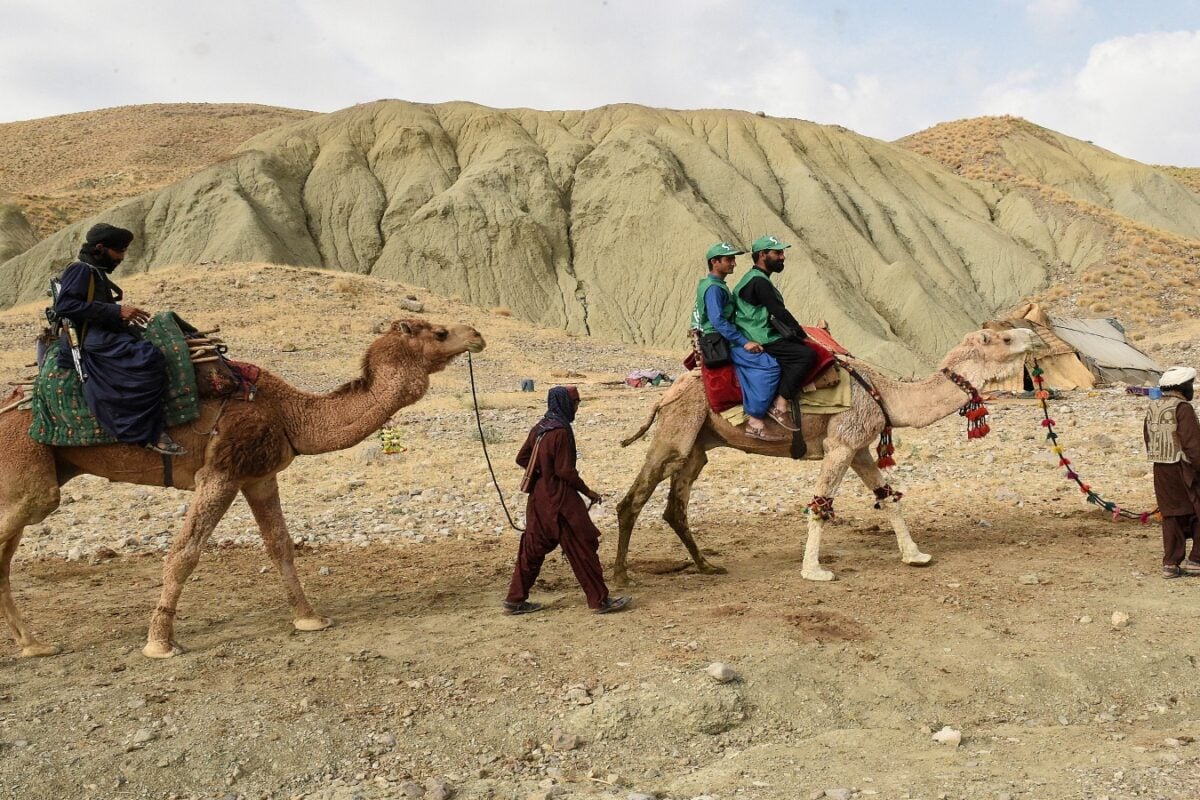
Why Balochistan Turned To India In 1948 After Pakistan's Annexation Move? Here's What History Says Published By, Last Updated: July 18, 2026, 16:47 IST The roots of the Balochistan issue trace back to the Partition of 1947, when the Khanate of Kalat declared independence before acceding to Pakistan in 1948. A member of the levies tribal force (L) and census officials from the Pakistan Bureau of Statistics (R) ride camels to collect information from Marri tribespeople living in the remote mountainous area of Mawand as part of a national census in southwest Pakistan’s Kohlu district, Balochistan province. (Photo: AFP) The origins of the Balochistan dispute date back to the Partition of British India in 1947. Before Pakistan was created, the region was divided into two administrative units. One was British Balochistan, which was governed directly by the British. The other comprised several princely states, the largest and most influential of which was the Khanate of Kalat, ruled by Khan Mir Ahmad Yar Khan. Unlike British-administered provinces, princely states had the option to determine their political future after the British withdrew. Kalat maintained that its treaty relationship with the British gave it a unique constitutional status, separate from both India and the soon-to-be-created Pakistan. Kalat’s Declaration Of Independence Following the end of British rule, the Khanate of Kalat declared itself an independent state on 15 August 1947. For the next several months, Kalat and the newly formed Dominion of Pakistan held negotiations over the state’s future.
The talks ended in March 1948, when Khan Mir Ahmad Yar Khan signed the Instrument of Accession, formally integrating Kalat into Pakistan. Islamabad maintains that the accession was lawful and voluntary. However, several historians and Baloch nationalist groups argue that the agreement was reached under considerable political and military pressure, making the circumstances of the merger a subject of continuing historical debate. The First Armed Rebellion After Accession The accession of Kalat to Pakistan did not end resistance in the region. Shortly after the merger in 1948, Prince Abdul Karim, the younger brother of the Khan of Kalat, opposed the decision and launched an armed rebellion from areas near the Afghan border. Although the uprising was eventually suppressed by Pakistani authorities, historians widely regard it as the first Baloch insurgency. Since then, Balochistan has witnessed several waves of insurgency over the decades, with various separatist groups demanding greater autonomy or independence. Pakistan, however, maintains that it is combating militancy and protecting the country’s sovereignty. Did Balochistan Turn To India? Whether Kalat sought India’s support before its accession to Pakistan remains one of the most debated aspects of Balochistan’s history. Historical documents indicate that Kalat approached the Government of India in 1947 seeking recognition of its independent status and permission to establish a trade agency in Delhi. However, then Prime Minister Jawaharlal Nehru later clarified in Parliament that Kalat had never formally requested accession to India. He also dismissed reports suggesting otherwise, stating that given Kalat’s geographical location, the question of its accession to India “did not arise at all." Some Baloch nationalist accounts and later historical writings claim that Kalat’s representatives explored the possibility of Indian assistance as Pakistan stepped up pressure on the state.
 The BriefWire